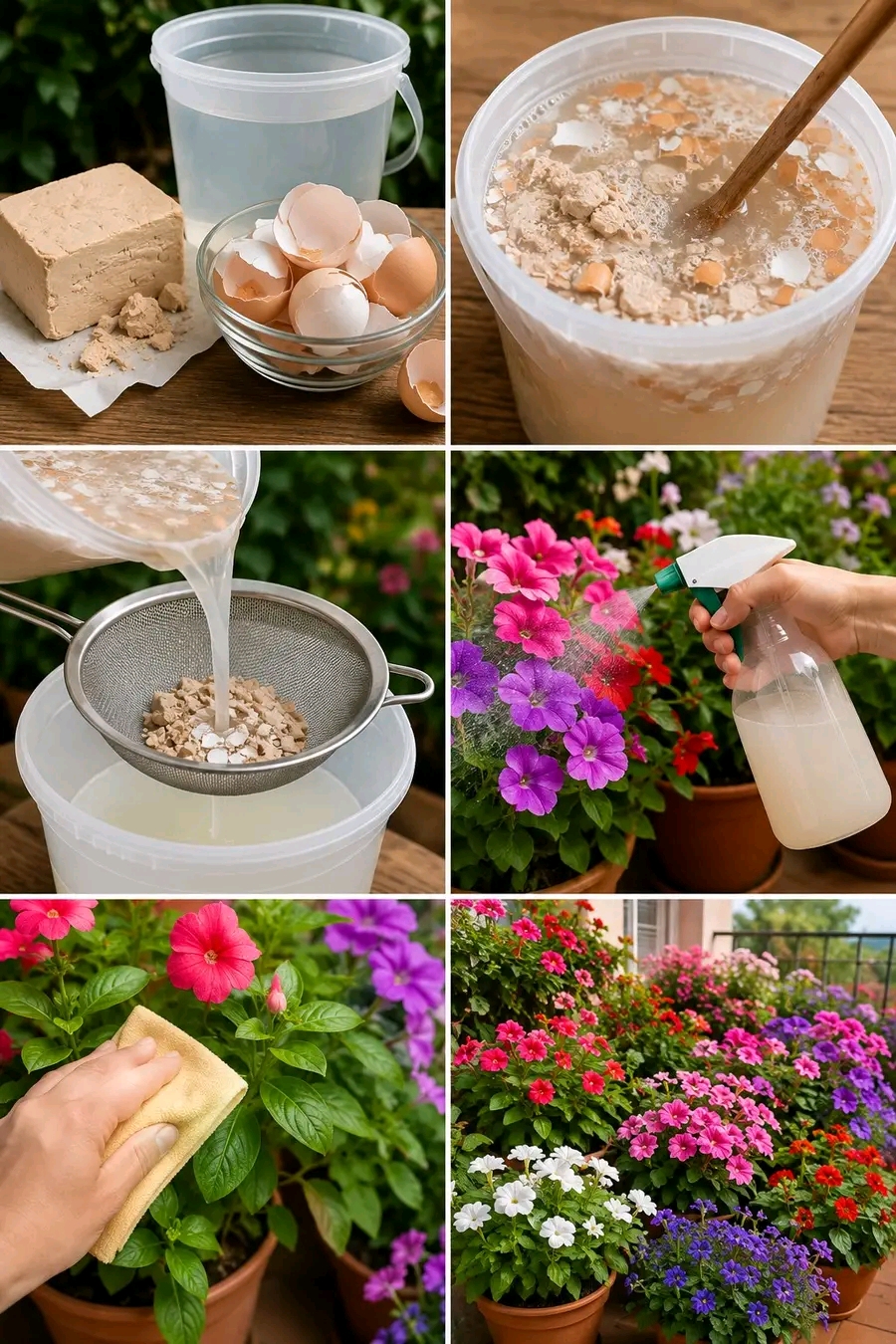
Flowering container plants can transform a balcony, patio, terrace, porch, windowsill, or small garden corner into a bright living display filled with color, fragrance, and seasonal beauty. Petunias, impatiens, geraniums, vinca, begonias, calibrachoa, and many other blooming plants look especially beautiful when their leaves stay clean, their stems remain strong, and their flowers continue opening in waves. Because of this, many home gardeners search for simple homemade plant-care ideas that may support healthier growth without relying on expensive products. One popular idea is mixing yeast and eggshells with water, straining the liquid, and using it as a light spray around flowering plants.
This method looks simple and natural because the ingredients are familiar. Eggshells are often associated with calcium, while yeast is often connected with fermentation and plant growth. When combined with water, they create a cloudy liquid that some gardeners use as a mild homemade garden tonic. The mixture is usually strained before being poured into a spray bottle so it can be misted lightly on leaves or around flowering containers. Some gardeners also wipe leaves gently afterward to remove residue and keep the display clean.
However, this type of homemade flower spray needs careful use. Yeast and eggshells are organic materials, and organic materials can spoil, ferment, smell unpleasant, attract fungus gnats, encourage mold, or leave residue if they are used too strongly. A light homemade spray may support a cleaner plant-care routine when it is diluted, fresh, and applied responsibly, but it should never be treated as a miracle bloom booster. Flowers do not stay colorful because of one spray alone. They bloom best when the roots are healthy, the soil drains well, the light is correct, the watering routine is steady, and feeding is balanced.
Understanding What the Yeast and Eggshell Mixture May Do
Eggshells are mostly calcium carbonate. Calcium is important for plant structure, but eggshells break down slowly. They do not instantly dissolve into plant food the moment they touch water. When crushed very finely or soaked, they may contribute a tiny amount of calcium over time, but they are not a fast fertilizer. This is why eggshell water should be seen as a mild support idea rather than a complete feeding solution.
Yeast is a living organism used in baking and fermentation. In garden mixtures, yeast may create microbial activity when mixed with water and organic matter. Some gardeners believe this can support soil life or stimulate growth. However, yeast can also ferment quickly, especially in warm weather. If the mixture becomes sour, foamy, smelly, or thick, it should not be sprayed on plants. A spoiled mixture can do more harm than good.
The combination of yeast and eggshells may create a cloudy liquid with small particles. This is why straining is important. Large particles should not be left in the spray bottle or sprayed onto leaves. They can clog the nozzle, sit on foliage, attract insects, or create a dirty look on flowers. A clean spray should be thin, fresh, and lightly diluted.
Why Flowering Plants Need Balanced Care First
Flowering plants need more than calcium or a homemade tonic. To produce steady blooms, they need enough light, proper watering, healthy roots, and a balanced supply of nutrients. Many flowering container plants are heavy bloomers, which means they use nutrients quickly during active growth. A balanced bloom fertilizer or slow-release fertilizer often provides more reliable support than kitchen-based mixtures.
If a plant is not blooming, the first question should be about light. Most flowering plants need bright light to produce flowers. Some prefer full sun, while others bloom better in partial shade, but nearly all need enough brightness to create flower buds. A homemade spray cannot replace light. A plant in a dark corner will not bloom heavily simply because it receives yeast water.
Watering is also essential. Container flowers dry faster than plants in the ground, especially on balconies, sunny patios, and windy terraces. If soil becomes too dry, buds may drop and leaves may wilt. If soil stays soggy, roots may rot and the plant may stop blooming. A flower spray cannot fix poor watering. The root zone must be healthy first.
How to Prepare the Mixture More Safely
A safer yeast and eggshell mixture should be weak, fresh, and well strained. Eggshells should be clean before use. Any egg residue left inside the shells can spoil and create odor. After rinsing, the shells can be dried and crushed as finely as possible. Fine particles are easier to strain and less likely to create messy residue.
The yeast should be used in a very small amount. More yeast does not mean better results. Too much yeast can make the liquid ferment aggressively. The mixture should be diluted with plenty of clean water and stirred well. It should not be allowed to become thick or foul-smelling. If it smells rotten or sour, it should be discarded.
After soaking briefly, the liquid should be passed through a fine strainer, cloth, or coffee filter. The final spray should be smooth and watery. If it looks chunky, gritty, or heavy, strain it again and dilute it more. A clean liquid is safer for leaves and better for spray bottles.
Why Straining Matters
Straining protects the plant and the spray bottle. Eggshell fragments can clog sprayers and leave white specks on leaves. Yeast particles can settle in the bottle and create uneven application. Bits of organic material left on leaves may mold or attract insects. This is especially important for decorative flowering plants where appearance matters.
A fine strainer removes the heavy material while leaving a light liquid that is easier to apply. The leftover solids should not be dumped onto the top of delicate container plants in thick piles. If used in the garden, they are better added to compost or mixed lightly into outdoor soil where they can break down slowly.
For balcony flowers and indoor-outdoor containers, clean application is important. A plant display should look fresh, not coated with kitchen residue. Straining helps keep the flowers, leaves, and soil surface tidy.
How to Apply the Spray Safely
The spray should be applied lightly, preferably in the early morning or evening when the sun is not strong. Spraying in hot direct sun can lead to leaf spotting or stress. Flower petals can be delicate, so avoid soaking open blooms. Focus more on the leaves and the area around the plant, not directly on petals.
A small patch test is important. Spray one or two leaves first and wait a day. If the leaves remain healthy with no spotting, yellowing, or curling, the mixture may be used lightly on the rest of the plant. If damage appears, stop using it and rinse the leaves gently with clean water.
Do not drench the plant. A fine mist is enough. The goal is light support, not heavy coating. If the leaves feel sticky or look dusty after drying, the mixture is too strong or not strained well enough. Wipe glossy leaves gently with clean water if residue appears.
Using the Mixture Around Petunias and Similar Flowers
Petunias and similar balcony flowers are popular because they bloom in bright colors and fill containers quickly. They usually need strong light, steady watering, and regular feeding. A mild homemade spray may be tested on healthy plants, but it should not replace fertilizer. Petunias are active bloomers and often respond better to balanced feeding than to homemade tonics.
Petunia flowers can mark easily, so avoid spraying the open blooms heavily. Wet petals may develop spots or look damaged. Apply any treatment around the foliage and soil surface instead. Deadheading old blooms and trimming leggy stems often improves petunia appearance more than spraying.
If petunias stop blooming, check light, root crowding, feeding, and moisture. Plants in small pots may become stressed quickly. A bigger container, fresh potting mix, and regular balanced fertilizer may create a stronger bloom display than repeated yeast spray.
Using the Mixture Around Geraniums
Geraniums are strong container plants that enjoy bright light, good airflow, and soil that dries slightly between watering. They do not like constantly wet roots. A yeast and eggshell spray should be used carefully around geraniums because too much moisture or organic residue can create problems.
Geranium leaves can handle light cleaning, but they should not be coated heavily. If the mixture leaves residue, wipe it away. Avoid spraying during hot sun, and keep flowers as dry as possible. Deadheading faded flower clusters encourages more blooms and keeps the plant tidy.
Geraniums often respond well to correct sunlight and moderate feeding. If the plant has lots of leaves but few blooms, it may be receiving too much nitrogen or not enough light. A homemade spray will not correct those issues by itself.
Using the Mixture Around Impatiens and Shade Flowers
Impatiens and other shade-loving flowers prefer consistent moisture and protection from harsh sun. They can be sensitive to leaf disease when foliage stays wet too long. Because of that, any spray should be used lightly and only when the leaves can dry quickly.
For shade flowers, airflow is especially important. A damp, crowded plant in shade can develop fungal problems. If using any homemade spray, apply early enough for leaves to dry and avoid overuse. A weak, fresh mixture is safer than a strong fermented one.
If shade flowers are not blooming, they may need brighter filtered light or better nutrition. If they are wilting, check soil moisture and root condition. A spray should never be the first solution for root or watering problems.
Why This Mixture Should Not Replace Fertilizer
Eggshells and yeast do not provide a complete nutrient profile. Flowering plants need nitrogen for growth, phosphorus for root and bloom support, potassium for overall strength, and trace elements for healthy development. Eggshells mostly provide calcium slowly, while yeast is not a balanced fertilizer.
A balanced flowering plant fertilizer is more predictable. It tells the gardener what nutrients are being applied and how much to use. Homemade mixtures vary every time. The strength depends on the amount of yeast, the freshness of the shells, the water volume, temperature, and soaking time.
For strong long-term bloom displays, use a complete feeding routine and treat homemade sprays as occasional extras only. If the plant is already receiving fertilizer, avoid adding too many extra treatments. Overfeeding and buildup can damage roots.
Risks of Fermentation
Yeast mixtures can ferment quickly. Fermentation may create gas, foam, sour smell, and microbial growth. A small amount of activity may seem natural, but a strong fermented mixture can irritate roots and leaves. It may also attract flies, ants, or fungus gnats if used in containers.
Never store the mixture for a long time in a closed bottle. Pressure can build up, and the liquid can spoil. Make only a small amount and use it fresh. If there is any unpleasant odor, discard it. A clean garden spray should never smell rotten.
Fermentation is more likely in warm weather. Balcony and patio gardeners should be especially cautious during summer. Heat speeds up spoilage, and plants are already under stress from sun and drying wind. In hot weather, plain water and proper fertilizer are often safer.
Preventing Leaf Residue
Leaf residue is one of the biggest problems with homemade sprays. Eggshell dust, yeast particles, and cloudy water can dry into marks. On glossy leaves, this can make the plant look dull. On flowering plants, residue can reduce the clean beauty of the display.
To prevent residue, dilute the liquid well and strain it carefully. Spray lightly and avoid open flowers. If residue appears, wipe broad leaves with plain water or gently rinse outdoor plants in the cooler part of the day. Do not scrub delicate leaves or petals.
A beautiful flower display depends on clean foliage and fresh blooms. Any treatment that makes the plants look dirty should be adjusted or stopped.
Watering and Drainage for Flower Containers
Container flowers need good drainage. Pots should have drainage holes so excess water can escape. If a pot has no drainage, water and homemade liquids can collect at the bottom and damage roots. A saucer is fine, but standing water should be emptied after watering.
Flowering plants in terracotta pots may dry faster than those in plastic or glazed ceramic pots. Balcony plants may dry faster because of wind and sun. Check soil moisture regularly. Water deeply when needed, then let excess drain.
If the soil surface is covered with organic residue from homemade sprays, it may attract gnats. Keep the surface clean. Remove dead leaves, fallen petals, and spoiled material. A tidy pot is healthier and more attractive.
Light and Bloom Production
Most colorful flowering plants need bright light to bloom well. Petunias, geraniums, calibrachoa, vinca, and many balcony flowers need several hours of sun. Impatiens and begonias may prefer shade or filtered light, but they still need enough brightness to flower strongly.
If a flowering plant is producing leaves but few flowers, light may be the issue. Move the plant gradually to a brighter suitable location. Avoid sudden harsh exposure if the plant has been in shade. Better light often creates more blooms than any homemade spray.
Light also helps plants use nutrients. Feeding a plant in low light can lead to weak growth or buildup because the plant cannot use the nutrients efficiently. Always match feeding to light and growth.
Pruning and Grooming for More Flowers
Regular grooming keeps flower containers looking fresh. Remove faded blooms, yellow leaves, and dead stems. This prevents the plant from wasting energy and reduces places where pests or disease can hide. Many flowering plants bloom better when old flowers are removed.
Some plants benefit from light trimming. Petunias can become leggy and may need cutting back to encourage fuller growth. Basil-like flowering herbs and some annuals also respond to pinching. Geraniums benefit from removing spent flower clusters.
A homemade spray cannot replace pruning. Clean grooming is one of the most effective ways to keep a balcony display colorful and tidy.
Using the Spray on Indoor Plants
This yeast and eggshell spray is better suited to outdoor or balcony flowering plants than indoor houseplants. Indoors, organic sprays can leave odor, residue, and pest problems. If used indoors, it should be extremely diluted, fresh, and tested carefully. Avoid spraying near furniture, curtains, carpets, or decorative surfaces.
Indoor flowering plants often need cleaner, more controlled care. A labeled fertilizer and plain water are usually safer. Homemade organic mixtures can sour in warm indoor rooms and create fungus gnats. For premium indoor displays, residue and smell are not acceptable.
If a plant is kept indoors but moved outside for treatment, keep it out of harsh sun and let leaves dry before bringing it back inside. This reduces mess and moisture issues.
Using the Spray on Balcony and Patio Gardens
Balcony and patio gardens are better places to test mild homemade sprays because airflow is stronger and the plants are often grown in containers designed for seasonal color. Even so, the spray should remain light. Do not soak flowers, and do not apply during hot midday sun.
Balcony plants may already face heat, wind, and quick drying. If the plants are stressed, improve watering and placement first. A weak plant under heat stress may react badly to any spray. Healthy plants tolerate gentle experiments better.
After spraying, observe the plants over the next few days. If the foliage looks clean and no problems appear, the method may be used occasionally. If leaves spot, petals mark, or pests appear, stop immediately.
Continue to Page 2
Continue to page 2 for more details about this article and the key points many readers miss on the first page.