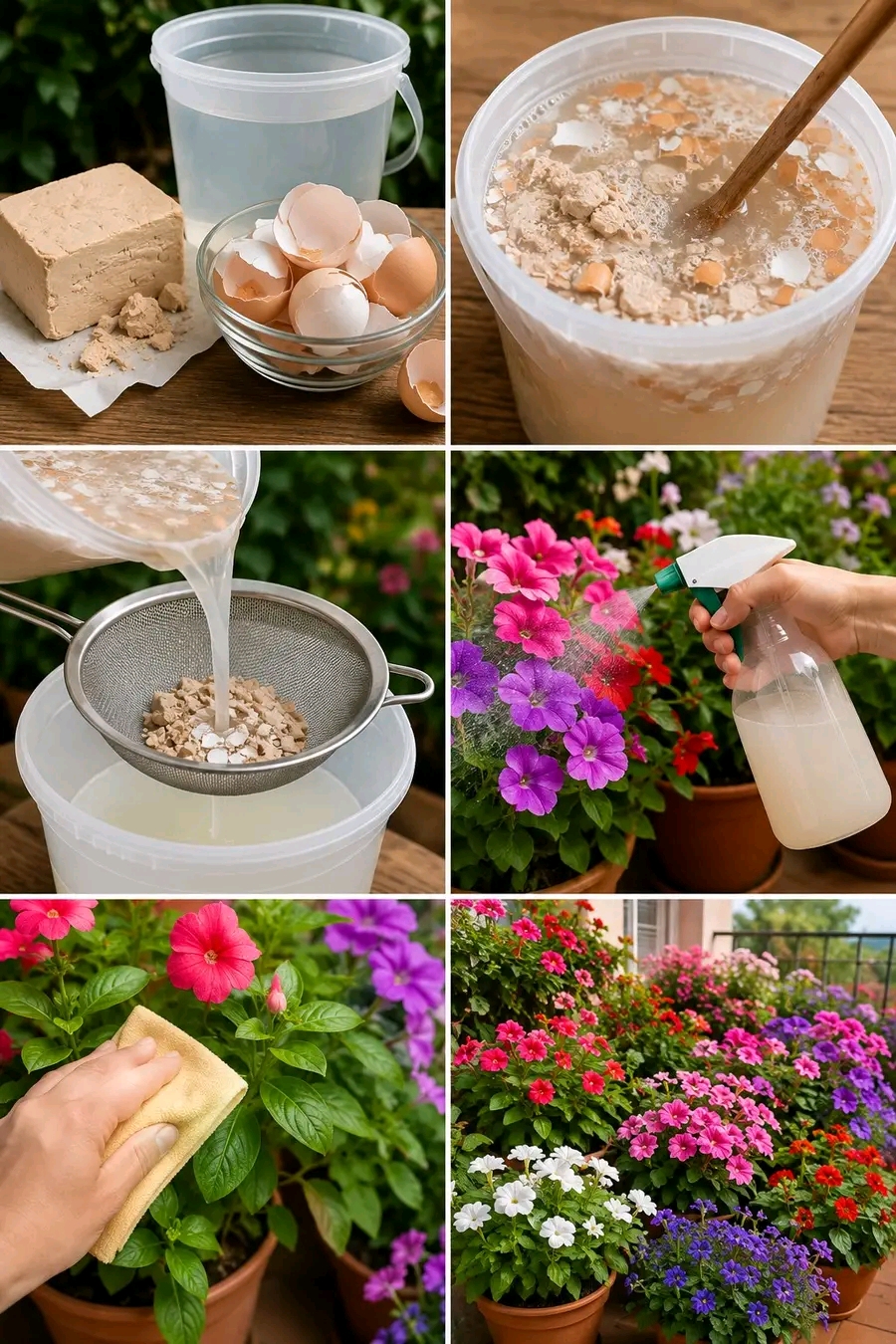
Common Mistakes With Yeast and Eggshell Sprays
One common mistake is using too much yeast. This can make the liquid ferment strongly. Another mistake is using dirty eggshells with egg residue, which can spoil. A third mistake is failing to strain the liquid. Particles can clog the sprayer and leave residue on leaves.
A fourth mistake is spraying open flowers heavily. Petals can mark and lose beauty. A fifth mistake is using the mixture too often. Repeated organic sprays can create buildup and attract pests. A sixth mistake is using the spray on sick plants before checking roots, light, and watering.
A seventh mistake is storing the mixture for several days. Fresh is safer. An eighth mistake is treating the mixture as complete fertilizer. It is not complete plant food and should not replace balanced feeding.
What to Do If Problems Appear
If leaves develop spots after spraying, rinse the plant gently with plain water in the cooler part of the day. Avoid direct sun while the plant is wet. If petals become marked, remove damaged flowers and avoid spraying blooms in the future.
If the soil smells sour or fungus gnats appear, stop using the mixture. Remove any residue from the soil surface, let the top layer dry properly, and improve airflow. Sticky traps can help monitor gnats, but the root cause is usually damp organic material.
If the plant wilts, check moisture and roots. A homemade spray may not be the cause; the plant may be underwatered, overwatered, root-bound, or heat-stressed. Correct the main care issue before applying anything else.
Better Alternatives for Strong Blooms
For reliable bloom support, use a balanced fertilizer designed for flowering plants. Choose a product appropriate for containers and follow the label carefully. Many flowering annuals benefit from regular light feeding during active blooming, especially when grown in pots.
Fresh potting mix also matters. Old soil can become depleted, compacted, or salty. Refreshing container soil can improve growth. Good drainage, proper pot size, and consistent watering often make a bigger difference than homemade sprays.
For pest prevention, clean plants regularly, remove dead debris, and inspect leaves. If pests appear, identify them and use the correct treatment. A yeast and eggshell spray is not a reliable pest-control product.
Decor and Styling Benefits of Healthy Flowers
Colorful flowering containers can make outdoor spaces feel warm, welcoming, and luxurious. A balcony filled with pink, purple, red, and white blooms can look like a small garden retreat. Terracotta pots create a classic style, white planters look clean and modern, and mixed containers bring a cottage-garden feeling to small spaces.
For the best display, group plants with similar light and watering needs. Keep taller plants in the back and trailing plants near the edge. Remove faded blooms so the arrangement always looks fresh. Clean leaves and healthy flowers create a premium look without needing dramatic tricks.
A homemade spray should support the display, not make it messy. If it leaves cloudy marks or odor, it does not belong in a decorative garden routine. The most beautiful plant styling comes from healthy care and clean presentation.
Final Thoughts
A light yeast and eggshell spray can be an interesting homemade garden-care idea for flowering container plants, but it must be used with caution. Eggshells break down slowly and are not instant fertilizer. Yeast can ferment quickly and may create odor or residue if the mixture is too strong or stored too long. The liquid should be fresh, diluted, strained well, and applied lightly away from hot sun and open blooms.
The real foundation of strong flowers is bright suitable light, healthy roots, well-draining soil, correct watering, regular grooming, good airflow, and balanced fertilizer during active growth. If the plants are not blooming, check light and nutrition first. If the plants are wilting, check watering and roots. If pests appear, identify the pest and treat it properly.
With careful use, this homemade spray may become a small occasional support step for balcony and patio flowers. Used too strongly or too often, it can create residue, pests, mold, and plant stress. Healthy soil, steady care, clean leaves, and balanced feeding will always create a more colorful and elegant flower display than relying on any single homemade shortcut.