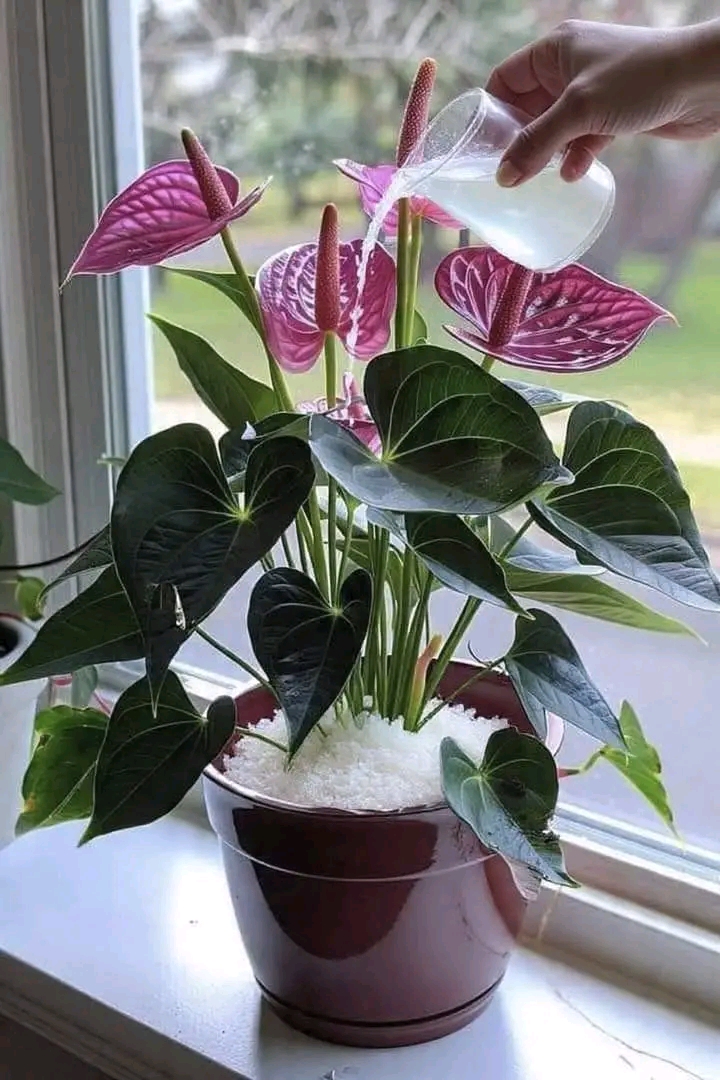
Cleaning Anthurium Leaves and Spathes
Anthurium leaves are naturally glossy and look best when clean. Dust can dull the foliage and reduce light absorption. A soft damp cloth is usually the safest cleaning method. Support each leaf while wiping so the stems do not bend.
If white powder lands on the leaves or spathes, remove it gently. Powder can leave residue and make the plant look dirty. Do not rub gritty powder into the leaf surface. Use plain water and a soft cloth if needed.
Avoid oily leaf shine products. Anthuriums already have a natural gloss. Oils can attract dust and interfere with the clean appearance. A plant with naturally clean leaves looks more elegant than one coated with products.
Humidity and Airflow
Anthuriums appreciate moderate humidity. Dry air can cause brown edges, slow growth, or dull leaves. A humidifier, plant grouping, or pebble tray can help. However, humidity should be balanced with airflow. Damp stagnant air can encourage leaf spots and fungal issues.
If powder and water are used together, airflow becomes even more important. The soil surface should not stay wet and crusted. A warm bright room with gentle air movement helps the plant dry properly after watering.
Keep anthuriums away from cold drafts, heating vents, and air-conditioning blasts. Stable warmth supports better growth and blooming.
When White Powder Should Be Avoided
White powder should be avoided if the ingredient is unknown. Unknown household powders can damage roots. It should also be avoided if the plant has wet soil, sour smell, fungus gnats, mold, yellowing leaves, drooping stems, root rot, or poor drainage.
Do not use table salt, cleaning powders, laundry products, scented powders, baking soda, or random kitchen powders on anthurium soil. Do not combine white powder with lemon juice, vinegar, milk, coffee, sugar, or oil. Mixed household ingredients can create unpredictable conditions.
During winter or low-light periods, avoid extra treatments. Anthuriums grow more slowly in lower light and use water more slowly. Extra powders and liquids can sit in the pot longer and create buildup.
Common Mistakes With White Powder Treatments
One common mistake is using too much powder. A thick layer can trap moisture and hide the soil. Another mistake is watering over unknown powder. This can move harmful ingredients into the root zone. A third mistake is applying powder directly against the crown.
A fourth mistake is assuming white powder is fertilizer. Perlite, eggshell, Epsom salt, baking soda, and diatomaceous earth all do different things. They cannot be used interchangeably. A fifth mistake is using powder to fix lack of blooms when the real issue is low light.
A sixth mistake is ignoring the potting mix. If the mix is dense and wet, powder on top will not help. Fresh airy mix is the better solution.
What to Do If Problems Appear
If the soil becomes crusty after using white powder, remove the top layer gently and replace it with fresh airy mix. Avoid adding more powder. Return to plain water and watch the plant’s response.
If the plant develops yellow leaves, drooping stems, or brown edges after treatment, stop all additives. Check the soil moisture and inspect the roots if the problem continues. Damaged roots need fresh mix and careful watering, not more products.
If fungus gnats appear, reduce surface moisture and remove organic or damp residue. Sticky traps can help monitor adult gnats, but the root cause is usually wet soil and decaying material. Keep the surface clean and allow better drying between waterings.
Indoor Decor and Styling Ideas
Anthuriums are excellent for indoor styling because their glossy leaves and colorful spathes look bold and tropical. A deep red or purple anthurium near a window can create a rich luxury look. A white pot feels clean and modern. A terracotta pot adds warmth. A woven basket creates a soft natural style.
Place the plant where it receives bright indirect light and has space for leaves to spread. Anthuriums look beautiful on windowsills, side tables, wooden benches, plant stands, entry consoles, and office shelves. Keep the pot clean and the soil surface tidy for the best display.
A heavy layer of white powder can distract from the plant’s beauty. If a mineral or amendment is used, it should be applied subtly and safely. The plant should look healthy and intentional, not messy or overtreated.
Better Alternatives for Strong Growth
If the goal is stronger roots, repot into a chunky airy mix and avoid overwatering. If the goal is more blooms, improve bright indirect light and feed gently during active growth. If the goal is cleaner leaves, wipe with plain water. If the goal is pest control, identify the pest before choosing a treatment.
If the soil needs better drainage, mix perlite or bark into the potting mix during repotting. If the plant needs nutrition, use a measured fertilizer. If the plant has root rot, remove damaged roots and refresh the medium. These steps are more reliable than unknown powder.
Anthuriums reward steady care. The most effective plant-care routine is usually simple, clean, and consistent.
Final Thoughts
A white powder with clear water around an anthurium may look like a simple growth trick, but the ingredient matters. It could be perlite, eggshell powder, Epsom salt, baking soda, slow-release fertilizer, diatomaceous earth, or something else. Each one has different effects and risks. Unknown powders should never be watered into an anthurium pot.
The real foundation of healthy anthurium growth is bright indirect light, airy potting mix, drainage holes, balanced watering, moderate humidity, clean leaves, warm stable conditions, and gentle feeding during active growth. If the plant is not blooming, improve light and root health first. If the soil is wet or sour, avoid all powders and refresh the root zone. If pests are present, identify them and treat carefully.
With patient care and clean styling, anthuriums can remain stunning indoor plants for living rooms, bedrooms, home offices, apartments, bright windowsills, commercial interiors, luxury home staging, and premium plant displays. Glossy leaves, colorful spathes, tidy soil, and balanced maintenance will always create a safer and more elegant result than relying on risky white powder shortcuts.