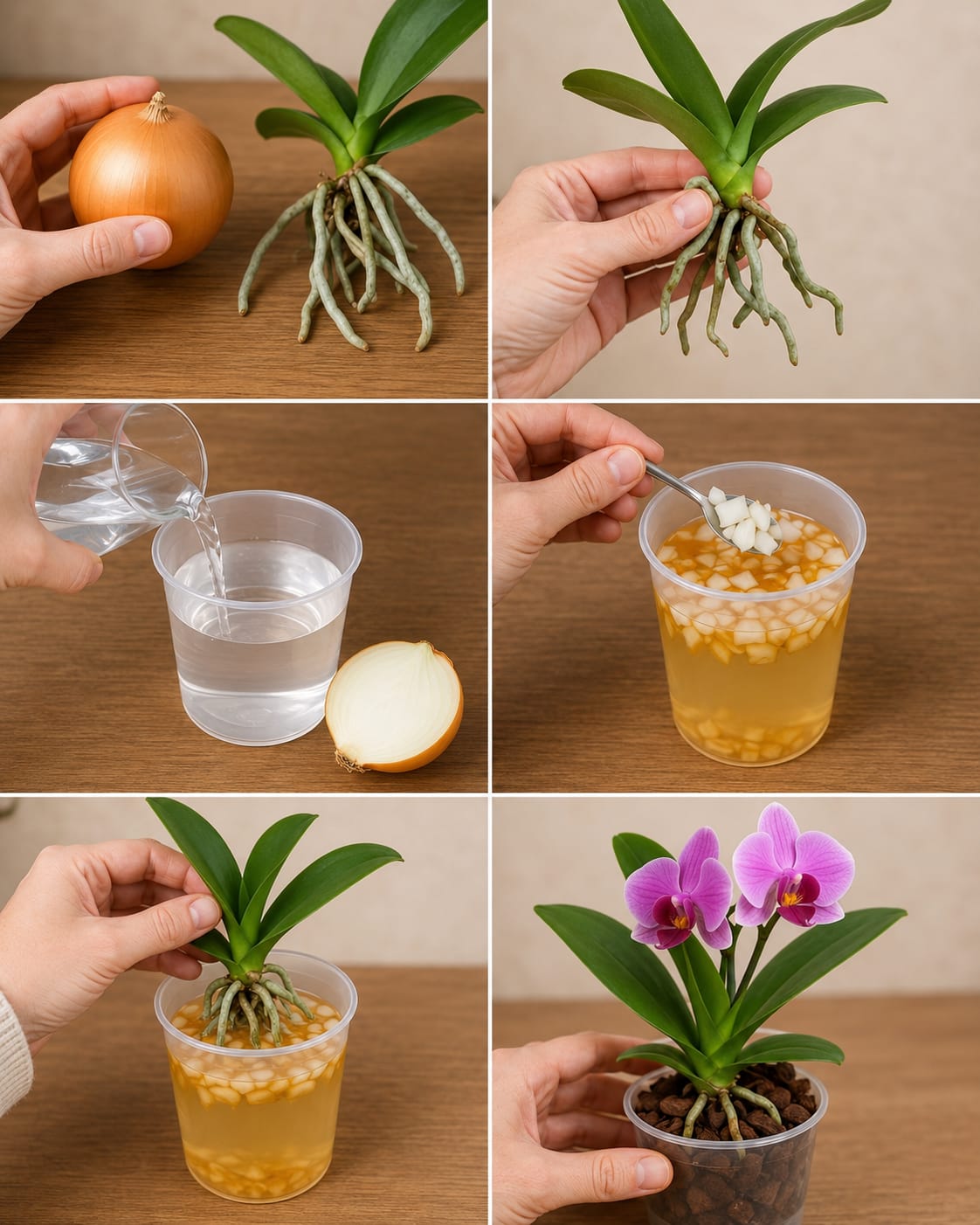
Orchids are some of the most elegant indoor plants for homeowners who want long-lasting flowers, sculptural stems, glossy leaves, silver-green roots, and a refined decorative display that fits beautifully in living rooms, bedrooms, bright kitchens, home offices, apartments, plant shelves, windowsills, commercial interiors, luxury home staging, and premium indoor plant styling. Their white, pink, purple, yellow, peach, and speckled blooms can make a simple container look graceful and expensive, especially when the plant has firm leaves, healthy roots, and clean potting media.
Many plant lovers become curious when they see orchid roots placed near onion water or soaked in a pale golden liquid made from chopped onion. This method is often described as a natural root-support trick for weak orchids, stronger roots, cleaner growth, and future blooming. Onion contains strong natural compounds and sulfur-like aroma, which is why some gardeners experiment with onion water in plant care. However, orchids are sensitive plants, and their roots are very different from the roots of many ordinary houseplants. A homemade onion soak can become risky if it is too strong, too old, fermented, or used too often.
The safest way to understand onion water for orchids is to treat it as an optional experiment, not a guaranteed orchid rescue method. An orchid does not bloom beautifully because of one onion soak. It grows well when the roots are firm, the potting mix is airy, the crown stays dry, the light is bright but indirect, watering is balanced, airflow is good, and feeding is gentle during active growth. If the orchid is weak, yellowing, losing roots, or not blooming, the first step is diagnosis. Onion water should never replace proper root inspection, fresh orchid bark, clean watering, and stable care.
Understanding Orchid Roots Before Using Onion Water
Most common indoor orchids, especially Phalaenopsis orchids, grow with thick aerial roots covered in a spongy layer called velamen. This layer helps the roots absorb water quickly and breathe between waterings. Healthy roots are usually firm. They may look silver or pale gray when dry and green when wet. This color change is normal and shows that the root covering is doing its job.
Damaged roots look different. Rotten roots may be brown, black, mushy, hollow, or foul-smelling. Dry dead roots may be papery and empty. If an orchid has very few healthy roots, it cannot absorb water properly, even if the leaves are watered often. Root recovery begins with removing rotten roots, protecting remaining firm roots, and giving the plant a clean airy environment.
Onion water should never be used on roots without first checking their condition. If the roots are already mushy, a soak in organic liquid may make the problem worse. If roots are firm but slightly dry, the plant may only need correct watering and humidity. A homemade soak is not always necessary.
What Onion Water Might Do
Onion water is usually made by soaking chopped onion pieces in clean water and then using the strained liquid. Some gardeners believe it may provide mild natural support because onion contains strong aromatic compounds. It may also be used as a homemade pest-support rinse in some plant routines. However, onion water is not a complete fertilizer, not a proven bloom booster, and not a substitute for fresh orchid mix.
The biggest issue is that onion is a fresh organic kitchen material. Once chopped and soaked, it begins to break down. If the mixture sits too long, it can ferment, smell sour, attract insects, or grow microbes. A fresh, weak, well-strained onion water is very different from an old strong liquid that has been left in a warm room.
For orchids, clean water is usually safer than organic kitchen liquids. If onion water is used at all, it should be mild, fresh, diluted, and temporary. It should never be poured repeatedly into orchid bark or left sitting around roots for long periods.
Why Onion Water Can Be Risky for Orchids
Orchid roots need oxygen. They are not designed to sit for a long time in thick, cloudy, organic liquid. If onion water contains small pieces of onion, those pieces can cling to roots or settle in the potting mix. As they decay, they may create odor and encourage rot. This is especially risky when the orchid is in a plastic pot with limited airflow or in old bark that already holds too much moisture.
Another risk is crown rot. If onion water touches the crown or collects between leaves, it can create a damp area that does not dry quickly. The crown of a Phalaenopsis orchid should stay dry. Water trapped there can cause serious damage, and organic liquid can make that risk worse.
A third risk is residue. Onion water may leave a smell on roots, pots, tables, or decorative containers. Indoor orchid displays should look clean and fresh. A treatment that makes the plant smell like rotting kitchen scraps is not worth using.
How to Prepare Onion Water More Safely
If a homeowner wants to test onion water, the safest version should be weak and fresh. Use a small amount of clean onion and plenty of clean room-temperature water. The onion should be soaked briefly, not left for days. The liquid should not smell rotten, sour, alcoholic, or fermented. If it smells unpleasant, it should be discarded immediately.
The mixture must be strained very well. A fine cloth, coffee filter, or very fine sieve can remove onion particles. The final liquid should be thin and clear enough to rinse roots without leaving debris. Any visible onion pieces should be removed. Chunks should never be placed into orchid bark.
Do not add sugar, salt, lemon juice, vinegar, baking soda, milk, coffee, oil, soap, cinnamon, or fertilizer to the onion water. Combining household ingredients can create unpredictable effects and may damage roots. Simple and weak is safer than strong and complicated.
How to Use It Without Hurting the Orchid
Onion water should only be considered for a plant that has been inspected and cleaned. Remove the orchid from old potting media if the roots are being treated. Trim only dead or rotten roots with sterile scissors. Keep firm roots. After cleaning, a very brief rinse or short soak may be tested on the roots only, not the leaves or crown.
The soak should not be long. Orchids do not need to sit in onion water for hours. A short contact is safer. Afterward, the roots should be allowed to drain and dry slightly before repotting into fresh airy orchid mix. The crown must remain dry throughout the process.
Do not leave the orchid permanently sitting in onion water. Water culture is already difficult for many orchids, and onion water makes it more risky. If the goal is root recovery, fresh bark, humidity, airflow, and careful watering are more important.
Why Fresh Orchid Bark Matters More
Old orchid bark breaks down over time. As it decomposes, it becomes smaller, denser, and less airy. Roots that once received airflow may become trapped in wet compact media. This often causes root rot. If an orchid is struggling, old bark is one of the first things to check.
Repotting into fresh orchid bark can do more for root recovery than onion water. Fresh bark allows air to reach the roots and drains quickly after watering. A good orchid mix may include bark, perlite, charcoal, coconut chips, or a small amount of sphagnum moss depending on the environment.
If the old potting medium smells sour, stays wet too long, or looks broken down, replace it. Do not try to fix bad bark by pouring onion water into it. The root environment must be corrected first.
Best Light for Orchid Recovery and Blooming
Orchids need bright indirect light to grow well and rebloom. A bright window with filtered light is usually ideal. Too little light can cause weak growth and poor flowering. Too much direct sun can scorch leaves and stress the plant. The best light is bright but gentle.
If an orchid has healthy roots but does not bloom again, light is often the issue. Move the plant gradually to a brighter filtered location. Leaves should look medium green. Very dark green leaves can suggest low light, while yellow or burned patches can suggest too much sun.
Onion water cannot replace light. Future blooms depend on plant energy, and that energy comes from healthy leaves receiving proper brightness. A weak orchid with poor light will not become a strong bloomer from a kitchen soak.
Watering Orchids Correctly
Correct watering is one of the most important parts of orchid care. Many Phalaenopsis orchids are watered when the bark is nearly dry and the roots look silver. Water thoroughly with room-temperature water, then let the pot drain completely. The roots should not sit in standing water.
Clear pots are helpful because they allow root inspection. Green roots usually mean moisture is present. Silver roots often mean the plant may be ready for water. However, moss holds water longer than bark, so the potting medium must also be considered.
Do not water orchids with onion water as a routine. Plain water should remain the main watering method. A homemade onion treatment, if used at all, should be rare and limited to a specific purpose. Repeated organic liquids can sour the potting medium.
Protecting the Crown
The crown is the central area where orchid leaves meet. This area must stay dry. Water sitting in the crown can cause crown rot, which is one of the fastest ways to lose a Phalaenopsis orchid. Onion water should never be poured over the crown or sprayed into the leaf center.
After watering or cleaning, check the crown. If any liquid is trapped there, blot it gently with a tissue or paper towel. This simple habit protects the plant more than many homemade remedies.
A healthy orchid display should have firm leaves, clean roots, and a dry crown. The crown should not smell sour, feel soft, or show dark wet tissue. If it does, act quickly and stop all homemade treatments.
Feeding Orchids Safely
Orchids benefit from gentle feeding during active growth. A diluted orchid fertilizer or balanced fertilizer used at weak strength can support leaves, roots, and future blooms. Strong fertilizer can burn roots, especially roots that are already stressed.
Do not feed an orchid with damaged roots immediately after trimming and repotting. Let the plant stabilize first. Once new root tips or new leaf growth appear, gentle feeding can resume. Feeding should match growth, not panic.
Onion water is not fertilizer. It does not provide reliable nutrient levels. If the plant needs food, use a measured orchid fertilizer. If the plant needs root recovery, focus on clean roots and fresh medium.
Can Onion Water Help With Pests?
Some gardeners believe onion water may discourage pests because of its strong smell. However, it is not a dependable pest treatment for orchids. Orchids can attract mealybugs, scale, aphids, thrips, spider mites, and fungus gnats. Each pest requires proper identification and targeted care.
If white cottony patches appear, mealybugs may be present. If brown bumps cling to leaves or stems, scale may be present. If tiny insects damage flowers, thrips may be involved. Onion water alone may not solve these problems and can delay more effective treatment.
For pests, isolate the orchid, inspect carefully, and use a suitable treatment. A damp cloth, cotton swab, insecticidal soap, or horticultural oil may be used depending on the pest, but each treatment should be tested carefully. Orchids are sensitive, so gentle and targeted care is best.
Using Onion Water on Leaves
Onion water should not be used as a regular leaf spray for orchids. It can leave odor and residue. It may also mark flowers or leaves if used strongly. Orchid leaves are best cleaned with plain water and a soft cloth.
If leaves are dusty, wipe them gently while supporting the leaf. Do not let water run into the crown. If mineral spots are present, use plain water first. Strong homemade sprays are usually unnecessary.
Never spray onion water on open flowers. Orchid flowers are delicate and can spot easily. A beautiful bloom display should be kept clean and dry.
When Onion Water Should Be Avoided
Onion water should be avoided if the orchid has severe root rot, crown rot, yellowing leaves, soft tissue, pests that need targeted treatment, old sour bark, or newly opened flowers. It should also be avoided if the mixture is old, cloudy, fermented, or strong-smelling.
Do not use onion water on newly purchased orchids without a reason. Many new orchids only need light, proper watering, and time to adjust. Extra treatments can create stress.
Do not use onion water repeatedly. Even if one weak application causes no visible damage, repeated organic soaking can disturb the potting medium and root zone. Orchids prefer clean air and water.
Common Mistakes With Onion Water and Orchids
One common mistake is soaking roots too long. Orchid roots need air and should not sit in organic liquid for extended periods. Another mistake is leaving onion pieces in the pot. Raw onion scraps can rot and attract pests. A third mistake is pouring onion water into old bark instead of replacing the bad medium.
A fourth mistake is wetting the crown. This can cause rot. A fifth mistake is using onion water as fertilizer. It is not balanced plant food. A sixth mistake is expecting instant blooms. Orchids bloom from healthy roots, light, and time.
A seventh mistake is using strong-smelling or fermented mixtures. If it smells unpleasant to you, it is not suitable for orchid roots. Fresh and clean care is safer.
Continue to Page 2
Continue to page 2 for more details about this article and the key points many readers miss on the first page.