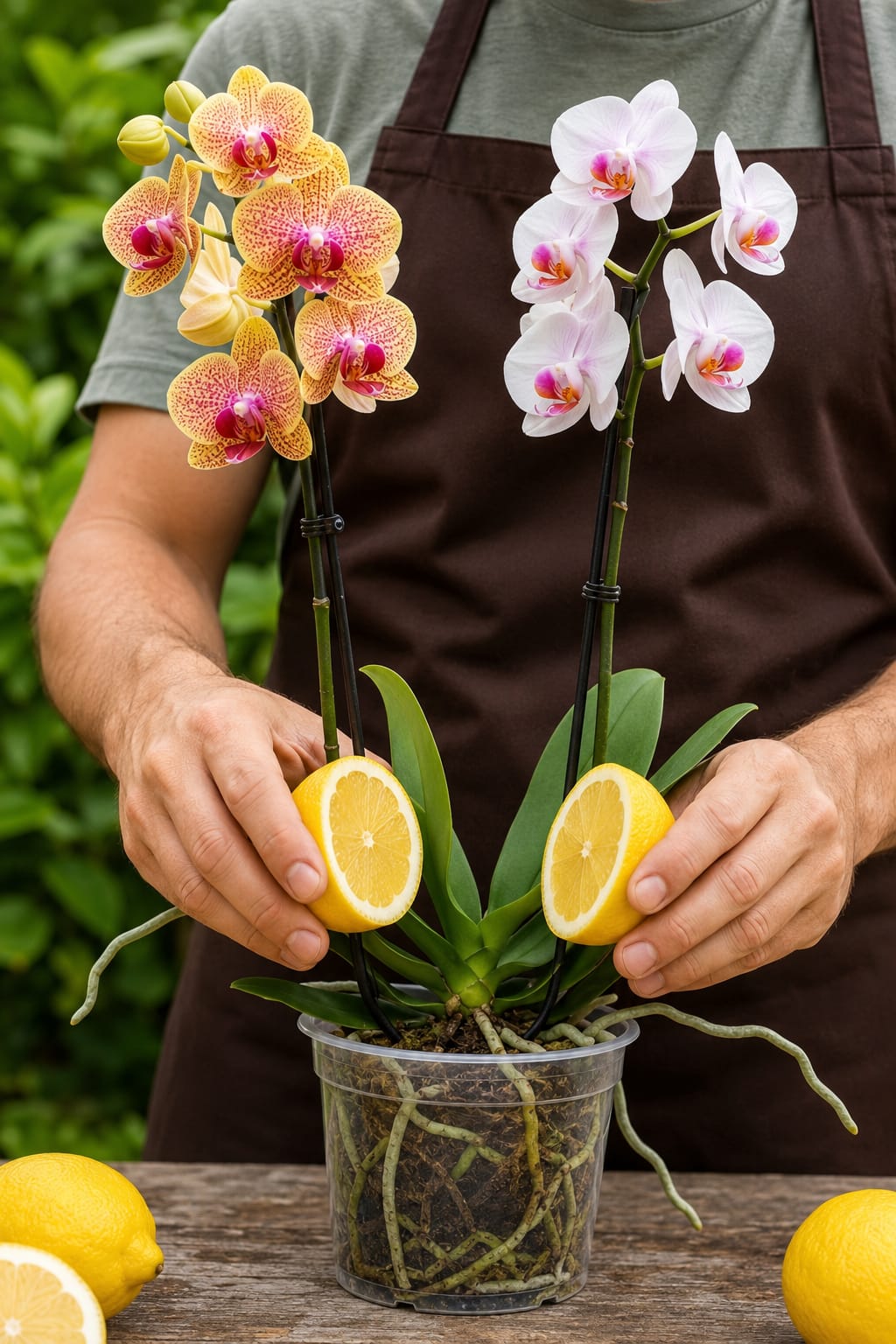
Orchids are some of the most elegant indoor plants for homeowners who want long-lasting flowers, sculptural stems, clean green leaves, exposed silver roots, and a refined decorative display that fits beautifully in living rooms, bedrooms, bright kitchens, home offices, apartments, windowsills, plant shelves, commercial interiors, luxury home staging, and premium indoor plant styling. Their soft white, pink, yellow, purple, peach, and speckled blooms can make a simple container look expensive and graceful, especially when the plant is healthy, upright, and placed near bright filtered light.
Many plant lovers become curious when they see lemon being held around orchid leaves or roots. The method is often described online as a natural orchid trick for brighter leaves, cleaner roots, pest support, or stronger blooming. Lemon looks fresh and harmless because it is a familiar kitchen ingredient, but orchids are sensitive plants. Their roots are not like regular houseplant roots. Most common indoor orchids, especially Phalaenopsis orchids, grow with thick aerial roots covered in velamen, a spongy layer that absorbs water and air. That root system can be damaged by strong acidic liquids, sticky residue, or repeated homemade treatments.
The safest way to understand lemon for orchids is to treat it as a risky household experiment, not a reliable orchid care routine. Lemon juice should not be rubbed directly on orchid roots, poured into orchid bark, or squeezed over the crown. Orchids do not bloom because of lemon. They bloom best when they receive bright indirect light, airy orchid bark, careful watering, good drainage, gentle feeding, clean leaves, stable temperatures, and proper rest between bloom cycles. If the orchid is weak, yellowing, losing flowers, or growing poor roots, lemon is not the first solution. The first step is checking light, roots, watering, potting media, airflow, and crown health.
Understanding Orchid Roots Before Using Lemon
Orchid roots are one of the most important parts of the plant. Healthy roots are usually firm and may appear silver when dry and green when wet. This color change is normal and comes from the velamen layer that helps the plant absorb moisture. If roots are brown, mushy, hollow, black, or foul-smelling, they may be damaged or rotten. If roots are dry, papery, and shriveled, they may have been underwatered or exposed to low humidity for too long.
Lemon juice is acidic and can irritate this delicate root covering. When direct lemon touches roots, it may dry or damage the velamen, especially if the juice is strong or left on the plant. Orchids need clean water and oxygen around their roots, not sticky citrus residue. Even if a plant does not show damage immediately, repeated lemon use can gradually stress the root zone.
Exposed orchid roots should be handled gently. They should not be scrubbed, rubbed with citrus, soaked in strong homemade liquids, or buried in heavy soil. The best root support is an airy orchid mix, careful watering, and good airflow. A healthy root system creates stronger leaves and better future blooms.
Why Lemon Is Not Orchid Fertilizer
Lemon is not a complete fertilizer. It does not provide the balanced nutrients orchids need for healthy leaves, roots, and flowers. Orchids need small amounts of nutrients during active growth, usually from a diluted orchid fertilizer or balanced houseplant fertilizer used carefully. Lemon juice cannot replace nitrogen, phosphorus, potassium, calcium, magnesium, and trace elements in a proper feeding routine.
Some people assume lemon helps because it is natural and acidic. However, natural does not always mean safe for orchids. Orchids grow best with gentle, predictable care. Strong kitchen ingredients can create sudden changes around roots and leaves. Fertilizer should be measured, diluted, and applied only when the plant is healthy and ready for watering.
If an orchid is not blooming, the issue is usually not lack of lemon. It may need better light, a healthy root system, a slight nighttime temperature drop, proper feeding during growth, or time to rest after a bloom cycle. Lemon will not force safe blooms.
Can Lemon Clean Orchid Leaves?
Some growers use diluted lemon water to wipe mineral spots from leaves. This can sometimes remove hard-water marks, but it must be done with extreme caution. Direct lemon juice can be too strong. It may leave streaks, irritate the leaf surface, or cause spotting if the plant receives bright light afterward.
If leaves are dusty, plain water and a soft cloth are safer. Support each leaf gently and wipe from base to tip. Do not let water collect in the crown, because trapped moisture in the crown can cause rot. If mineral marks remain, a very weak diluted lemon solution may be tested on a small area of one older leaf, then wiped away with plain water. It should not be used on roots, flowers, buds, or the crown.
Clean orchid leaves help the plant absorb light and look more elegant. The goal is a natural clean shine, not a coated or sticky surface. Avoid oily leaf shine products and avoid strong homemade mixtures.
Why Lemon Should Not Be Put in Orchid Bark
Orchid bark is designed to hold air around the roots. It should not smell sour, stay soaked, or collect kitchen residue. If lemon juice is poured into the pot, it can sink into the bark and stay around the roots. This may disturb the root zone and create unwanted acidity.
Orchid bark naturally breaks down over time. When it becomes old and compacted, roots receive less oxygen. Adding lemon does not fix old bark. Repotting into fresh orchid mix is better. Fresh bark gives roots air, drains quickly, and supports healthy growth.
If lemon juice was accidentally poured into orchid bark, flush the pot gently with plain room-temperature water if the pot drains well. Let all excess water drain out. Do not leave the orchid sitting in water. If the bark smells sour later, repotting may be safer.
Best Light for Orchid Blooms
Most common indoor orchids need bright indirect light. A window with filtered light is ideal. Too little light often causes orchids to grow leaves but not bloom. Too much direct sun can scorch leaves and damage flowers. The right light is bright enough to support growth but soft enough to protect the foliage.
An orchid that has not bloomed again after purchase may need more light. Move it gradually to a brighter filtered position. Do not place it suddenly in harsh afternoon sun. Leaves should look medium green. Very dark leaves can suggest low light, while yellow or burned patches can suggest too much sun.
Light is one of the real bloom factors. Lemon cannot replace light. A well-lit orchid with healthy roots has a much better chance of producing a new flower spike when the season and plant energy are right.
Watering Orchids Correctly
Orchids should be watered according to their potting mix, root color, room temperature, and light level. Many Phalaenopsis orchids are watered when the bark is nearly dry and the roots appear silvery. Water thoroughly, then let the pot drain completely. The roots should never sit in standing water.
Clear pots can help because the roots are visible. Green roots usually mean moisture is present. Silver roots often mean the plant may be ready for water. However, the potting mix should also be checked. Some bark dries quickly, while moss can hold moisture much longer.
Do not water with lemon juice, milk, coffee, sugary liquids, or other kitchen mixtures. Clean room-temperature water is safer. If tap water is very hard, filtered water or rainwater may help reduce mineral spots and root stress.
Protecting the Orchid Crown
The crown is the center where leaves meet. This area should stay dry. If water, lemon juice, or any liquid collects in the crown, it can cause crown rot. Crown rot is serious and can kill an orchid quickly. After watering or cleaning, check the crown and blot away trapped moisture with a paper towel if needed.
Do not squeeze lemon over the crown or between leaves. Do not spray homemade liquids into the center of the plant. The safest watering method is to water the bark and roots, not the crown. Good orchid care keeps the center clean and dry.
For decorative displays, a dry clean crown also looks better. Healthy orchids should have firm leaves, clean roots, and a tidy base without sticky residue.
Best Potting Mix for Orchids
Most indoor orchids grow best in a chunky orchid mix rather than regular potting soil. Orchid bark, charcoal, perlite, coconut chips, and sphagnum moss may be used depending on the plant and environment. The mix should support airflow while holding enough moisture for the roots.
Regular houseplant soil is usually too dense for orchids. It can suffocate roots and cause rot. If an orchid is planted in dense soil, it should be repotted into a proper orchid medium. Lemon will not correct a poor potting mix.
The pot should have drainage holes and airflow. Clear plastic orchid pots are useful because they allow root inspection. Decorative outer pots can be used, but standing water must be emptied after every watering.
Feeding Orchids Safely
Orchids benefit from gentle feeding during active growth. Use a diluted orchid fertilizer or balanced fertilizer at weak strength. Strong fertilizer can burn roots. Many orchid growers prefer light feeding more often rather than heavy feeding occasionally, but the routine should match the plant and environment.
Do not fertilize a sick orchid with damaged roots. Fertilizer helps healthy roots grow; it does not rescue rotten roots. If roots are damaged, focus on fresh medium, correct watering, and airflow first.
Lemon juice should not be used as fertilizer. It is acidic and unpredictable. A measured fertilizer product is safer, cleaner, and more effective for long-term orchid health.
How to Encourage Reblooming
Orchid reblooming depends on plant maturity, light, root health, feeding, and seasonal signals. After flowers fade, the orchid may need time to grow new leaves and roots before blooming again. This rest period is normal. A healthy plant may produce a new flower spike when conditions are right.
Bright indirect light is essential. A slight drop in nighttime temperature can help some Phalaenopsis orchids initiate spikes. Gentle feeding during active growth supports energy. Healthy roots allow the plant to absorb water and nutrients properly.
Lemon does not force reblooming. If the orchid is not flowering, improve light and root health first. Patience is part of orchid care.
Common Problems Lemon Cannot Fix
Lemon cannot fix root rot. If roots are mushy, black, or hollow, remove damaged roots with sterile tools and repot into fresh orchid mix. Lemon cannot fix low light. If the plant is too dark, move it to brighter indirect light. Lemon cannot fix old compacted bark. Repotting is the correct solution.
Lemon cannot fix overwatering. If the orchid is kept constantly wet, roots will decline. Lemon cannot fix underwatering either. If roots are shriveled and dry, the plant needs a better watering routine and perhaps humidity support.
Lemon cannot fix pests reliably. If pests are present, identify them and use targeted care. Mealybugs, scale, spider mites, and aphids need different treatment methods. Random citrus use can delay proper pest management.
When Lemon Should Be Avoided Completely
Lemon should be avoided if the orchid has damaged roots, active rot, yellowing leaves, soft crown tissue, leaf spots, open wounds, pests, or stress from repotting. It should also be avoided on flowers and buds because it can mark delicate petals.
Do not use lemon juice on aerial roots. Do not pour it into bark. Do not squeeze it into the crown. Do not combine it with baking soda, vinegar, milk, sugar, coffee, oil, soap, or other household ingredients. Mixed kitchen treatments can create unpredictable effects and damage the plant.
If the plant is healthy, it still does not need lemon. Simple care is safer. Orchids reward patience, not harsh shortcuts.
What to Do If Lemon Was Already Used
If lemon juice touched the leaves, wipe the leaves gently with plain water and dry them. Keep the orchid away from direct sun until you know there is no spotting. If lemon touched the flowers, blot carefully, but some marks may remain because petals are delicate.
If lemon was poured into the pot, flush with plain water if the pot drains freely. Let the water run through the bark and drain completely. Do not leave the plant sitting in runoff. Watch for sour odor, root discoloration, or leaf stress over the next few weeks.
If the bark smells sour or roots begin to decline, repot into fresh orchid mix. Trim damaged roots with clean tools and keep the crown dry. Do not fertilize immediately after major root work. Let the orchid stabilize first.
Indoor Decor and Styling Ideas
Orchids are ideal for elegant indoor styling because their flowers look refined and long-lasting. A white orchid in a clear pot feels modern and clean. A yellow or speckled orchid adds warmth. A pink orchid creates a soft romantic look. A decorative cachepot, wooden tray, stone surface, or bright windowsill can make the plant look like a luxury floral arrangement.
Keep the display tidy by removing faded blooms, wiping leaves, supporting flower spikes, and hiding the nursery pot inside a decorative container if desired. Always remove the inner pot for watering so it can drain fully. Beautiful styling should never trap water around the roots.
Lemons can look attractive beside orchids in a photograph, but they are not necessary for care. The best display comes from healthy roots, firm leaves, clean flowers, and a balanced environment.
Continue to Page 2
Continue to page 2 for more details about this article and the key points many readers miss on the first page.