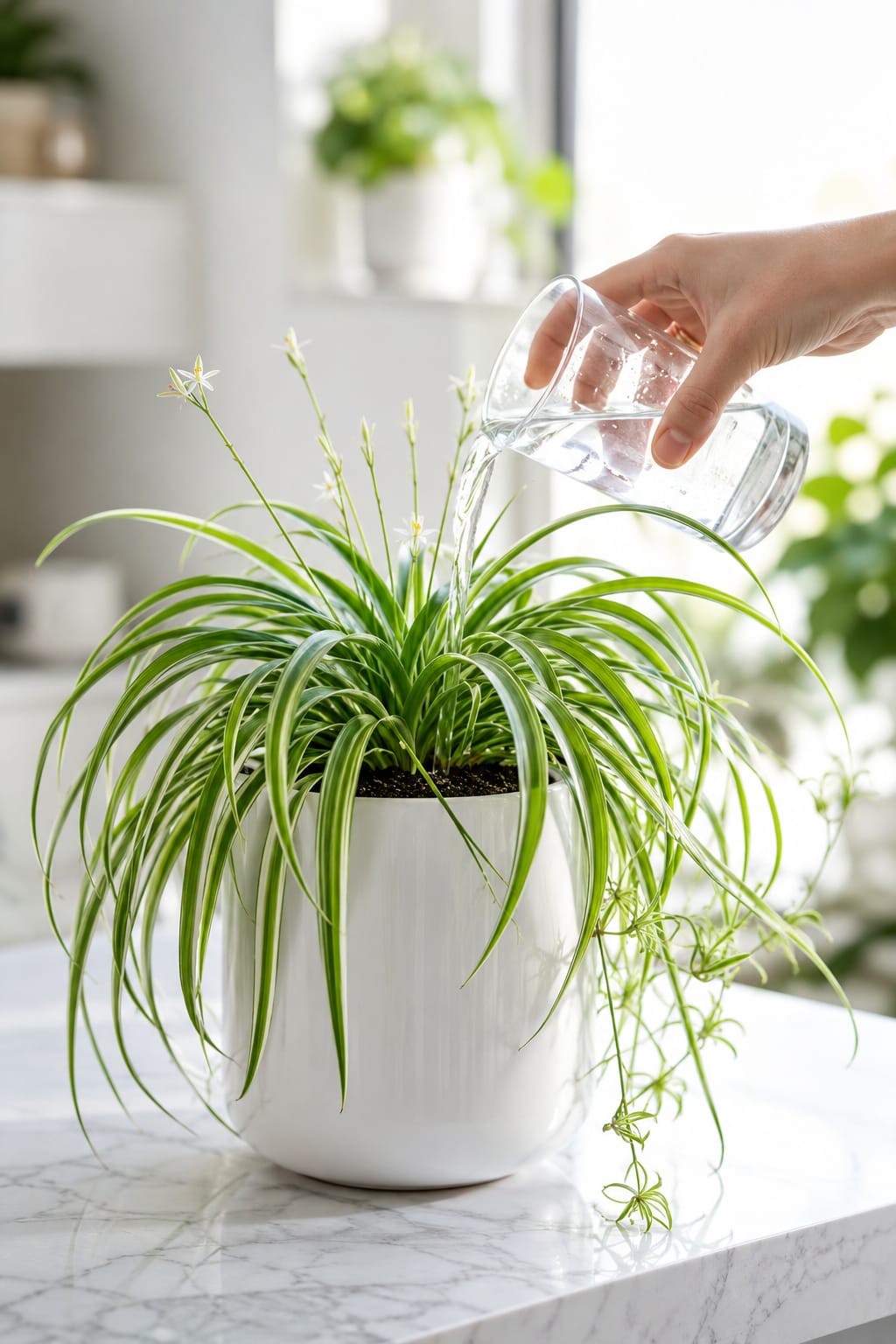
Spider plant is one of the most cheerful indoor plants for homeowners who want arching variegated leaves, easy care, quick growth, baby plantlets, and a fresh decorative look that fits beautifully in living rooms, bedrooms, bright kitchens, home offices, apartments, windowsills, plant shelves, hanging baskets, entry corners, commercial interiors, luxury home staging, and premium indoor plant styling. Its long green-and-white striped leaves create movement and softness, while its trailing baby shoots can make even a simple white pot look full, lively, and elegant.
Many plant lovers become interested when they see a spider plant being watered with clear liquid near a bright window. The method is often described as a simple way to boost fuller growth, refresh tired leaves, encourage baby spiderettes, and keep the plant looking vibrant. In most cases, the liquid should simply be clean water. Spider plants do not need complicated homemade tonics to become full and healthy. They respond best to bright indirect light, steady watering, a draining pot, airy soil, gentle feeding, clean leaves, and occasional grooming.
The safest way to grow a fuller spider plant is to focus on consistent care rather than quick tricks. Spider plants are forgiving, but they can still develop brown tips, pale leaves, weak growth, or root stress when watered incorrectly or kept in poor light. A clear watering routine, clean soil, and balanced indoor conditions usually create better results than milk water, baking soda water, lemon juice, coffee mixtures, or other risky household shortcuts.
Understanding Spider Plant Growth
Spider plants grow from a central crown and produce long narrow leaves that arch outward. Mature plants can also send out long stems with small white flowers and baby plantlets. These baby plants are one of the reasons spider plants are so loved. A healthy spider plant can become full, cascading, and dramatic when it has enough light, moisture, and root space.
The root system is thick and fleshy, which allows spider plants to store some moisture. This makes them more forgiving than many delicate houseplants, but it does not mean they like soggy soil. If the roots sit in water for too long, they can rot. If the plant dries too much for too long, the leaves can turn dull, curl, or develop crispy tips.
Full foliage comes from steady growth over time. A spider plant usually becomes thicker when it receives bright filtered light, proper watering, and occasional trimming of damaged leaves. It does not need dramatic treatments. The best results come from simple care repeated consistently.
Best Light for Fuller Spider Plant Foliage
Bright indirect light is one of the biggest keys to a vibrant spider plant. A spider plant can survive in lower light, but it may become thinner, slower, and less colorful. Variegated varieties need enough brightness to keep their white or cream stripes looking clean and defined. In too much shade, the leaves may look dull or stretch toward the window.
A bright window with filtered light is ideal. Morning light can be helpful, but harsh afternoon sun may scorch the leaves, especially if the plant is suddenly moved from shade into strong light. A sheer curtain can soften sunlight while still giving the plant enough brightness for strong growth.
If the spider plant is not producing babies or looks thin, improve light before adding fertilizer or homemade mixtures. Better light often does more for growth than any tonic. Move the plant gradually so it can adjust without stress.
Watering Spider Plants Correctly
Spider plants like evenly moist soil, but they do not like soggy roots. Water when the top part of the soil begins to dry. The plant should not remain constantly wet, but it should also not stay bone dry for long periods. A balanced rhythm keeps the leaves fresh and flexible.
When watering, pour slowly onto the soil until water drains from the bottom of the pot. Let the excess drain completely, then empty the saucer. The plant should never sit in standing water. A pot with drainage holes is essential for healthy roots.
Clear water is usually best. If tap water causes brown tips in your area, let water sit overnight or use filtered water when possible. Spider plants can be sensitive to mineral buildup, fluoride, and salts in some water sources. Brown tips do not always mean the plant needs fertilizer. Sometimes it simply needs cleaner water and better humidity.
Why Overwatering Causes Weak Growth
Overwatering is one of the easiest ways to weaken a spider plant. When soil stays wet for too long, oxygen cannot move properly around the roots. The plant may develop yellow leaves, limp growth, a sour smell, or mushy roots. A spider plant can look thirsty even when the soil is wet because damaged roots cannot absorb water properly.
If the plant droops and the soil is wet, do not add more water. Check the root zone. If roots are brown, soft, or rotten, the plant may need repotting into fresh airy soil. Remove damaged roots gently and avoid fertilizer until the plant begins to recover.
A healthy watering routine should match the environment. A spider plant in bright light may need water more often than one in a dim corner. A plant in terracotta may dry faster than one in plastic or glazed ceramic. The soil should guide the schedule.
Best Soil for Spider Plants
Spider plants grow best in a light, well-draining indoor potting mix. A regular houseplant mix can work well when it is not too dense. Adding perlite, fine bark, or coco coir can improve airflow and drainage. The soil should hold light moisture but not become muddy.
If the potting mix is old, compacted, or sour-smelling, repotting can help the plant grow fuller. Old soil can hold salts, become dense, and dry unevenly. Fresh soil gives roots a cleaner environment and supports new growth.
The pot should have drainage holes. A decorative pot without drainage may look stylish, but it can trap water and cause root problems. For a polished look, use a nursery pot with drainage inside a decorative outer pot, then remove it after watering so excess water can drain fully.
How to Encourage More Baby Spiderettes
Spider plants often produce baby plantlets when they are mature, healthy, and receiving enough light. A plant kept in bright indirect light is more likely to send out long stems with small white flowers and babies. Low light can reduce baby production.
A slightly snug pot can also encourage spiderettes, but the plant should not be severely root-bound. If roots are circling tightly and the plant dries too quickly, repotting into a slightly larger pot may help. Choose a pot only one size bigger so the soil does not stay wet for too long.
Gentle feeding during spring and summer can support baby production. Use a diluted balanced houseplant fertilizer. Avoid heavy feeding because too much fertilizer can cause brown tips and weak growth. Fuller growth comes from balance, not excess.
Feeding Spider Plants Safely
Spider plants are not heavy feeders. During active growth, a diluted balanced fertilizer can be used occasionally. A weak dose is safer than a strong one. Overfeeding can create salt buildup in the soil, which may lead to brown tips and stressed roots.
Do not fertilize a spider plant that is already struggling from wet soil, root rot, or low light. Fertilizer supports healthy growth, but it does not rescue damaged roots. Correct the growing conditions first.
If the plant is growing well, feeding once in a while during spring and summer is enough. In winter or low-light conditions, reduce feeding because the plant is growing more slowly.
Preventing Brown Tips
Brown tips are very common on spider plants. They can happen because of dry air, mineral-heavy tap water, inconsistent watering, fertilizer buildup, low humidity, or stress from too much sun. Brown tips do not always mean the plant is dying. They are often a sign that the care routine needs small adjustments.
Use clean water when possible. Avoid overfertilizing. Keep humidity moderate. Do not let the plant sit in strong hot sun. Trim brown tips with clean scissors if they bother you, following the natural shape of the leaf so the plant still looks tidy.
If many tips turn brown at once, check the roots and soil. Salt buildup can be reduced by watering thoroughly and letting excess drain out, but only if the pot has drainage holes. If the soil is old and crusty, repotting may be better.
Cleaning Spider Plant Leaves
Spider plant leaves can collect dust, especially in bright rooms near windows. Dust makes the foliage look dull and can reduce light absorption. Wipe leaves gently with a damp cloth or rinse the plant lightly in a sink or shower if the pot drains well. Let the plant dry in bright indirect light afterward.
Because the leaves are narrow and numerous, cleaning can take time. A gentle rinse is often easier than wiping every leaf. Avoid harsh sprays, oily leaf shine, or strong homemade liquids. Spider plants look best with a natural clean finish.
Remove old yellow leaves from the base and trim damaged tips as needed. Grooming keeps the plant fresh and helps the full shape stand out in a decorative display.
Humidity and Indoor Conditions
Spider plants tolerate average indoor humidity, but they look better when the air is not extremely dry. Dry air can contribute to crispy tips. A humidifier, pebble tray, or grouping plants together can help. However, humidity should come with airflow so the plant does not stay wet for too long.
Keep spider plants away from heating vents, cold drafts, and air-conditioning blasts. Sudden temperature stress can cause leaf damage. A stable warm room with bright filtered light is ideal.
Spider plants are excellent for kitchens and bathrooms with bright indirect light because those rooms often have a little more humidity. They also look beautiful in hanging baskets where the leaves and baby plantlets can cascade naturally.
Repotting for Fuller Growth
A spider plant may need repotting when roots fill the pot, the soil dries extremely quickly, growth slows, or the plant becomes unstable. Repot into a container only slightly larger than the current one. A pot that is too large can hold excess moisture and slow recovery.
When repotting, loosen the roots gently and remove old compacted soil. Place the plant in fresh well-draining mix. Water lightly after repotting and keep the plant in bright indirect light while it adjusts. Avoid strong fertilizer for a few weeks after repotting.
Repotting can make a tired spider plant look refreshed, but it should be done carefully. The goal is to give roots space and air, not bury the crown or trap the plant in heavy wet soil.
Continue to Page 2
Continue to page 2 for more details about this article and the key points many readers miss on the first page.