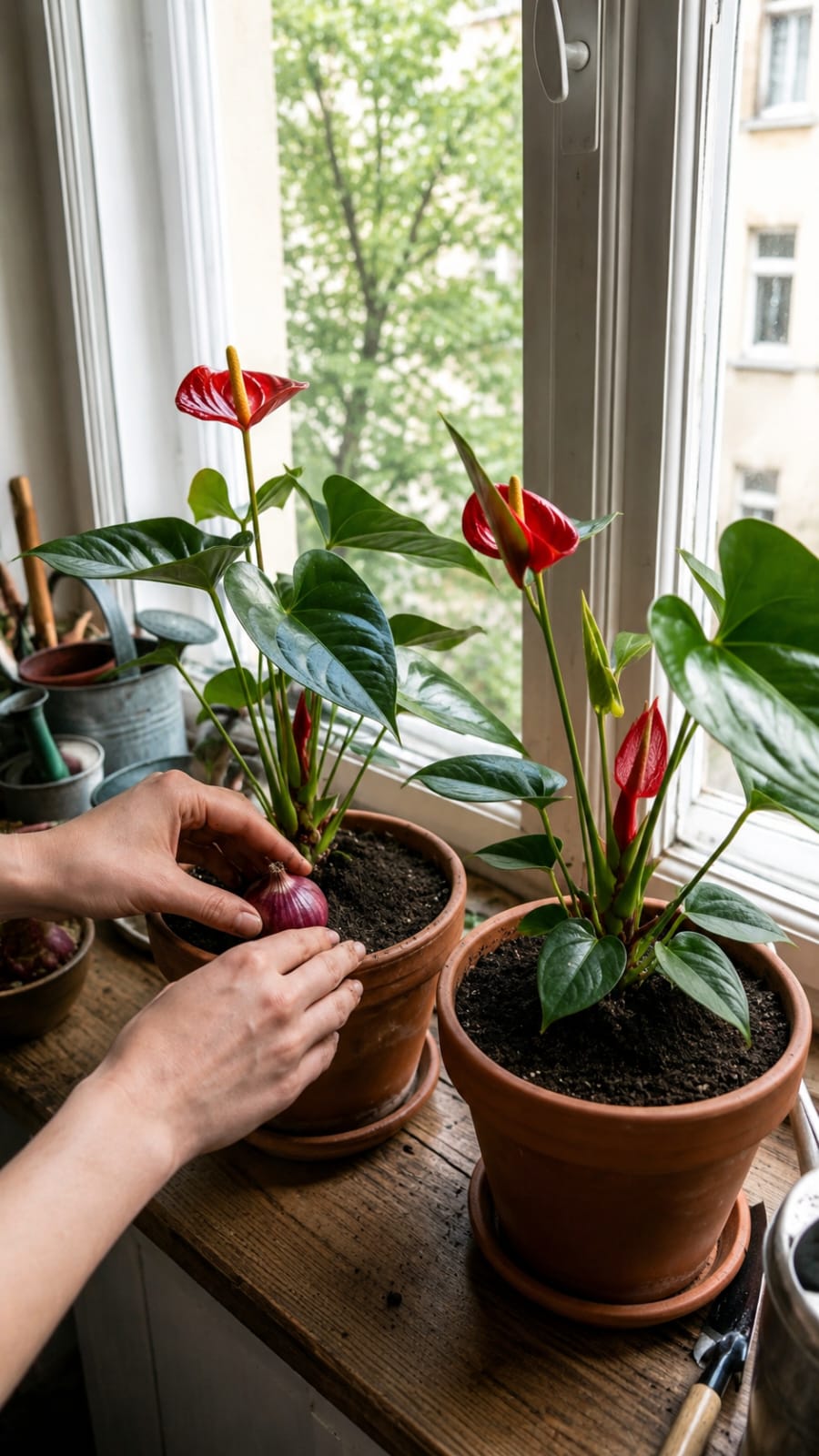
Anthurium is one of the most eye-catching indoor plants for homeowners who want glossy heart-shaped leaves, colorful spathes, upright tropical stems, and a polished decorative display that fits beautifully in living rooms, bedrooms, bright kitchens, home offices, apartments, plant shelves, entry corners, commercial interiors, luxury home staging, and premium indoor plant styling. Its red, pink, white, coral, purple, or green spathes can look almost artificial because of their shiny surface and sculptural shape. A healthy anthurium in a simple terracotta pot can make a windowsill or plant table feel like a small tropical garden.
Many plant lovers become curious when they see a red onion placed directly around the base of an anthurium. This method is often described as a natural trick for cleaner soil, stronger roots, pest support, and better blooming. Red onion contains sulfur compounds and strong natural aroma, which is why some gardeners experiment with onion pieces, onion water, or onion peel mixtures around plants. However, anthuriums are sensitive tropical houseplants with roots that need oxygen, drainage, and clean airflow. A whole onion or fresh onion pieces placed in potting soil can easily rot, smell, attract fungus gnats, and disturb the root zone if used carelessly.
The safest way to understand this method is to treat red onion as a risky homemade experiment, not a reliable anthurium care routine. Anthuriums do not produce bigger leaves and brighter spathes because of one onion placed on the soil. They grow well when their roots receive air, the potting mix drains quickly, the plant receives bright indirect light, humidity stays moderate, watering is balanced, and feeding is gentle during active growth. If the plant is weak, yellowing, not blooming, or losing leaves, the first solution is not onion. The first solution is checking light, roots, watering, drainage, pests, and soil condition.
Understanding Anthurium Roots Before Adding Onion
Anthuriums are tropical plants that naturally prefer a loose, airy root environment. Their roots need moisture, but they also need oxygen. This is why many anthuriums grow better in a chunky mix with bark, perlite, coco chips, charcoal, and light organic matter instead of heavy compact soil. When the soil becomes dense, wet, or sour, anthurium roots can decline quickly.
A healthy anthurium has firm stems, glossy leaves, and clean spathes that last for many weeks. New leaves should emerge fresh and bright, then harden into a shiny surface. If the plant begins to droop, yellow, develop brown edges, or stop growing, the root zone should be checked before any homemade treatment is added.
Red onion placed on the soil can create extra organic material around the roots. If it begins to break down, it can hold moisture and encourage microbial activity at the surface. In a garden bed, organic matter has more space to decompose. In a small indoor pot, the same material can become sour and unpleasant much faster.
What Red Onion Might Be Used For
Some gardeners use red onion because of its strong smell and natural sulfur compounds. The idea is that the scent may discourage some small pests or that onion water may act as a mild homemade spray. This does not mean raw onion is a proven fertilizer or bloom booster. It does not provide a balanced nutrient profile for anthuriums.
Red onion is not the same as compost. Fresh onion is full of moisture and organic material. When placed in soil, it begins to decay. That decay can create odor, attract insects, and change the soil surface. For indoor plants, this is a serious concern because the pot is close to furniture, windows, curtains, and living spaces.
If the goal is pest support, it is better to identify the pest first. Mealybugs, scale, spider mites, fungus gnats, aphids, and thrips all need different care. Onion placed on the soil may not solve the issue and may even attract more unwanted insects if it rots.
Why Placing a Whole Onion in the Pot Can Be Risky
A whole red onion placed partly in the soil can hold moisture around the base of the plant. As it softens, it may create a damp pocket near the crown or roots. Anthuriums do not like stagnant wet conditions. The base of the plant should remain clean and airy.
Another risk is odor. Fresh onion may smell strong at first, and rotting onion can smell much worse. In an indoor plant display, odor quickly becomes a problem. A plant-care method should not make the home smell unpleasant.
A third risk is fungus gnats. Fungus gnats are attracted to damp organic material. A decomposing onion in a pot can become a perfect invitation for them. Once gnats appear, they can spread to nearby houseplants and become difficult to control.
Why Onion Is Not Fertilizer
Anthuriums need balanced nutrition during active growth. They may benefit from a diluted houseplant fertilizer or orchid-style fertilizer used at weak strength. Red onion does not provide a controlled balance of nitrogen, phosphorus, potassium, calcium, magnesium, and trace elements. It is not a reliable plant food.
Even if onion contains small natural compounds, the plant cannot use them safely or predictably while the onion is rotting on top of the soil. Roots absorb nutrients in dissolved mineral forms, not from raw kitchen scraps placed directly beside them. Decomposition must happen first, and in a small pot that process can create problems.
If the anthurium needs feeding, use a measured fertilizer at low strength during active growth. If the plant is stressed, do not feed immediately. Fix root health, light, and watering first.
A Safer Way to Use Onion Around Plants
If a homeowner wants to experiment with onion, the safer version is not placing a whole onion in the pot. A mild onion water spray can be prepared, strained very well, diluted, and tested on one leaf first. Even then, it should be used cautiously and only when there is a clear reason, such as mild pest inspection support.
Another safer option is composting onion scraps outside before using any finished compost. Fully broken-down compost is very different from raw onion pieces. Finished compost should smell earthy, not rotten. It can be used lightly in potting mixes, but anthuriums still need a chunky airy structure.
For indoor anthuriums, clean care is usually better than raw kitchen treatments. A clean potting mix, proper light, and careful watering will support the plant more reliably than onion pieces.
Best Light for Anthurium Growth and Blooms
Anthuriums bloom best in bright indirect light. A plant kept in low light may stay alive, but it may produce fewer spathes and smaller leaves. A spot near a bright window with filtered light is usually ideal. Direct harsh sun can burn the leaves and fade the spathes, especially if the plant is suddenly moved from shade into sun.
If the plant has healthy leaves but no blooms, light is often the first thing to improve. Move it gradually to a brighter position. A sheer curtain can protect the plant while still giving it enough brightness. The goal is strong filtered light, not direct midday heat.
Light also affects watering. A plant in brighter light uses water faster than a plant in a dark room. This means the watering routine should change with location, season, and temperature. Onion or other homemade treatments should never be used to compensate for poor light.
Watering Anthuriums Correctly
Anthuriums like moisture, but they do not like soggy roots. Water when the top part of the potting mix begins to dry. Water thoroughly and let excess drain out. Do not let the pot sit in standing water. A decorative outer pot should be emptied after watering.
If the soil stays wet for many days, the mix may be too dense or the pot may not be draining properly. Wet soil plus raw onion is a bad combination because both can encourage sour smells and fungal activity. The root zone should remain fresh, airy, and lightly moist rather than swampy.
Do not water on a strict calendar without checking the mix. Anthuriums respond better to observation. The pot weight, soil feel, leaf firmness, room temperature, and light level all help decide when to water.
Best Potting Mix for Anthuriums
A good anthurium mix is chunky and breathable. Many growers use a blend that includes orchid bark, perlite, coco chips, charcoal, and a small amount of potting mix or compost. The goal is to hold some moisture while allowing air to move around the roots.
A dense potting mix can suffocate the roots. If the plant was purchased in a heavy nursery mix and begins to decline, repotting into a better aroid-style mix may help. Repot gently because anthurium roots can be sensitive.
The pot should have drainage holes. Terracotta pots are attractive and breathable, but they dry faster than plastic or glazed pots. A decorative pot can work well if the inner root environment is correct. Beauty should never come at the expense of drainage.
Keeping the Crown Clean
The crown is the base area where stems emerge from the soil. This area should stay clean and open. Placing onion too close to the crown can trap moisture and create decay near the plant’s most sensitive base. Anthurium stems should not sit against rotting organic material.
If an onion has already been placed in the pot, it should be removed before it softens. Check the soil surface for odor, mold, or damp residue. If the soil around the onion is wet and sour, remove that top layer and replace it with fresh airy mix.
A clean crown helps prevent rot and keeps the plant looking elegant. Decorative plant care should make the pot look tidy, not like a compost bin.
Feeding Anthuriums Safely
Anthuriums benefit from gentle feeding during active growth. A balanced houseplant fertilizer or orchid-style fertilizer diluted to a weak strength can support leaves and spathes. Strong fertilizer is not necessary and can burn roots.
Feed only when the plant is healthy and growing. A stressed plant with yellow leaves, wet soil, or root rot should not be fertilized immediately. Fix the root problem first. Fertilizer supports healthy roots; it does not rescue damaged ones.
Red onion should not replace fertilizer. It does not provide known nutrient levels, and it can rot. If the plant needs food, use a measured product at a low strength and watch the plant’s response.
Cleaning Anthurium Leaves
Anthurium leaves are naturally glossy and look best when clean. Dust can dull the shine and reduce light absorption. A soft damp cloth is usually the safest cleaning method. Support each leaf gently while wiping so the stem does not bend.
If onion juice touches the leaves, wipe it away with plain water. Onion residue can smell and leave marks. The leaves should look glossy, not sticky or streaked. Avoid oily leaf shine products because they can attract dust and may clog the leaf surface.
Clean leaves improve the decorative display. Anthuriums are often used as statement plants, and their beauty depends on polished foliage, colorful spathes, and tidy soil.
Humidity and Airflow
Anthuriums appreciate moderate humidity. Dry air can cause brown edges, slow growth, and dull leaves. A humidifier, plant grouping, or pebble tray can help. However, humidity should not mean stagnant wet air. Good airflow is important, especially if any homemade method is used.
If a pot contains decomposing organic material, poor airflow makes odor and mold more likely. Keep the plant in a warm bright room with gentle air movement. Avoid cold drafts and heating vents that can stress the leaves.
Balanced humidity supports tropical growth, but the root zone should still breathe. Moist air above the plant does not mean wet soil below the plant.
Continue to Page 2
Continue to page 2 for more details about this article and the key points many readers miss on the first page.