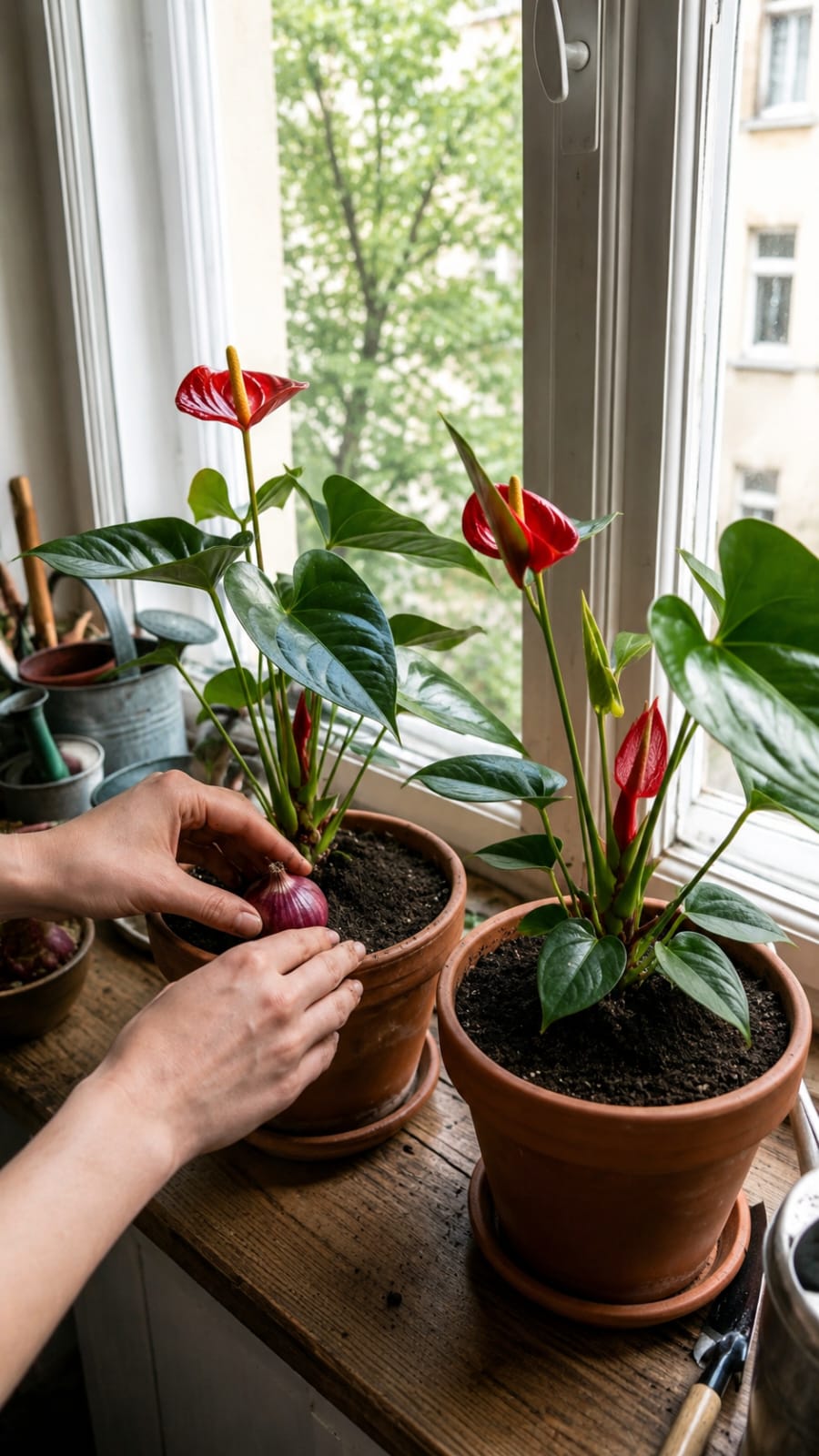
When Red Onion Should Be Avoided
Red onion should be avoided if the anthurium has wet soil, sour smell, fungus gnats, mold, yellowing leaves, drooping stems, root rot, or poor drainage. These signs suggest the plant may already be stressed. Adding fresh onion can make the problem worse.
It should also be avoided in small indoor pots, newly repotted plants, and rooms with poor airflow. Raw kitchen scraps belong in compost systems, not pressed directly into sensitive houseplant soil.
Do not combine onion with lemon, vinegar, baking soda, milk, sugar, salt, oil, or soap in the soil. Mixed household ingredients can create unpredictable conditions and damage the plant.
Common Mistakes With Onion Around Anthuriums
One common mistake is placing a whole onion into the pot and leaving it there. It may rot before it provides any benefit. Another mistake is assuming onion is a fertilizer. It is not a balanced plant food. A third mistake is placing onion against the crown, where moisture can create rot.
A fourth mistake is using onion because the plant is not blooming. Anthuriums usually need better light, healthy roots, and gentle feeding, not onion. A fifth mistake is ignoring fungus gnats. Raw organic material can attract them.
A sixth mistake is copying outdoor garden tricks indoors without adjusting for pot size, airflow, and drainage. Indoor pots are less forgiving than garden soil.
What to Do If Problems Appear
If the soil smells like rotten onion, remove the onion immediately. Remove the top layer of affected soil and replace it with fresh airy mix. Let the pot dry slightly before watering again. Do not add fertilizer or another homemade treatment right away.
If fungus gnats appear, stop all organic kitchen treatments. Let the soil surface dry more between waterings, remove decaying material, and use sticky traps to monitor adults. If the problem continues, use a targeted fungus gnat control method.
If leaves yellow or stems soften, inspect the roots. The plant may be too wet or suffering from root rot. Repotting into fresh chunky mix may be necessary. Recovery starts with root health, not more additives.
Indoor Decor and Styling Ideas
Anthuriums are excellent for indoor styling because their glossy leaves and colorful spathes look bold and tropical. A red anthurium in a terracotta pot feels warm and classic. A white or stone planter creates a modern luxury look. A woven basket softens the display and pairs well with natural textures.
Place anthuriums where they receive bright indirect light and where their leaves have space to spread. They look beautiful on windowsills, side tables, plant stands, entry consoles, kitchen corners, and office shelves. Keep the pot clean and the soil surface tidy for the best display.
A raw onion sitting on the soil may distract from the plant’s beauty. For a premium look, the pot should appear clean and intentional. If using any experimental method, it should not create odor, residue, or visual mess.
Better Alternatives to Red Onion
If the goal is stronger growth, improve light and potting mix first. If the plant is not blooming, provide bright indirect light and gentle feeding during active growth. If the leaves are dusty, wipe them with plain water. If pests are present, identify them and use a targeted solution.
If the goal is root support, repot into an airy mix and avoid overwatering. Anthurium roots thrive when they receive oxygen. A chunky mix is more valuable than onion.
If the goal is organic feeding, use a high-quality mild fertilizer, worm castings in small amounts, or finished compost blended carefully into the mix. Raw onion is not the cleanest option for indoor plant care.
Final Thoughts
Red onion around anthurium soil may look like a simple natural plant trick, but it should be used with caution. Fresh onion can rot, smell, attract fungus gnats, trap moisture, and disturb the root zone. It is not a complete fertilizer, not a guaranteed pest treatment, and not a bloom booster.
The real foundation of healthy anthurium growth is bright indirect light, airy potting mix, drainage holes, balanced watering, moderate humidity, clean leaves, warm stable conditions, and gentle feeding during active growth. If the plant is not blooming, improve light and root health first. If the soil smells bad, remove organic scraps and refresh the potting mix. If pests are present, identify them before treating.
With patient care and clean styling, anthuriums can remain stunning indoor plants for living rooms, bedrooms, home offices, apartments, kitchens, bright windowsills, commercial interiors, luxury home staging, and premium plant displays. Glossy leaves, colorful spathes, tidy soil, and balanced maintenance will always create a more elegant result than relying on risky raw onion shortcuts.