How to Propagate Spider Plant Babies
Spider plant babies are easy to propagate. Once a baby has small roots or a clear base, it can be placed in water or directly into soil. Water propagation allows you to watch roots grow, while soil propagation helps the plant adjust directly to potting mix.
For soil propagation, place the baby in a small pot with light moist mix and keep it in bright indirect light. Do not overwater. The baby should root gradually and begin producing new leaves. For water propagation, change the water regularly and move the plantlet into soil once roots are strong enough.
Do not remove all babies if you like the cascading look. Leaving some on the mother plant creates a fuller decorative display. Removing a few can also reduce weight and allow the mother plant to stay tidy.
Indoor Decor and Styling Ideas
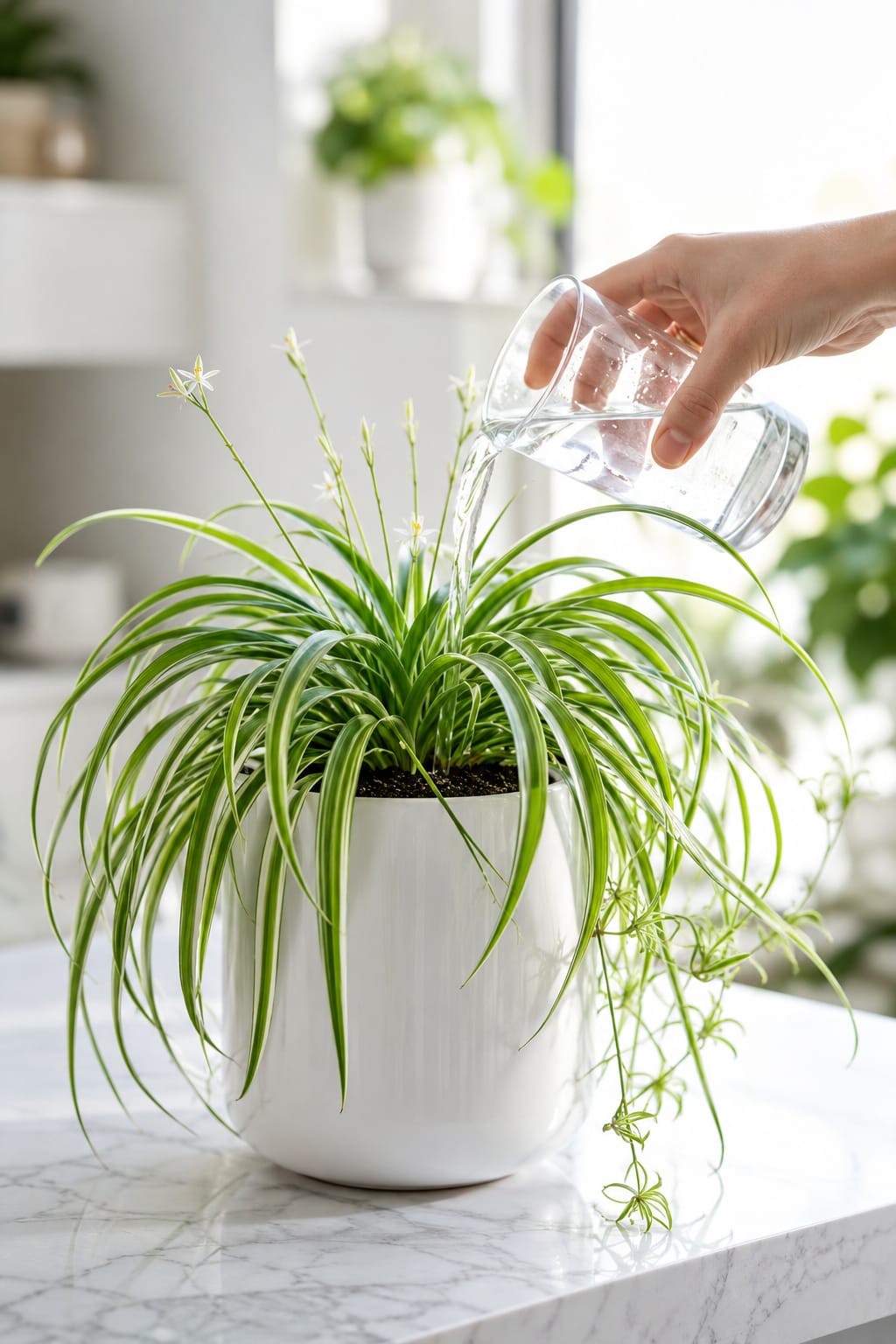
Spider plants are perfect for soft indoor styling because their arching leaves create movement. A white ceramic pot gives a clean modern look. A terracotta pot adds warmth. A hanging basket creates a classic cascading display. A woven planter makes the plant feel natural and cozy.
Place a spider plant on a bright windowsill, marble counter, wooden plant stand, shelf, kitchen corner, bathroom ledge, or office desk. It pairs beautifully with pothos, ferns, peace lilies, snake plants, and small succulents. The variegated leaves brighten dark corners and soften hard furniture lines.
For a premium look, keep the pot clean, trim brown tips, remove dead leaves, and avoid messy homemade residue. A healthy spider plant should look fresh, airy, and naturally full.
Common Mistakes With Spider Plant Care
One common mistake is watering too often. Spider plants like moisture, but they still need drainage and airflow. Another mistake is keeping the plant in very low light and expecting fast growth. Bright indirect light is better for fuller foliage.
A third mistake is overfertilizing. More fertilizer does not mean more growth. It can cause brown tips and salt buildup. A fourth mistake is using heavy soil that stays wet too long. A fifth mistake is letting the plant sit in water inside a decorative pot.
A sixth mistake is using risky household liquids. Milk, lemon juice, baking soda water, coffee mixtures, and sugary tonics can create residue, odor, pests, or root stress. Clean water and balanced fertilizer are safer.
What to Do If the Plant Looks Thin
If the spider plant looks thin, move it gradually into brighter indirect light. Check the soil and roots. If the pot is too small and packed with roots, repot slightly larger. If the soil is old, refresh it with a light draining mix.
Trim badly damaged leaves at the base. This improves the shape and allows new growth to stand out. Feed lightly during active growth if the plant is healthy. Avoid strong fertilizer or sudden heavy watering.
Fullness takes time. New leaves grow from the center, and the plant thickens gradually. With better light and steady care, a spider plant can become much fuller over the growing season.
Final Thoughts
A spider plant can become fuller, brighter, and more vibrant with simple care. The most important steps are bright indirect light, proper watering, a pot with drainage holes, airy soil, clean leaves, moderate humidity, occasional grooming, and gentle feeding during active growth. Clear water is usually the safest and best liquid to use.
Homemade tricks are not necessary for a healthy spider plant. If the plant has brown tips, check water quality, humidity, fertilizer buildup, and watering consistency. If the plant is thin, improve light and root conditions. If the plant is not producing babies, give it time, maturity, and steady care.
With patient maintenance and clean styling, spider plants can remain beautiful indoor plants for living rooms, bedrooms, kitchens, bathrooms, home offices, apartments, hanging baskets, bright windowsills, commercial interiors, luxury home staging, and premium plant displays. Strong roots, arching leaves, fresh variegation, baby plantlets, tidy soil, and balanced care will always create a more elegant result than relying on risky shortcuts.