What to Do If Problems Appear
If the orchid smells like onion after treatment, rinse the roots gently with plain water and let them drain. If onion particles are visible in the bark, remove them. If the bark begins to smell sour, repot into fresh orchid mix.
If roots become brown, mushy, or hollow after treatment, trim damaged roots with sterile tools and repot into clean airy medium. Keep the crown dry and water carefully while the plant recovers.
If leaves wrinkle after root loss, the plant may not have enough healthy roots to hydrate itself. Increase humidity around the plant without soaking the crown. Keep it in bright indirect light and wait for new root growth. Recovery takes time.
Indoor Decor and Styling Ideas
Orchids are perfect for elegant indoor styling because their blooms look refined and long-lasting. A clear pot shows healthy roots and helps with watering. A decorative ceramic outer pot can hide the nursery pot while still allowing drainage. A wooden tray, marble surface, bright windowsill, or clean plant shelf can make the orchid look like a luxury floral arrangement.
Keep the flower spike supported with a clip or stake if needed. Remove faded blooms after they fall. Wipe leaves gently and keep the potting media tidy. The display should look calm, clean, and intentional.
Onion pieces beside the plant may look interesting in a tutorial, but they are not needed for styling or daily care. The best orchid display comes from healthy roots, firm leaves, clean bark, and graceful blooms.
Better Alternatives for Root Recovery
If an orchid has weak roots, the best alternative is careful repotting. Remove old bark, trim dead roots, and place the plant in fresh airy orchid mix. Keep the plant stable and avoid overwatering. Good airflow helps new roots grow.
If the plant has very few roots, humidity support may help. A humid environment around the plant can reduce moisture loss while roots recover. However, the crown should still stay dry. Do not seal the plant in a wet stagnant container for too long without airflow.
If the plant is healthy but not blooming, improve light and feeding. A slight nighttime temperature drop may help some orchids initiate a spike. Patience is essential. Orchids often need time to rebuild energy after flowering.
Final Thoughts
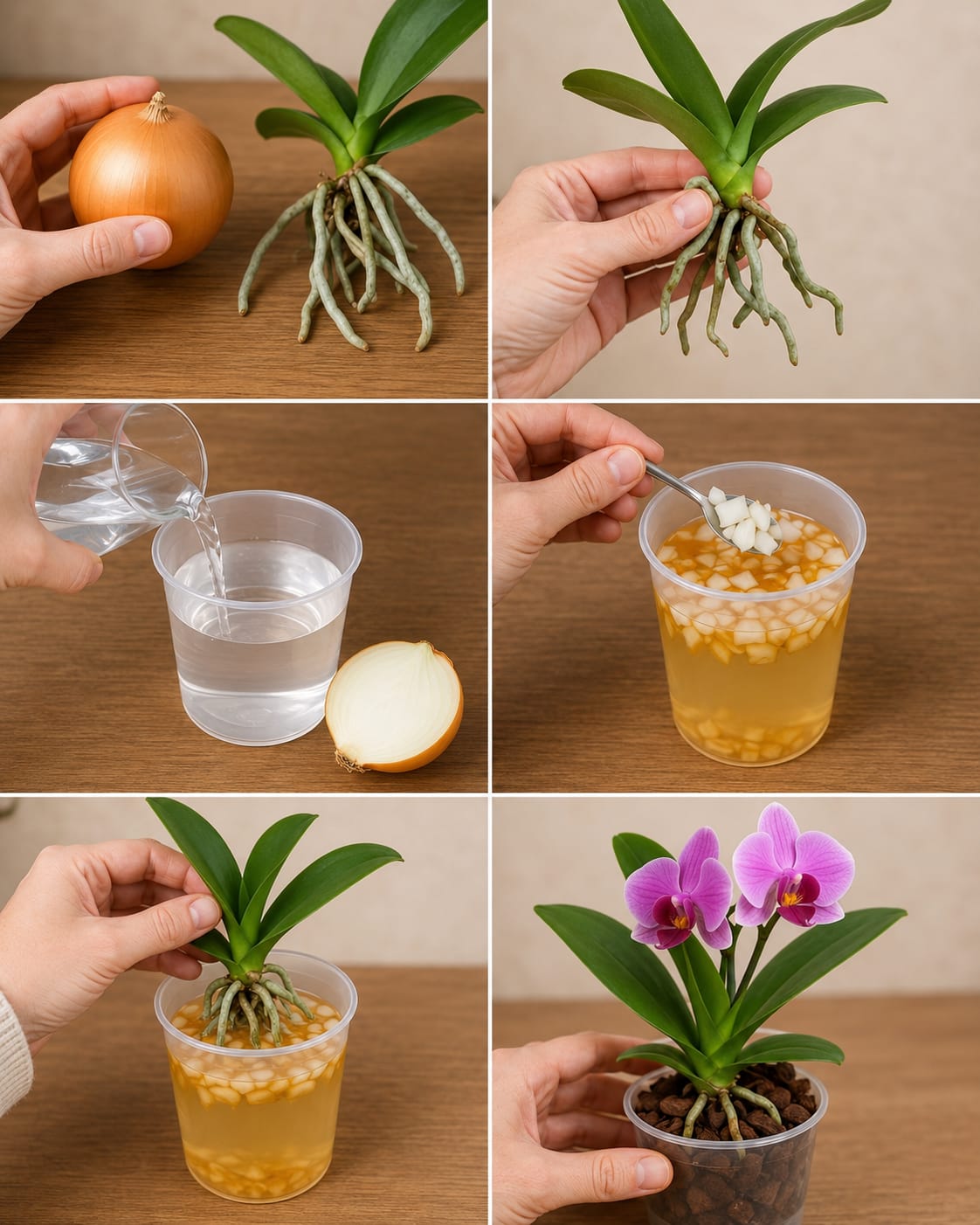
Onion water may look like a simple natural orchid root trick, but it should be used carefully. A weak, fresh, well-strained onion water may be tested briefly by some growers, but it is not a proven fertilizer, not a guaranteed bloom booster, and not a replacement for proper orchid care. Strong, old, fermented, or chunky onion mixtures can sour the potting medium, attract pests, leave odor, and stress delicate roots.
The real foundation of orchid health is firm roots, fresh airy orchid bark, drainage, bright indirect light, careful watering, a dry crown, gentle feeding, airflow, stable temperatures, and patience between bloom cycles. If the orchid has bad roots, repot. If it lacks blooms, improve light and root health. If it has pests, identify them and treat properly. If leaves are dusty, clean them with plain water.
With clean care and elegant styling, orchids can remain stunning indoor plants for living rooms, bedrooms, home offices, apartments, bright windowsills, commercial interiors, luxury home staging, and premium plant displays. Strong roots, glossy leaves, graceful flower spikes, tidy potting media, and balanced maintenance will always create a safer and more beautiful result than relying on risky onion water shortcuts.