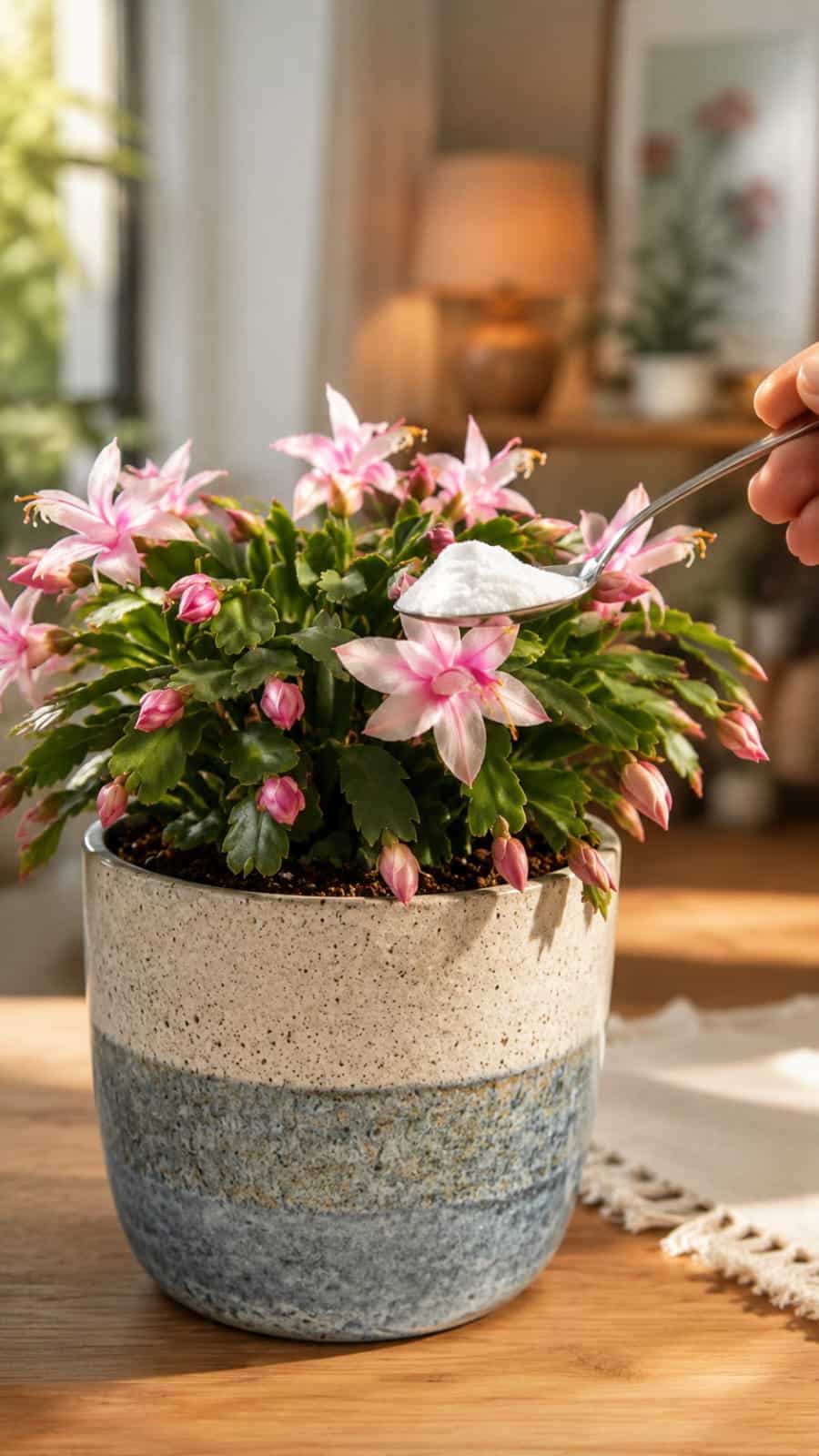
What to Do If Too Much Powder Was Added
If a small amount of known perlite was added, it is usually not a problem. If an unknown white powder was added, gently remove as much as possible from the soil surface. Do not water it deeper into the pot. Replace the removed surface with fresh airy potting mix if needed.
If the powder was baking soda, salt, strong fertilizer, or anything that may dissolve strongly, remove the top layer of soil immediately. If the plant begins dropping buds, yellowing, wilting, or smelling sour, inspect the moisture and consider repotting when safe.
If the plant is actively blooming, avoid disturbing the roots unless the powder was dangerous or excessive. Remove the surface material first, then watch the plant closely. Repot after blooming if the soil seems contaminated.
Cleaning Christmas Cactus Segments
Christmas cactus segments can collect dust and powder. Dust makes the plant look dull and may reduce light absorption. Wipe gently with a soft damp cloth when needed. Avoid leaving water trapped between dense segments.
If white powder lands on the green growth or flowers, remove it gently. Powder can make flowers look dirty and may settle into the joints. A clean plant looks healthier and more decorative.
Avoid oily leaf shine products. Christmas cactus segments do not need shine sprays. Plain water and gentle cleaning are enough.
Indoor Decor and Styling Ideas
Christmas cactus looks beautiful in ceramic pots, speckled planters, blue patterned containers, white minimalist pots, terracotta, stone-style planters, and woven baskets. A blooming plant can become a natural centerpiece for a coffee table, dining table, window ledge, plant stand, office shelf, or entry table.
Place the plant where it receives bright indirect light and can be enjoyed without constant movement. A stable location is especially important while buds are forming. A warm room with filtered light and cozy decor can make the blooms feel even more special.
For a premium display, keep the pot clean, remove fallen flowers, wipe the table, and avoid visible powder piles on the soil. The flowers and healthy green segments should be the focus.
Common Mistakes With Christmas Cactus Powder Tricks
One common mistake is assuming white powder means plant food. Many white powders are not safe fertilizers. Another mistake is using baking soda for blooms. It is not a bloom trigger and can stress roots. A third mistake is using Epsom salt too heavily without knowing whether the plant needs magnesium.
A fourth mistake is adding powder while the plant is full of buds. This is when stability matters most. A fifth mistake is using powder to compensate for poor light. A sixth mistake is ignoring drainage and watering problems.
Christmas cactus blooms because of seasonal rhythm and healthy roots. Shortcuts rarely work better than correct care.
Better Alternatives for More Flowers
If the goal is more flowers, give the plant bright indirect light during active growth and a proper short-day period before bloom season. Keep nights darker and slightly cooler. Avoid moving the plant once buds appear. Water consistently but do not keep the soil soggy.
If the goal is stronger roots, use airy well-draining soil and a pot with drainage holes. If the goal is fuller growth, prune lightly after blooming. If the goal is nutrition, feed weakly during the growing season. If the goal is cleaner soil, remove fallen flowers and avoid random powders.
These steps solve real needs more safely than unknown white powder. Christmas cactus rewards patience, timing, and consistency.
Final Thoughts
A white powder around Christmas cactus may look like a simple secret for bigger holiday blooms, but it should be used carefully. The powder could be baking soda, Epsom salt, crushed eggshells, perlite, fertilizer, diatomaceous earth, limestone, cornstarch, or another unknown material. Some materials can help when used correctly, but many can damage roots, create salt buildup, clump on the soil, or stress a plant that is already budding.
The real foundation of Christmas cactus health is bright indirect light, airy well-draining soil, drainage holes, consistent but not soggy moisture, stable temperatures, gentle feeding during active growth, and a proper short-day cool period before blooms. If the soil is wet, do not add powder. If buds are forming, avoid experiments. If the plant is not blooming, improve light rhythm and seasonal care. If the plant is healthy, keep the routine simple.
With patient care and clean styling, Christmas cactus can remain a beautiful indoor plant for living rooms, bedrooms, home offices, apartments, bright kitchens, windowsills, commercial interiors, luxury home staging, and festive premium plant displays. Strong roots, healthy green segments, tidy soil, and balanced maintenance will always create a safer and more elegant result than relying on risky white powder shortcuts.