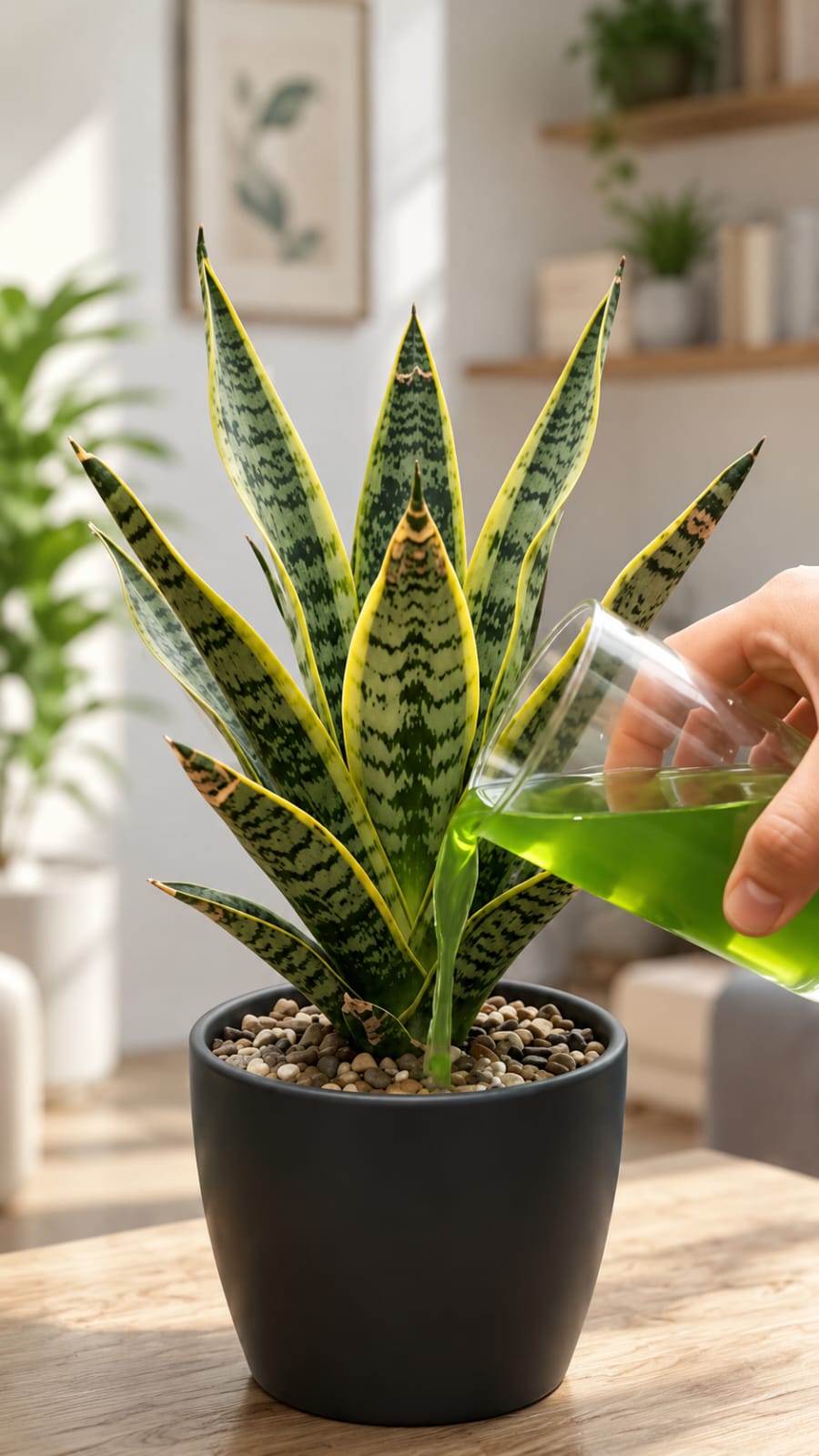
Common Mistakes With Green Plant Tonics
One common mistake is using a green tonic too often. Snake plants do not need frequent extra liquids. Another mistake is pouring tonic into wet soil. This increases the risk of root rot. A third mistake is using blended plant water without straining it. Small particles can decay in the soil.
A fourth mistake is assuming green color means safe nutrition. A green liquid may look rich, but it may be too strong, too organic, or not useful at all. A fifth mistake is using tonic to fix low light. No liquid can replace proper brightness.
A sixth mistake is forgetting that snake plants are dry-leaning plants. They thrive with restraint. Too much care often causes more damage than neglect. Simple routines are usually best.
Better Alternatives for Strong Growth
If the goal is stronger roots, use a fast-draining succulent mix and water only when dry. If the goal is more pups, provide bright indirect light and allow the plant to mature. If the goal is greener leaves, clean the foliage and avoid overwatering. If the goal is nutrition, use a weak measured fertilizer during active growth.
If the plant has brown tips, review water quality, fertilizer strength, and physical damage. If the plant is soft, inspect the roots. If the plant is not growing, improve light and be patient. If the soil smells sour, repot.
These steps solve real problems more safely than unknown green liquid. Snake plants reward simple, steady care over dramatic treatments.
Final Thoughts
A green liquid around a snake plant may look like an exciting growth trick, but it should be used carefully. The mixture could be aloe water, seaweed fertilizer, spinach water, compost tea, diluted plant food, or another homemade tonic. Some fresh weak mixtures may be tolerated rarely, but strong, sticky, fermented, sugary, or unknown liquids can sour the soil, attract fungus gnats, leave residue, and damage roots.
The real foundation of snake plant health is bright indirect light, fast-draining soil, drainage holes, infrequent room-temperature watering, firm rhizomes, warm stable conditions, clean leaves, and gentle feeding only during active growth. If the soil is wet, do not add more liquid. If the plant is soft, check the roots. If the plant is slow, improve light. If the plant is healthy, keep the care routine simple.
With patient care and clean styling, snake plants can remain beautiful indoor plants for living rooms, bedrooms, home offices, apartments, entryways, bright windowsills, commercial interiors, luxury home staging, and premium plant displays. Strong upright leaves, healthy rhizomes, tidy soil, and balanced maintenance will always create a safer and more elegant result than relying on risky green tonic shortcuts.