When Homemade Liquids Should Be Avoided Completely
Homemade liquids should be avoided if the soil is wet, the pot has no drainage, the plant is in low light, the room is cold, fungus gnats are present, the soil smells sour, leaves are dropping heavily, stems are soft, or roots may be rotting. These conditions require correction, not extra liquid.
They should also be avoided in winter or during slow growth. Jade plants need less water during cooler darker months. Adding rice water, milk water, banana water, or compost tea during this period can create damp soil and residue.
Do not use milk, sugar water, honey water, salty water, vinegar, lemon juice, oil, fermented water, thick rice water, spoiled banana water, or unknown kitchen liquids on jade plants. Succulents need clean, controlled care.
What to Do If Too Much Homemade Liquid Was Added
If too much homemade liquid was poured into the pot, let the excess drain completely and empty the saucer. If the liquid was mild and the pot drains well, allow the soil to dry fully before watering again. Watch for smell, gnats, or leaf drop.
If the liquid was milk-based, sugary, sour, salty, or sticky, stronger action may be needed. If the pot has drainage, flush carefully with plain water and allow it to drain completely, but only if the plant is not already suffering from soggy soil. If the soil smells bad afterward, repotting is safer.
During repotting, remove contaminated soil, inspect roots, trim rotten sections, and replant in fresh dry succulent mix. Do not water immediately if roots were cut heavily. Give the plant time to dry and recover.
Cleaning Jade Plant Leaves
Jade leaves are naturally glossy when healthy. Dust can make them look dull and can reduce light absorption. Wipe leaves gently with a soft damp cloth. Support branches while cleaning so the stems do not snap.
If homemade liquid splashes onto the leaves, wipe it away. Milk water, banana water, or rice water can leave residue and attract dust. Jade leaves should stay clean and dry. Water sitting on leaves in strong sun can sometimes leave spots.
Avoid oily leaf shine products. Jade plants do not need coatings. Good light, clean leaves, and proper watering keep the plant attractive.
Indoor Decor and Styling Ideas
Jade plants are excellent for warm natural styling. They look beautiful in terracotta pots, stone-style planters, white ceramic containers, rustic clay pots, modern concrete pots, and woven baskets used as cover pots. Their woody stems and rounded leaves pair well with natural wood tables, linen curtains, rattan chairs, sunrooms, bright shelves, and calm neutral interiors.
Place a jade plant where it can receive strong bright light and where its branching shape can be seen clearly. A sunny windowsill, bright side table, sunroom bench, office shelf, or living room plant stand can work well. Avoid dark corners if you want compact growth.
For a premium display, keep the pot clean, remove fallen leaves from the soil, wipe the table, and avoid visible liquid spills or sour residue. A clean terracotta pot with a healthy jade plant often looks more elegant than a plant treated with messy homemade mixtures.
Common Mistakes With Jade Plant Liquid Tricks
One common mistake is treating jade plant like a moisture-loving tropical plant. Jade plants need dry-down time. Another mistake is pouring homemade liquid on a schedule without checking soil moisture. A third mistake is using milk or sugar-based liquids that spoil in the soil.
A fourth mistake is trying to fix low light with fertilizer or tonics. The plant needs light first. A fifth mistake is using a pot without drainage. A sixth mistake is watering during winter as often as in summer. A seventh mistake is assuming wrinkled leaves always mean the plant needs more water, when root rot can create similar symptoms.
Jade plant care is simple when the basics are respected. Bright light, drainage, gritty soil, and careful watering matter more than hacks.
Better Alternatives for Stronger Jade Growth
If the goal is thicker leaves, provide brighter light and water correctly. If the goal is stronger roots, use fast-draining soil and drainage holes. If the goal is fuller branching, prune during active growth. If the goal is better color, give the plant enough sun gradually. If the goal is nutrition, use weak succulent fertilizer during spring or summer.
If leaves are falling, check moisture and roots. If stems are soft, stop watering and inspect for rot. If growth is stretched, increase light. If the soil smells bad, repot. These practical steps solve real problems more safely than unknown pale liquids.
A jade plant rewards restraint. It often grows better when left alone between proper waterings than when constantly treated with new mixtures.
Final Thoughts
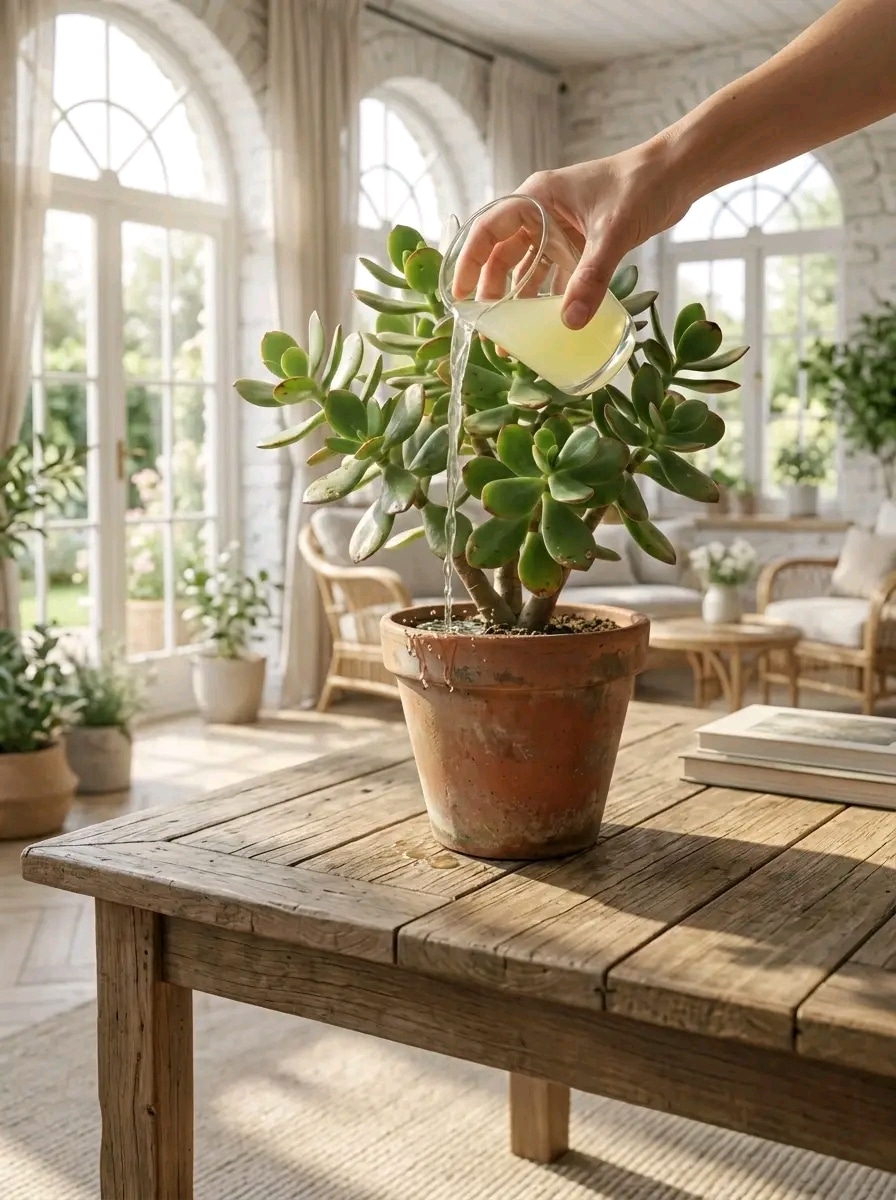
A light homemade liquid poured around a jade plant may look like a simple secret for thicker leaves and stronger growth, but it should be used carefully. The liquid could be rice water, diluted milk water, banana peel water, eggshell water, compost tea, aloe water, diluted fertilizer, or another unknown mixture. Some mild liquids may be tolerated rarely, but thick, milky, sugary, fermented, sour, or salty liquids can damage roots, sour the soil, attract pests, and cause leaf drop.
The real foundation of jade plant health is bright light, fast-draining succulent soil, drainage holes, deep but infrequent watering, full dry-down time, warm stable conditions, clean leaves, and gentle feeding only during active growth. If the soil is wet, do not add liquid. If the plant is dropping leaves, check roots and watering. If the plant is stretching, improve light. If the plant is healthy, keep the routine simple.
With patient care and clean styling, jade plants can remain beautiful indoor succulents for living rooms, bedrooms, home offices, apartments, bright kitchens, sunrooms, covered patios, plant shelves, commercial interiors, luxury home staging, and premium plant displays. Thick glossy leaves, strong woody stems, healthy roots, tidy soil, and balanced maintenance will always create a safer and more elegant result than relying on risky homemade liquid shortcuts.