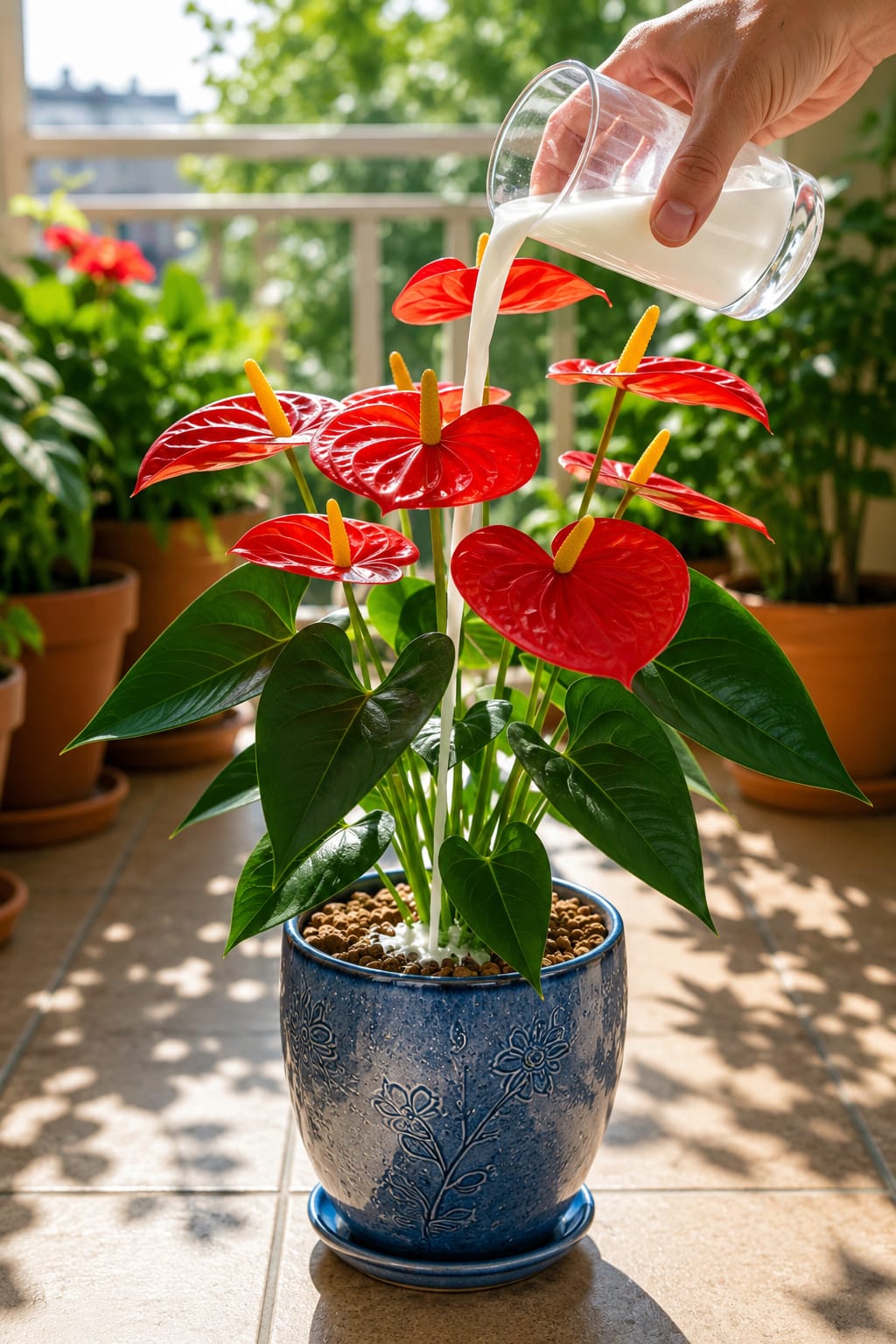
Anthurium is one of the most eye-catching indoor plants for homeowners who want glossy heart-shaped leaves, bright tropical spathes, upright stems, and a polished decorative display that feels colorful, modern, and luxurious. Its red, pink, white, or coral spathes can look like long-lasting flowers, while the deep green foliage adds a clean tropical texture to living rooms, bedrooms, home offices, apartments, balconies, bright kitchens, entryways, commercial interiors, luxury home staging, and premium indoor plant displays. A healthy anthurium in a beautiful ceramic pot can instantly make a sunny indoor corner feel brighter, warmer, and more expensive.
Many plant lovers become curious when they see a light white liquid being poured around the base of an anthurium. The method is often presented as a simple plant-care hack for bigger leaves, stronger roots, more blooms, and a cleaner indoor display. The white liquid may be diluted milk water, rice water, a weak liquid fertilizer solution, calcium water, or another homemade root tonic. It may look gentle and natural, but anthuriums are sensitive tropical plants. Their roots need air, moisture balance, and a clean growing medium. A white liquid can support the plant only when it is fresh, diluted, used rarely, and applied to a plant that is already healthy.
The safest way to understand this method is not as an instant bloom secret, but as an optional support step. Anthuriums do not produce glossy leaves and bright spathes because of one dramatic pour. They perform best when they receive bright indirect light, a chunky airy potting mix, drainage holes, steady moisture, warm indoor temperatures, moderate humidity, clean leaves, and gentle feeding during active growth. If the plant is in dense soggy soil or a pot without drainage, pouring a white liquid into the container can make root problems worse.
Understanding Anthurium Growth
Anthuriums grow from a central crown and produce leaves and spathes on long stems. The colorful part most people call the flower is actually a spathe, while the upright yellow or cream spike is the spadix. A healthy plant can produce these spathes repeatedly when conditions are right. The leaves should feel firm, glossy, and deep green, while the roots should remain healthy and oxygenated inside the pot.
Unlike plants that tolerate heavy wet soil, anthuriums prefer a loose, airy root zone. Their roots need moisture, but they also need oxygen. When the potting mix becomes compacted or constantly wet, roots can rot. This is why any homemade liquid should be used carefully. A plant already struggling with wet soil does not need more liquid or extra organic matter. It needs better drainage and a healthier root environment.
If an anthurium has yellow leaves, soft stems, black spots, a sour smell from the soil, or drooping even when the soil is wet, the roots may be stressed. In that situation, avoid white liquids and fertilizers. Check the pot, soil, and watering routine first. Root health must come before bloom tricks.
What the White Liquid Might Be
The white liquid may be diluted milk water. Some homeowners use milk water because milk contains calcium and other small nutrients. However, milk can sour quickly in potting mix, especially if it is poured thickly or used often. Straight milk should never be poured into an anthurium pot. It can leave residue, attract fungus gnats, create odor, encourage mold, and damage the clean indoor display. If milk water is tested at all, it should be extremely diluted until it is barely cloudy and used very rarely.
The liquid may also be rice water. Rice water can look cloudy white and may contain trace minerals and starches. Fresh diluted rice water may be less risky than milk, but it can still leave starch residue and feed microbes in the soil. Fermented rice water is stronger and less predictable. If rice water smells sour or looks thick, it should not be used. Anthuriums need clean, airy roots, not sticky organic buildup.
Another possibility is weak liquid fertilizer. Some fertilizers become cloudy when mixed with water. A properly diluted houseplant fertilizer or anthurium-safe fertilizer can support growth better than most kitchen liquids because the nutrient content is known. Even then, it should be used weakly. Strong feeding can burn roots and cause brown leaf edges.
What This Method Can Actually Do
A light white root tonic may support an anthurium only if the plant is already healthy and actively growing. A weak fertilizer solution can provide nutrients that help maintain leaf color, root strength, and future spathe production. A very diluted homemade liquid may provide mild organic support, but the results are unpredictable. It will not force instant blooms, repair root rot, or make a plant thrive in poor light.
The visible improvement people notice after using a white liquid often comes from the complete routine around it. The plant may also be receiving better light, cleaner leaves, more careful watering, and improved attention. These basic changes are usually more important than the liquid itself. Anthuriums respond strongly to correct light and root health.
If the plant is not blooming, the first thing to check is light. Anthuriums need bright indirect light to produce strong spathes. A plant kept too far from a window may survive with green leaves but bloom poorly. A white tonic cannot replace the energy the plant gets from light.
Best Soil for Anthuriums
Anthuriums grow best in a chunky, breathable potting mix. A good mix may include orchid bark, perlite, coco coir, peat-based potting mix, charcoal, and a small amount of compost-like material. The goal is a mix that holds light moisture but still drains quickly and leaves air pockets around the roots. Dense garden soil should not be used because it can become compacted and suffocate roots.
If the potting mix stays wet for many days, it is too heavy or the pot is too large. If water runs through instantly and the plant wilts quickly, the mix may not hold enough moisture. Anthuriums like balance. The roots should not dry bone-hard for long periods, but they should not sit in swampy soil either.
A decorative top layer of pebbles can look elegant, but it should not hide problems. If stones cover the soil, check moisture below them before watering. A thick decorative layer can make it harder to know when the plant needs water. Clean styling should support care, not interfere with it.
Watering Anthuriums Correctly
Anthuriums prefer evenly moist soil with a short dry-down period. Water when the top portion of the mix begins to dry, then water thoroughly and allow excess to drain. The saucer should be emptied after watering. Standing water around roots can cause rot quickly, especially in decorative pots.
If a white tonic is used, it should count as watering. Do not add it to already wet soil. This is one of the most common mistakes. A plant may look like it needs feeding, but if the mix is still moist, extra liquid can create stress. Wait until the plant is ready for moisture before applying any diluted treatment.
Water should be directed toward the potting mix, not poured over the leaves or into the crown. Moisture trapped around the crown can encourage rot. The plant should be allowed to drain fully and should have airflow around the base.
Best Light for More Anthurium Blooms
Bright indirect light is essential for anthurium blooming. A position near a bright window with filtered sunlight is ideal. Gentle morning light may be helpful, but harsh afternoon sun can scorch the leaves and spathes. If the leaves develop pale burned patches, the plant is receiving too much direct light. If the plant grows leaves but few spathes, it may need more brightness.
For indoor styling, anthuriums look beautiful near a bright balcony door, east-facing window, or filtered south-facing window. Their red spathes stand out strongly against glossy green leaves and neutral decor. A blue, white, terracotta, or stone-textured pot can make the plant look like a luxury tropical centerpiece.
Light should be improved gradually. Moving a plant from low light to strong sun suddenly can burn it. A slow transition helps the foliage adjust. With better light and steady care, anthuriums can produce more consistent growth and better spathe color.
Feeding Anthuriums Safely
Anthuriums benefit from gentle feeding during active growth. A diluted balanced houseplant fertilizer or a fertilizer designed for flowering tropical plants can support leaves and spathes. The solution should be weaker than full strength if the plant is sensitive or growing indoors in moderate light. Overfeeding can cause brown tips, salt buildup, and root stress.
A white homemade liquid should not replace balanced fertilizer if the plant needs real nutrition. Milk water and rice water do not provide a predictable nutrient profile. They can also spoil. A labeled fertilizer is usually safer because the strength can be controlled.
Do not fertilize a stressed anthurium. If the plant has root rot, yellowing from overwatering, or soft stems, feeding can make the damage worse. Stabilize the roots first. Once new growth appears and the plant is healthy, weak feeding can resume.
Risks of Using Milk Water
Milk water is one of the riskiest white liquids for anthuriums if used too strongly. Milk contains organic material that can sour inside the pot. It may create a smell, attract pests, encourage mold, and leave residue on the soil surface. This is especially unpleasant indoors where the plant is part of the decor.
If milk water is tested, it should be heavily diluted and used only occasionally. The pot must drain well. Any liquid left in the saucer should be removed. If odor, mold, fungus gnats, or sticky soil appears, stop immediately and flush or repot the plant if needed.
For most homeowners, weak liquid fertilizer is cleaner and more predictable than milk water. Natural kitchen ingredients are not automatically safer for houseplants. A product can be natural and still cause problems when it spoils in soil.
Risks of Rice Water
Rice water can also be risky when used often. Its starch content can feed microbes and create residue. In a chunky anthurium mix, repeated rice water may collect around bark and roots. If the mix stays moist, the residue can become sour or moldy.
Fresh diluted rice water is safer than fermented or thick rice water, but it should still be used sparingly. It should never smell bad. It should never contain rice grains. It should be strained well and diluted until it is very light. Plain water should be used between any applications.
If the goal is blooming, rice water is not the main answer. Light, root health, and balanced feeding matter more. Rice water should remain optional, not routine.
Humidity and Temperature
Anthuriums appreciate moderate humidity. Dry air can cause brown leaf edges and reduce the polished look of the plant. A humidifier, pebble tray, or plant grouping can help in dry rooms. However, humidity should come with airflow. Damp stagnant air can encourage fungal issues.
The plant prefers warm stable conditions. Cold drafts, sudden temperature drops, and air-conditioning vents can stress it. Keep anthuriums away from cold windows in winter and strong heat sources. Stable warmth helps roots work properly and supports new growth.
If using any white liquid, good airflow becomes even more important. The soil surface should not stay wet and sour. A warm bright area with gentle airflow helps the plant process moisture more safely.
Cleaning Anthurium Leaves
Anthurium leaves look best when they are clean and glossy. Dust can make them look dull and reduce light absorption. Wipe leaves gently with a soft damp cloth, supporting each leaf so the stem does not bend. Avoid oily leaf shine products because they can attract dust and leave residue.
If white liquid splashes onto the leaves or spathes, wipe it away before it dries. Milk or rice residue can leave marks. The colorful spathes are part of the display and should not be coated with liquid. Clean leaves and clean spathes make the plant look more expensive and healthy.
Old yellow leaves and faded spathes should be removed with clean scissors. This keeps the plant looking tidy and helps direct attention to fresh growth. Grooming is one of the easiest ways to improve the luxury indoor plant look.
When White Liquid Should Be Avoided
A white tonic should be avoided if the anthurium has wet soil, fungus gnats, a sour smell, yellow leaves from overwatering, soft stems, blackened roots, or mold on the potting mix. These are signs that the root zone is already stressed. Adding more organic liquid can worsen the problem.
It should also be avoided during cold or dark periods when the plant is not growing actively. In low light, the plant uses water and nutrients more slowly. Extra liquid can sit around the roots longer than it should. During winter, plain careful watering is usually safer.
Do not use thick milk, sweetened milk, flavored milk, spoiled milk, fermented rice water, kitchen leftovers, or any liquid with salt, sugar, oil, or seasoning. These can harm the plant and attract pests. Only clean, fresh, diluted, plant-safe liquids should be considered.
Continue to Page 2
Continue to page 2 for more details about this article and the key points many readers miss on the first page.