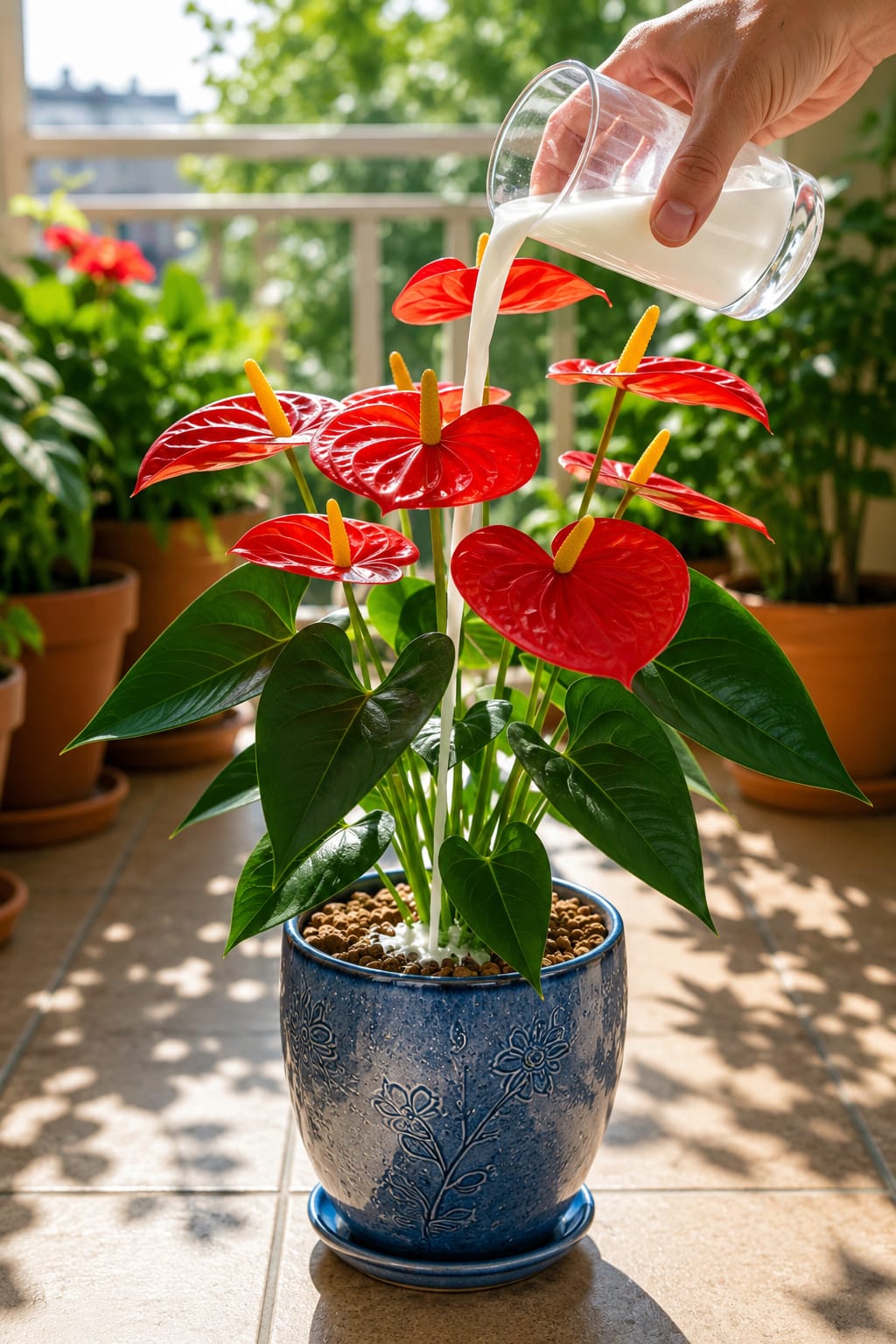
How to Encourage More Anthurium Blooms
To encourage more blooms, begin with bright indirect light. Anthuriums need enough energy to produce spathes. A plant in dim light may grow leaves but bloom rarely. Move it gradually closer to a filtered window if it is not blooming.
Next, check root health. A healthy root system supports strong stems, glossy leaves, and colorful spathes. If the potting mix is old, compacted, or sour, repot into a fresh airy mix. If roots are damaged, remove rotten sections and let the plant recover before feeding.
Then use gentle balanced fertilizer during active growth. Do not overfeed. A weak steady routine is better than a strong sudden dose. Anthurium blooms come from consistent care over time, not from one heavy treatment.
Repotting an Anthurium
Anthuriums may need repotting when roots fill the pot, the mix breaks down, or water stops draining properly. Choose a pot only slightly larger than the root ball. A pot that is too large can hold excess moisture and increase the risk of root rot.
Use a chunky airy mix and keep the crown above the soil line. Do not bury the plant too deep. After repotting, water lightly and let the plant adjust. Avoid strong fertilizer or homemade tonics immediately after repotting. Fresh roots need stability.
Repotting can refresh the plant more effectively than pouring white liquid into old tired soil. If the growing medium is poor, fix the medium first. Healthy roots are the foundation of the entire display.
Indoor Decor and Styling Ideas
Anthuriums are excellent for colorful indoor styling. A red anthurium in a blue ceramic pot creates a strong tropical contrast. A white or cream pot gives a clean modern look. Terracotta adds warmth and works beautifully near sunny windows, balcony doors, and natural wood furniture.
In a living room, an anthurium can sit on a coffee table, plant stand, or sideboard where its bright spathes become a focal point. In a bedroom, it adds a soft tropical feeling. In a home office, it brings color and freshness without taking much space. In apartments, it can create a balcony-garden mood even indoors.
For luxury home staging and commercial interiors, anthuriums work well because the spathes last a long time and the plant looks sculptural. Clean leaves, tidy soil, and a polished pot are essential. A plant with residue, sour odor, or messy liquid marks will not create a premium impression.
Common Mistakes With White Root Tonics
One common mistake is using the liquid too often. Even mild homemade liquids can build up in soil. Another mistake is using a mixture that is too thick. Thick milk or rice water can leave residue and attract pests. A third mistake is pouring the liquid into already wet soil. This increases the chance of root stress.
A fourth mistake is using a tonic on a sick plant before checking the roots. If roots are damaged, feeding or organic liquids can worsen decline. A fifth mistake is expecting blooms without enough light. Light is the main energy source. A sixth mistake is leaving liquid in the saucer. Anthuriums should never sit in standing water.
A seventh mistake is splashing white liquid on spathes and leaves. This can leave marks and reduce the plant’s beauty. The root zone should be targeted carefully, and any splashes should be wiped away.
What to Do If Problems Appear
If the soil smells sour after using a white liquid, stop immediately. Remove any residue from the surface and let the pot dry appropriately. If the smell remains, repot into fresh airy mix. Sour soil is a warning sign that organic material is breaking down in a way the roots may not tolerate.
If fungus gnats appear, reduce moisture and remove organic residue from the soil surface. Sticky traps can help monitor adults, but the root cause is usually damp organic material. Repeated milk water or rice water can contribute to the problem.
If leaves develop brown edges or yellowing, check watering, light, fertilizer strength, and root condition. Do not add more tonic. Return to simple care with plain water, bright indirect light, and good drainage until the plant stabilizes.
Professional Plant-Care Note
In professional indoor plant care, anthuriums are valued for their glossy leaves, vivid spathes, and tropical luxury look. They are often used in modern apartments, office plant design, reception areas, boutique displays, hotel-style interiors, wellness spaces, and staged homes. The best displays look clean, balanced, and effortless.
Professionals usually avoid unpredictable kitchen liquids because odor, residue, pests, and root stress can damage both the plant and the presentation. If a supplement is used, it is measured, diluted, and applied carefully. The plant should look naturally healthy, not overtreated.
The most reliable anthurium care routine is simple. Provide bright indirect light, chunky soil, drainage, steady moisture, warm temperatures, moderate humidity, clean foliage, and gentle fertilizer. This routine creates better long-term results than dramatic shortcuts.
Final Thoughts
A light white root tonic around an anthurium may look like an easy way to support bigger leaves and brighter blooms, but it should be used carefully. The liquid may be diluted milk water, rice water, or weak fertilizer, and each option has different risks. Thick, spoiled, fermented, sugary, salty, or unknown liquids should never be poured into an anthurium pot.
The real foundation of healthy anthurium growth is bright indirect light, strong roots, a chunky airy potting mix, drainage holes, correct watering, stable warmth, moderate humidity, clean leaves, and gentle balanced feeding. If the plant is not blooming, improve light and root health first. If the soil is wet or sour, avoid all tonics and fix the root zone.
With patient care and clean styling, anthuriums can remain stunning indoor plants for living rooms, bedrooms, home offices, apartments, balconies, entryways, commercial interiors, luxury home staging, and premium plant displays. Glossy leaves, bright spathes, healthy roots, tidy soil, and balanced maintenance will always create a stronger and more elegant result than relying on risky homemade shortcuts.