Common Orchid Mistakes
One common mistake is treating orchids like regular houseplants in potting soil. Orchids need airflow around their roots. Dense soil can suffocate them. Another mistake is watering too often. The roots should not remain constantly wet. A third mistake is using strong homemade liquids or strong fertilizer because the plant is not blooming. Too much feeding can damage roots and reduce flowering potential.
A fourth mistake is pouring liquid into the crown. Crown rot can develop if water sits in the center of the plant. A fifth mistake is placing the orchid in low light and expecting blooms from fertilizer. Light is essential for flowering. A sixth mistake is leaving water in the decorative pot after watering. Trapped water around orchid roots can quickly create rot.
A seventh mistake is changing care too often. Orchids respond slowly. A plant may need weeks or months to show improvement. Constantly switching between milk water, rice water, fertilizer, repotting, and different locations can create stress. Stable care is usually better.
Recovery Plan for a Weak Orchid
If an orchid is weak, stop all homemade tonics first. Remove the plant from its pot and inspect the roots if there are signs of rot, sour smell, or collapsing leaves. Trim mushy or dead roots with clean scissors. Keep firm roots. Repot into fresh orchid bark or a suitable airy orchid mix. Use a pot with excellent drainage.
After repotting, water carefully and allow the plant to drain fully. Place it in bright indirect light. Do not fertilize strongly. Let the plant rebuild roots first. A weak orchid needs stability, not rich feeding. Once new roots begin growing, gentle orchid fertilizer can be introduced at weak strength.
If the orchid has healthy roots but no flowers, do not repot unnecessarily. Improve light and care consistency. Feed weakly during active growth. Give the plant time. Flower spikes often appear only after the plant has enough stored energy.
Professional Orchid Care Note
In high-end indoor plant care, orchids are valued for their elegant blooms, sculptural stems, and premium decorative impact. They are often used in luxury home staging, modern apartment decor, commercial interior landscaping, office plant design, boutique displays, and hotel-style interiors. A healthy blooming orchid can make a space feel polished instantly.
Professional orchid care focuses on clean roots, controlled watering, correct light, and stable presentation. Any fertilizer or tonic is used carefully and invisibly. The plant should not smell sour, attract gnats, or show residue. The blooms should stay clean, the leaves should be dust-free, and the pot should drain properly.
The best orchid display is not the one receiving the most dramatic treatment. It is the one with healthy roots, balanced light, elegant support stakes, clean foliage, and a tidy container. A white tonic can be optional, but professional-looking care depends on the basics.
Final Thoughts
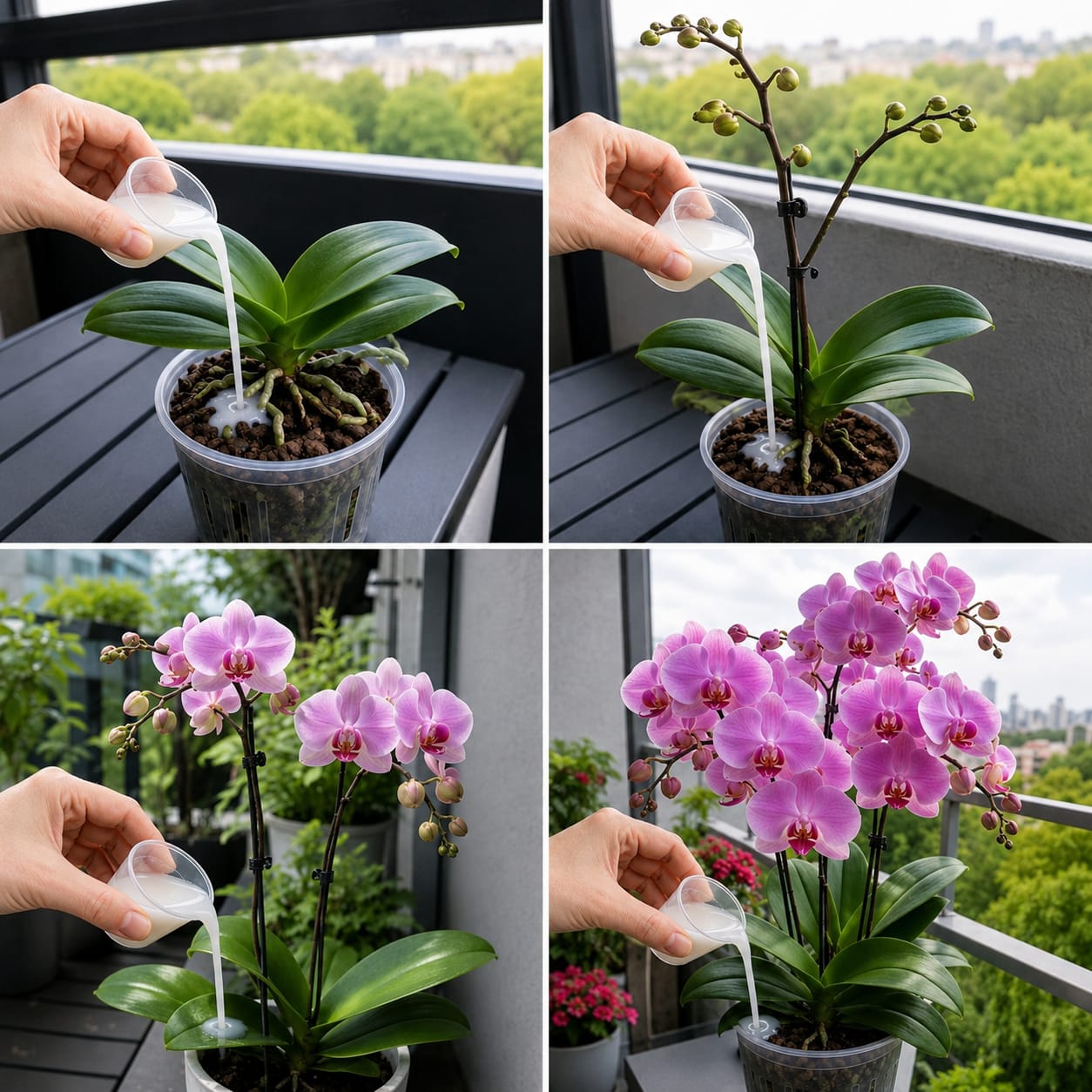
A light white root tonic may seem like an easy orchid blooming hack, but it should be used carefully. The liquid may be diluted milk water, rice water, weak fertilizer, eggshell water, or another homemade mixture. Each option carries different risks. Thick, sour, fermented, sugary, or unknown liquids should never be poured into an orchid pot. Orchid roots are sensitive and need airflow, not heavy residue.
The real foundation of stronger orchid roots, healthier leaves, and more elegant blooms is bright indirect light, fresh airy orchid medium, drainage, correct watering, good airflow, warm stable conditions, and gentle feeding during active growth. If the orchid is weak, fix the roots first. If the orchid is healthy but not blooming, improve light and patience before adding extra treatments.
With clean care and thoughtful styling, orchids can remain stunning indoor and balcony plants for living rooms, bedrooms, home offices, windowsills, modern apartments, commercial interior landscaping, luxury home staging, and premium plant displays. Healthy roots, glossy leaves, graceful flower spikes, clean pots, and steady maintenance will always create a stronger result than risky homemade shortcuts.