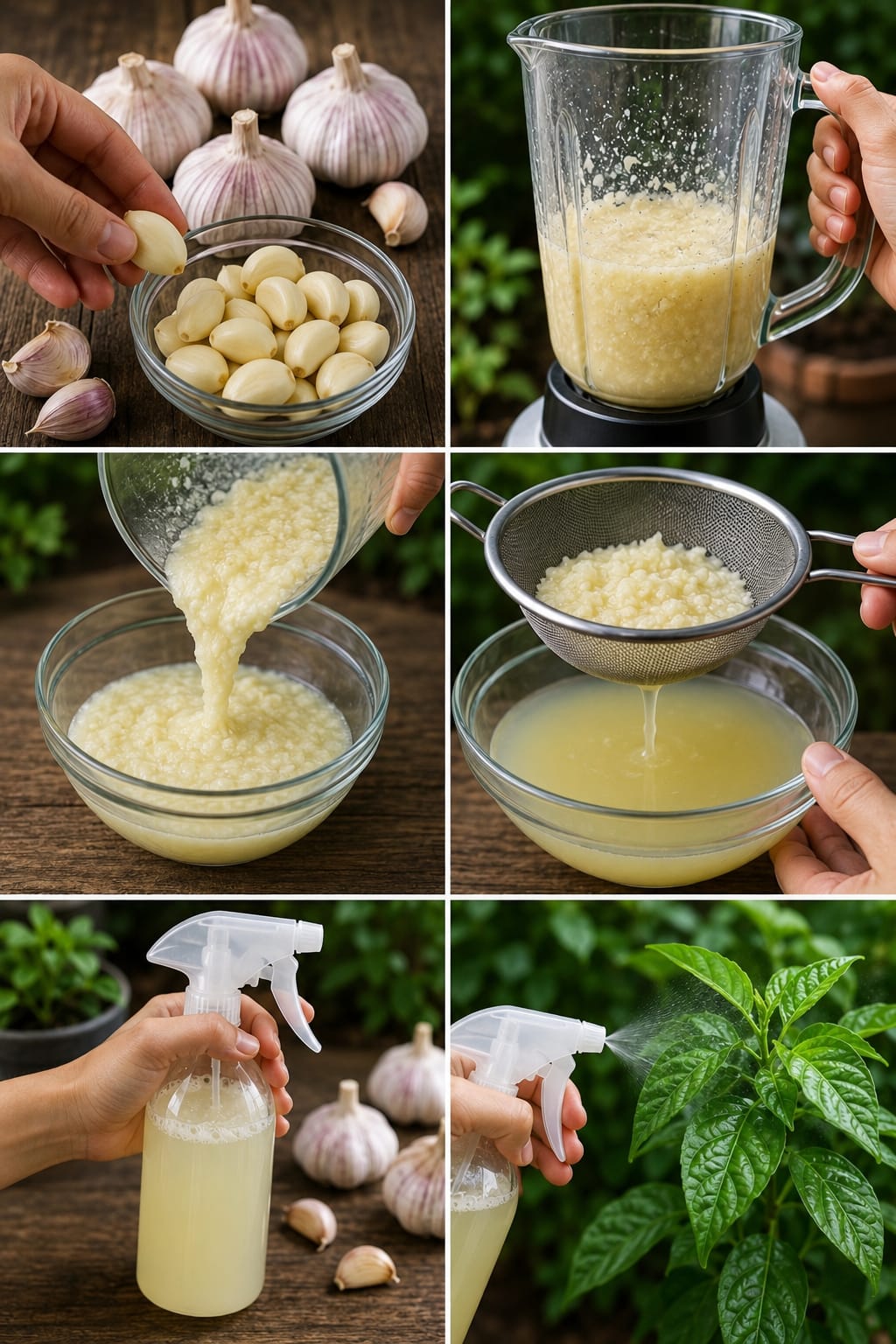
Garlic is one of the oldest home garden ingredients used by gardeners who want a simple, low-cost way to support cleaner foliage and reduce common pest pressure without immediately reaching for strong chemical products. A light garlic spray can be used as a cautious garden-care method for outdoor plants, edible garden beds, balcony planters, patio containers, ornamental foliage, flowering plants, and small home vegetable gardens. When prepared correctly, it may help discourage some soft-bodied pests and make leaves less attractive to insects that commonly gather on tender new growth. When prepared incorrectly, however, it can burn leaves, leave residue, irritate sensitive plants, create a strong odor, or cause more stress than benefit.
The idea behind a garlic spray is simple. Fresh garlic cloves are crushed or blended with water, then strained into a clean liquid that can be placed into a spray bottle and applied lightly to plant leaves. The strong natural compounds in garlic create a sharp smell and taste that many pests dislike. Gardeners often use this kind of homemade spray around plants that attract aphids, whiteflies, mites, thrips, small leaf-chewing insects, and other common garden visitors. It is not a miracle cure, and it is not a replacement for good plant care, but it can be one part of a careful pest-prevention routine when used responsibly.
This method works best when it is treated as a gentle support spray rather than a powerful pesticide. A healthy plant still needs the basics first: bright appropriate light, correct watering, good soil, drainage, airflow, balanced feeding, and regular leaf inspection. If a plant is weak because of root rot, compacted soil, underwatering, heat stress, or lack of nutrients, garlic spray will not fix the deeper problem. It may help keep foliage cleaner when pest pressure is mild, but the plant must already be growing in a healthy environment.
Garlic spray can be especially useful in outdoor settings where plants face regular insects from nearby soil, weeds, trees, or neighboring gardens. It is often used on leafy herbs, roses, peppers, tomatoes, ornamental shrubs, flowering containers, and general patio plants. However, it should be used carefully on delicate leaves, young seedlings, stressed plants, fuzzy foliage, thin tropical houseplants, and plants sitting in direct hot sun. Strong garlic mixtures can cause leaf spotting, yellow patches, or burned edges, especially when applied during the heat of the day.
Understanding What Garlic Spray Does
Garlic contains sulfur-based compounds that create its strong aroma. When garlic is crushed, those compounds become more noticeable. In a garden spray, that smell can help discourage certain insects from feeding or settling on leaves. The goal is not to poison the plant or coat it heavily. The goal is to create a light surface treatment that makes the plant less attractive to pests while keeping the foliage safe.
A garlic spray may help reduce pest visits when applied early, before a heavy infestation takes over. It is usually more useful as a preventive or mild-control method than as a rescue treatment for a plant covered in insects. If a plant is already heavily infested, a stronger integrated approach may be needed, including pruning damaged growth, washing leaves with water, improving airflow, isolating the plant if possible, and using a properly labeled plant-safe insecticidal product when necessary.
Garlic spray does not fertilize plants in a meaningful way. It should not be used as plant food. It does not replace compost, balanced fertilizer, healthy soil, or correct watering. Some gardeners think that because garlic is natural, it must feed the plant, but the real purpose is surface pest discouragement. The plant’s roots still need proper nutrition from soil and fertilizer, not repeated garlic water on the leaves.
Why Gardeners Use Garlic Spray
Gardeners often choose garlic spray because it is inexpensive, easy to prepare, and made from a common kitchen ingredient. It can feel safer and less aggressive than many store-bought sprays, especially for people growing herbs, vegetables, balcony plants, and family garden spaces. It also gives gardeners a way to respond quickly when they notice early signs of pests, such as curled leaves, tiny insects under leaves, sticky residue, or new growth that looks slightly distorted.
Another reason gardeners use it is that it fits into a cleaner garden-care routine. Instead of waiting until pests become severe, a light spray can be part of regular inspection and prevention. A gardener may check leaves once or twice a week, remove damaged foliage, keep the soil surface tidy, and use a mild garlic spray when pests first appear. This kind of attention often helps plants more than the spray alone.
Garlic spray can also be useful in gardens where strong synthetic odors or chemical residues are not wanted. Patio planters, balcony gardens, edible herb corners, and small home gardens often benefit from gentle methods first. However, gentle does not mean careless. Even natural sprays can damage plants when they are too concentrated or applied too often.
How to Make a Gentle Garlic Spray
A safe garlic spray should be mild, strained well, and used fresh. A common gentle approach is to blend several peeled garlic cloves with water, let the mixture sit briefly, and then strain it carefully through a fine sieve or cloth so no chunks remain. The strained liquid is then diluted with more clean water before being placed into a spray bottle. The final spray should be light and watery, not thick, pulpy, sticky, or oily.
Some recipes add a small amount of mild liquid soap to help the spray spread on leaves, but this should be done carefully. Too much soap can burn foliage, especially on tender plants. If soap is used, it should be very mild, plant-safe, and added in a tiny amount. Many gardeners prefer starting with garlic and water only, especially when testing on sensitive plants.
The mixture should not be stored for a long time. Fresh garlic water can change, ferment, smell stronger, and become less predictable. It is better to make a small amount and use it soon. If the liquid smells rotten rather than simply garlicky, discard it. A clean garden spray should smell strong but not spoiled.
How to Apply Garlic Spray Safely
Garlic spray should be applied lightly, not poured heavily over the plant. The best target is the foliage, especially the undersides of leaves where many pests hide. The spray should create a fine mist, not a soaking wet layer. Avoid drenching flowers, delicate buds, and open blooms because strong sprays can mark petals or shorten their display.
The safest time to spray is early morning or evening when the sun is not strong. Spraying in direct hot sun can increase the risk of leaf burn. Leaves should have time to dry slowly without being cooked by heat. Avoid spraying before heavy rain because the mixture will wash away quickly. Avoid spraying during windy conditions because the liquid may drift into eyes, skin, or nearby sensitive plants.
Before spraying the whole plant, test one or two leaves first. Wait at least twenty-four hours and check for spotting, yellowing, curling, or burning. If the test leaves look healthy, the spray can be used more broadly. This patch test is important because different plants respond differently. A spray that is fine for a mature pepper plant may be too strong for a delicate fern, young seedling, or thin-leaved ornamental.
Plants That May Tolerate Garlic Spray Better
Many outdoor garden plants with firm leaves may tolerate a mild garlic spray when it is diluted properly. Tomatoes, peppers, roses, some herbs, ornamental shrubs, and mature container plants are often the kinds of plants gardeners test first. Even then, the spray should remain mild. The goal is light pest discouragement, not a strong coating.
Plants growing outdoors usually have better airflow than indoor plants, which helps leaves dry after spraying. Outdoor light and air movement also reduce the chance of lingering odor. This is one reason garlic spray is usually better suited to outdoor garden care than indoor houseplant styling. Indoors, the smell can be unpleasant, and wet leaves can remain damp longer if airflow is poor.
Container plants on patios and balconies can also be candidates if they are healthy and not heat-stressed. A balcony pepper plant, a rose in a container, or leafy herbs with early aphid activity may benefit from a cautious spray. However, plants in small containers dry quickly, and stressed roots can make leaves more sensitive. Watering and heat conditions should be checked first.
Plants That Need Extra Caution
Delicate plants should be treated carefully or avoided. Ferns, thin-leaved tropical houseplants, fuzzy-leaved plants, young seedlings, orchids, African violets, calatheas, and plants with soft new growth may react badly to strong homemade sprays. Their leaves can spot or burn easily. If a plant is valuable, rare, or already stressed, it is safer to use proven plant-care methods and a labeled product designed for that plant type.
Flowering plants also need caution. Garlic spray may mark petals or leave a smell on blooms. If pests are on a flowering plant, spray the leaves and stems rather than the open flowers. If the flowers are the main display, protect them as much as possible. A plant used for luxury patio decor or premium garden styling should not be covered in visible residue or strong odor.
Indoor plants should be handled even more carefully. Garlic smell can linger inside a room, and organic sprays can leave residue on leaves, furniture, windowsills, and decorative pots. For indoor plant care, it may be better to rinse pests off with water, wipe leaves, improve airflow, isolate the plant, or use a mild insecticidal soap labeled for houseplants.
How Often to Use Garlic Spray
Garlic spray should not be used every day. Repeated spraying can stress leaves and create residue. For mild pest prevention, once a week for a short period may be enough. If pests are present, the spray may be used every several days for a limited time while monitoring the plant closely. If leaf damage appears, stop immediately.
After rain or overhead watering, the spray may wash away. However, reapplying too quickly can still cause buildup. The plant should be observed rather than treated automatically. If pests are gone and the plant looks clean, stop spraying and return to normal care. The best garden routine uses treatments only when needed.
Long-term pest control should focus on plant health. Strong plants resist pests better than weak plants. Correct watering, good light, airflow, balanced feeding, clean pruning, and pest inspection reduce the need for repeated sprays. Garlic spray is one tool, not a full care system.
Why Straining Matters
Straining the garlic mixture is very important. Garlic pulp left in the spray bottle can clog the nozzle and create uneven spraying. Garlic pieces left on leaves can rot, smell, attract insects, or cause small burn spots. A clean strained liquid is safer and easier to apply.
A fine mesh sieve, coffee filter, cloth, or clean kitchen strainer can be used to remove the solids. The final liquid should be smooth enough to spray as a mist. If it looks thick or chunky, dilute and strain again. A plant spray should never look like food paste on the leaves.
Straining also improves the visual result. For outdoor garden plants, appearance still matters. A clean spray disappears after drying, while garlic pulp leaves residue. For patio containers, balcony plants, and decorative garden displays, clean application keeps the plant looking polished.
Why Dilution Matters
Dilution is the difference between a gentle spray and a harsh treatment. Garlic is strong. A concentrated mixture may burn leaves, especially in sun or heat. Diluting the strained garlic liquid with water makes it safer for plant surfaces. It also reduces odor and lowers the chance of residue.
More garlic does not mean better results. A strong mixture can damage the plant before it discourages pests. The goal is a light scent and mild surface effect. If insects are severe enough that a weak spray does nothing, the solution may not be to make the garlic stronger. It may be time to use a more appropriate pest-control method.
When testing a new mixture, always start weaker than you think you need. Plants can be treated again if they tolerate it, but burned leaves cannot be repaired. New growth may eventually replace damaged foliage, but prevention is easier.
Using Garlic Spray With Good Plant Care
Garlic spray works best when combined with good plant care. Plants that are underwatered, overwatered, root-bound, nutrient-starved, or sunburned are more attractive to pests and more sensitive to sprays. Before applying anything to leaves, check the root and soil conditions. A plant in poor condition needs correction first.
Watering should match the plant type. Vegetable plants may need consistent moisture, while herbs may prefer slightly drier conditions. Container plants need drainage holes. Soil should not smell sour or stay waterlogged. If fungus gnats are present, reduce overwatering and improve the soil surface instead of relying only on spray.
Light also matters. Plants in too little light grow weak and soft, making them more vulnerable to pests. Plants in harsh sun may be stressed and more likely to burn from sprays. Good placement helps the plant tolerate mild treatments better.
How to Use Garlic Spray for Aphids
Aphids often gather on tender new growth, flower buds, and undersides of leaves. They can cause curling, sticky residue, and distorted growth. Before using garlic spray, rinse the plant with a gentle stream of water to remove many aphids physically. This simple step can reduce the population quickly.
After the plant dries, a mild garlic spray can be applied to the affected areas, especially under leaves and around new growth. Avoid soaking flowers. Repeat only as needed, watching for leaf reaction. If aphids continue to multiply, inspect for ants, because ants may protect aphids for their honeydew. Managing ants can be part of controlling aphids.
For severe aphid infestations, garlic spray alone may not be enough. Pruning heavily infested tips and using a labeled plant-safe insecticidal soap may be more effective. The earlier pests are noticed, the more useful a gentle method can be.
How to Use Garlic Spray for Whiteflies
Whiteflies are small insects that fly up when leaves are disturbed. They often hide under leaves and can weaken plants over time. A garlic spray may discourage them mildly, but whiteflies can be persistent. Yellow sticky traps can help monitor and reduce adult populations.
Spray the undersides of leaves lightly, because that is where many whiteflies rest and lay eggs. Apply in the cooler part of the day and repeat cautiously if the plant tolerates it. Washing the leaves with water before treatment can also help.
If whiteflies are severe, stronger integrated pest control may be needed. Removing badly infested leaves, improving airflow, and using appropriate labeled products can be more reliable. Garlic spray may be part of the early response, but it should not be the only plan for a heavy infestation.
How to Use Garlic Spray Around Edible Plants
Many gardeners are interested in garlic spray for edible plants because they want a lower-cost and more natural-feeling option. It may be used cautiously around herbs and vegetables, but edible leaves should be washed well before eating. Garlic smell and residue can remain on foliage if sprayed heavily.
Do not spray right before harvest if the flavor or smell matters. Herbs such as basil, mint, cilantro, parsley, and lettuce-like greens can hold odor on their leaves. It is better to spray earlier in the pest-control process and rinse edible portions thoroughly later. Tender herbs can also be more sensitive to sprays, so patch testing is important.
For vegetable plants such as peppers or tomatoes, focus on the leaves rather than the fruit. Avoid spraying open flowers heavily because pollinators may visit blooms. Homemade sprays should be used in a way that protects beneficial insects as much as possible.
Protecting Beneficial Insects
Not every insect in the garden is a problem. Bees, ladybugs, lacewings, hoverflies, and other beneficial insects can support a healthy garden. Garlic spray may discourage or disturb some beneficial insects if sprayed carelessly. This is why targeted application is better than spraying the entire garden heavily.
Avoid spraying open flowers where pollinators are active. Apply in early morning or evening when pollinator activity is lower. Spray only affected plants or affected leaf areas. This careful approach helps reduce unnecessary impact on helpful garden life.
Healthy gardens are balanced systems. Removing every insect is not realistic or desirable. The goal is to reduce pest pressure enough for the plant to grow well. A mild garlic spray should be used thoughtfully within that balance.
Safety for the Gardener
Garlic spray is natural, but it can still irritate skin, eyes, and the nose. When blending garlic and spraying it, avoid touching your eyes. Wash hands after preparation and use. If you have sensitive skin, wear gloves. When spraying, keep the mist away from your face and avoid inhaling it.
The spray bottle should be labeled clearly and kept away from children and pets. It should not be confused with kitchen liquids or cleaning products. Any leftover spray should be discarded if it begins to smell spoiled. The bottle should be washed before being used for another purpose.
If pets chew treated leaves, use extra caution. While a light plant spray may seem harmless, garlic is not something pets should ingest in quantity. Keep treated plants away from pets that nibble leaves. For pet-heavy homes, avoid spraying indoor plants with garlic mixtures.
Continue to Page 2
Continue to page 2 for more details about this article and the key points many readers miss on the first page.