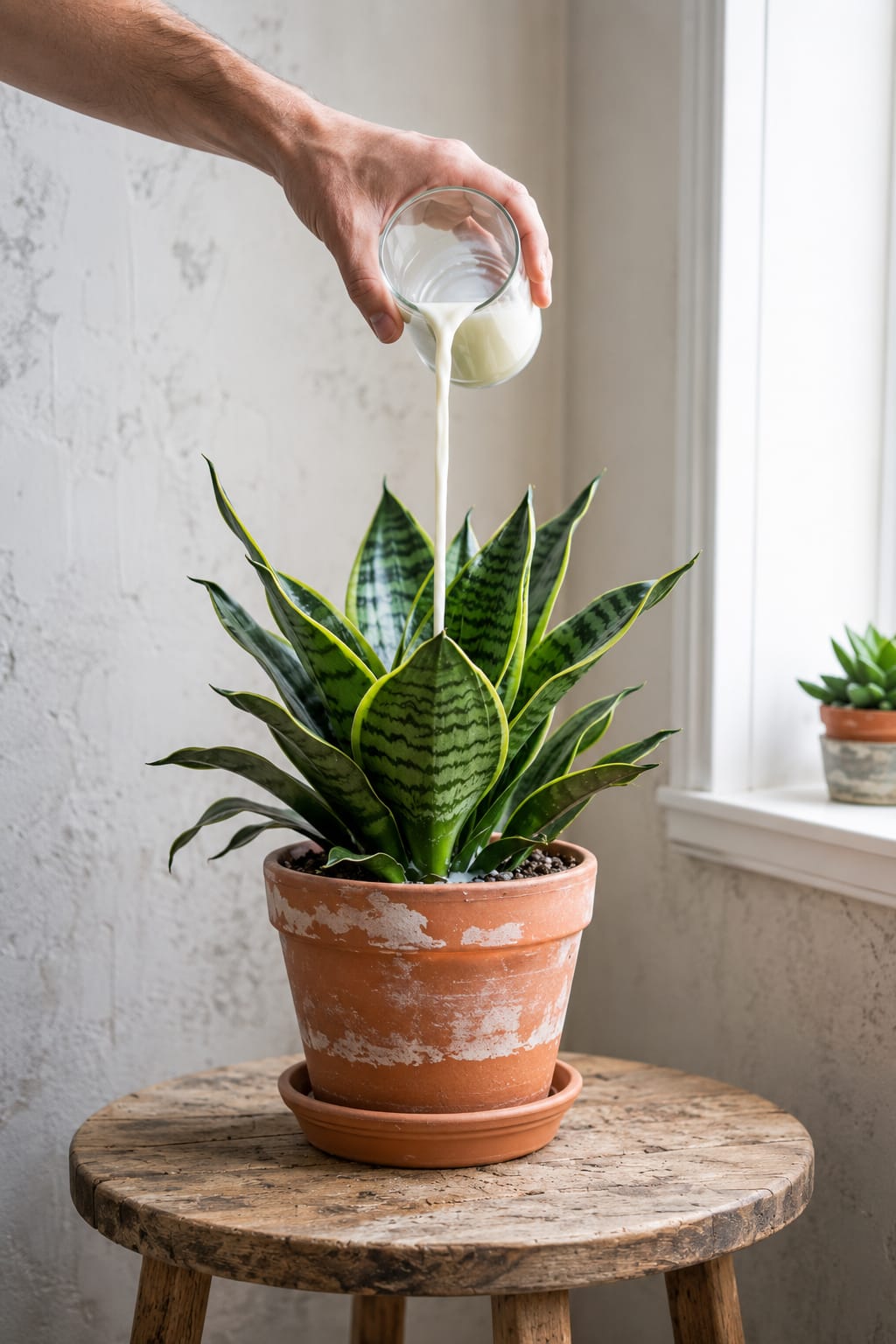
Common Mistakes With Snake Plant Tonics
One common mistake is pouring white liquid into the center of the leaves. This can trap moisture and cause rot. Another mistake is using the liquid too often. Snake plants should not be watered frequently, whether the liquid is plain water or a homemade tonic.
A third mistake is using thick mixtures that leave residue. A fourth mistake is applying tonics to a plant that is already stressed. A fifth mistake is keeping the plant in low light while adding more moisture. Low light slows drying and increases rot risk.
A sixth mistake is assuming natural ingredients are always safe. Milk, rice water, and other kitchen liquids can spoil. A plant-care method should keep the root zone clean, not sour or sticky.
What to Do If Problems Appear
If the soil smells sour after using a white liquid, stop immediately. Remove any residue from the soil surface and allow the pot to dry. If the smell remains, repot the plant into fresh gritty mix. Sour soil means organic material may be breaking down poorly.
If fungus gnats appear, reduce watering and remove any damp organic residue. Sticky traps can help monitor adults, but the deeper solution is a drier, cleaner pot. Repeated white tonics should be avoided until the issue is gone.
If the leaves become soft or yellow, check the roots and rhizomes. Do not add more liquid. Root health must be restored first. A healthy snake plant can recover slowly, but only if the rot risk is controlled.
Final Thoughts
A light white root tonic around a snake plant may look like a simple way to encourage stronger growth, but it should be used carefully. The liquid may be diluted milk water, rice water, weak fertilizer, or another homemade mixture. Each option has different risks. Thick, spoiled, fermented, sugary, salty, oily, or unknown liquids should never be poured into a snake plant pot.
The real foundation of snake plant health is firm rhizomes, fast-draining soil, a pot with drainage holes, bright indirect light, infrequent watering, clean leaves, warm stable conditions, and very gentle feeding during active growth. If the plant is not growing, improve light and root conditions first. If the soil is wet or sour, avoid all tonics and fix the potting mix.
With patient care and clean styling, snake plants can remain beautiful indoor plants for living rooms, bedrooms, home offices, apartments, windowsills, entryways, commercial interiors, luxury home staging, and premium plant displays. Strong roots, upright leaves, tidy soil, and balanced maintenance will always create better results than relying on risky homemade shortcuts.