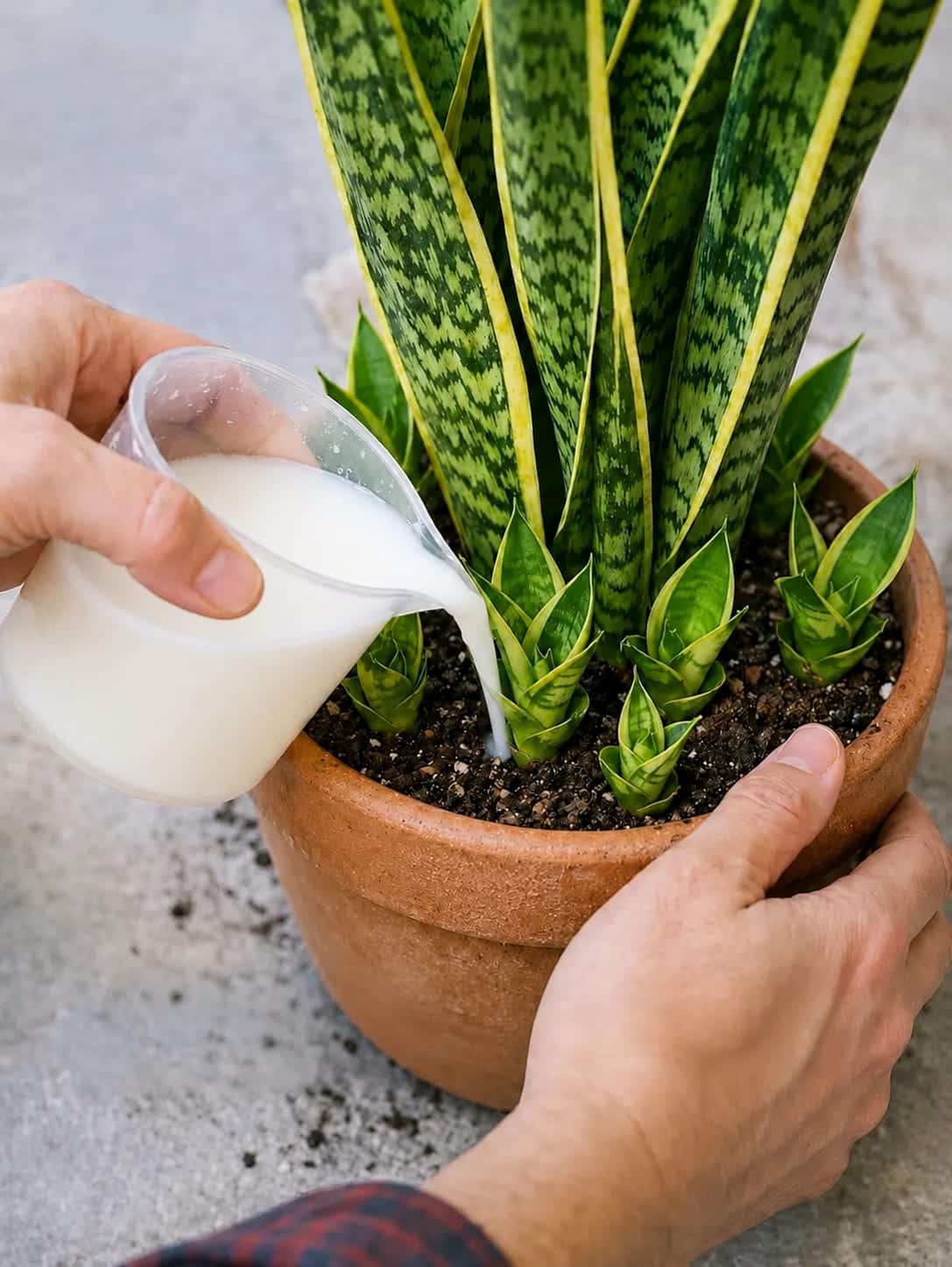
Common Mistakes With White Plant Tonics
One common mistake is using milk because it looks natural. Natural does not always mean safe for indoor pots. Another mistake is using rice water too often. Repeated starch can leave residue. A third mistake is pouring white liquid into wet soil.
A fourth mistake is using tonic to force pups. New shoots come from healthy rhizomes, not one quick pour. A fifth mistake is using a pot without drainage. A sixth mistake is feeding a plant that is already stressed.
Snake plants are easy because they prefer simple care. Too much attention can cause more trouble than neglect.
Better Alternatives for More Pups
If the goal is more pups, provide bright indirect light, fast-draining soil, and stable warmth. Let the plant become established. Keep watering infrequent but thorough. Avoid frequent repotting unless the soil is poor or the plant is severely crowded.
If the goal is stronger roots, improve the potting mix and drainage. If the goal is better leaf color, clean the leaves and provide better light. If the goal is nutrition, use a weak measured fertilizer during active growth.
These steps solve real problems more safely than unknown white liquid. Snake plants grow best when their basic needs are respected.
Final Thoughts
A white liquid around snake plant pups may look like a simple natural trick for more offshoots, but it should be used carefully. The liquid could be milk, rice water, aloe water, diluted fertilizer, calcium water, or another homemade mixture. Some fresh weak mixtures may be tolerated rarely, but milk, thick rice water, fermented liquids, and unknown tonics can sour the soil, attract fungus gnats, leave residue, and damage roots.
The real foundation of snake plant pup production is healthy rhizomes, bright indirect light, fast-draining soil, drainage holes, infrequent room-temperature watering, warm stable conditions, clean leaves, and gentle feeding only during active growth. If the soil is wet, do not add more liquid. If pups are soft, check the rhizomes. If the plant is slow, improve light and wait. If the plant is healthy, keep the routine simple.
With patient care and clean styling, snake plants can remain beautiful indoor plants for living rooms, bedrooms, home offices, apartments, entryways, bright windowsills, commercial interiors, luxury home staging, and premium plant displays. Strong upright leaves, healthy baby shoots, firm rhizomes, tidy soil, and balanced maintenance will always create a safer and more elegant result than relying on risky white liquid shortcuts.