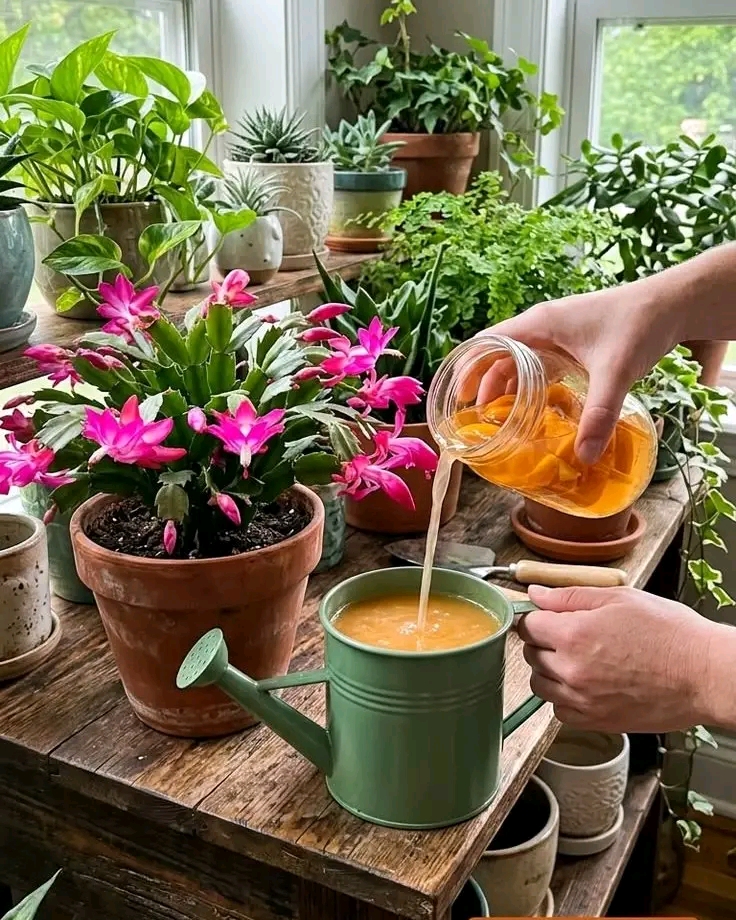
When Orange Peel Water Should Be Avoided
Orange peel water should be avoided if the Thanksgiving cactus has wet soil, soft segments, blackened stem bases, mold, fungus gnats, sour odor, poor drainage, or recent bud drop. These signs suggest the plant may already be stressed. Adding organic citrus liquid can make the problem worse.
It should also be avoided if the mixture has fermented. A sour, fizzy, rotten, or alcoholic smell means the liquid is no longer a gentle fresh infusion. It should be discarded.
Do not use citrus water on newly repotted plants, severely stressed plants, or plants sitting in cold rooms. Let them recover with plain water, correct light, and stable conditions first.
Common Mistakes With Orange Peel Tonics
One common mistake is making the mixture too strong. Concentrated citrus liquid can irritate roots. Another mistake is soaking peels for too long until the liquid ferments. A third mistake is failing to strain the mixture, leaving organic particles in the soil.
A fourth mistake is using orange peel water too often. Thanksgiving cactus does not need citrus water at every watering. A fifth mistake is pouring it into a pot without drainage. A sixth mistake is expecting blooms without proper seasonal darkness.
A seventh mistake is treating kitchen scraps as complete fertilizer. Orange peels may contain small nutrients, but they are not a balanced plant food. Measured feeding is more reliable.
What to Do If Problems Appear
If the soil smells sour after using orange peel water, stop immediately. Remove any visible residue from the soil surface and allow the mix to dry to a healthier level. If the smell remains, repot into fresh airy mix.
If fungus gnats appear, avoid all organic liquids. Let the top layer dry slightly between waterings, remove decaying material, and use sticky traps to monitor adults. If the infestation continues, use a targeted gnat control method.
If segments soften or darken near the base, inspect the roots and stem base. Rot may be present. Remove damaged parts and repot if necessary. Do not add fertilizer or homemade tonics while the plant is recovering.
Indoor Decor and Styling Ideas
Thanksgiving cactus looks beautiful in cozy interiors because its arching stems and bright flowers bring warmth to the room. A terracotta pot creates a rustic cottage look. A white ceramic pot feels clean and modern. A green watering can, wooden table, woven textures, and bright window light can create a charming indoor garden style.
Place the plant where its blooms can cascade naturally. A plant stand, side table, windowsill, wooden bench, or holiday shelf works well. Keep the area around the pot clean and free from sticky residue. The flowers should be the focal point.
For a premium display, avoid visible homemade mess. The plant should look naturally healthy, not overtreated. Strong green segments, colorful flowers, clean soil, and a tidy pot create the most elegant effect.
Final Thoughts
Orange peel water may look like a fresh natural tonic for Thanksgiving cactus, but it should be used carefully. A weak, fresh, well-strained, heavily diluted mixture may be tolerated occasionally by a healthy plant, but strong or fermented citrus liquid can sour the soil, attract fungus gnats, irritate roots, and create odor. It is not a complete fertilizer and it does not replace proper bloom care.
The real foundation of Thanksgiving cactus blooming is bright indirect light, seasonal darkness, stable temperatures, healthy roots, airy soil, drainage holes, steady moisture, and gentle feeding before bud season. If the plant is not blooming, improve light and nighttime darkness first. If the soil is wet or sour, avoid homemade tonics and fix the root zone.
With patient care and clean styling, Thanksgiving cactus can become a stunning indoor flowering plant for living rooms, bedrooms, apartments, bright windowsills, plant shelves, holiday displays, and premium indoor decor. Firm green segments, colorful blooms, tidy soil, and balanced maintenance will always create a more beautiful result than relying on risky homemade shortcuts.