Orchids are some of the most elegant indoor plants for homeowners who want long-lasting blooms, glossy green leaves, graceful flower spikes, and a refined decorative look that fits beautifully in living rooms, bedrooms, home offices, apartments, bright windowsills, balcony corners, commercial interiors, luxury home staging, and premium indoor plant displays. Their smooth foliage, sculptural roots, and delicate flowers create a polished look that feels calm, expensive, and timeless, especially when the plant is placed in a clear orchid pot, a ceramic cover pot, or a simple table display with soft filtered light.
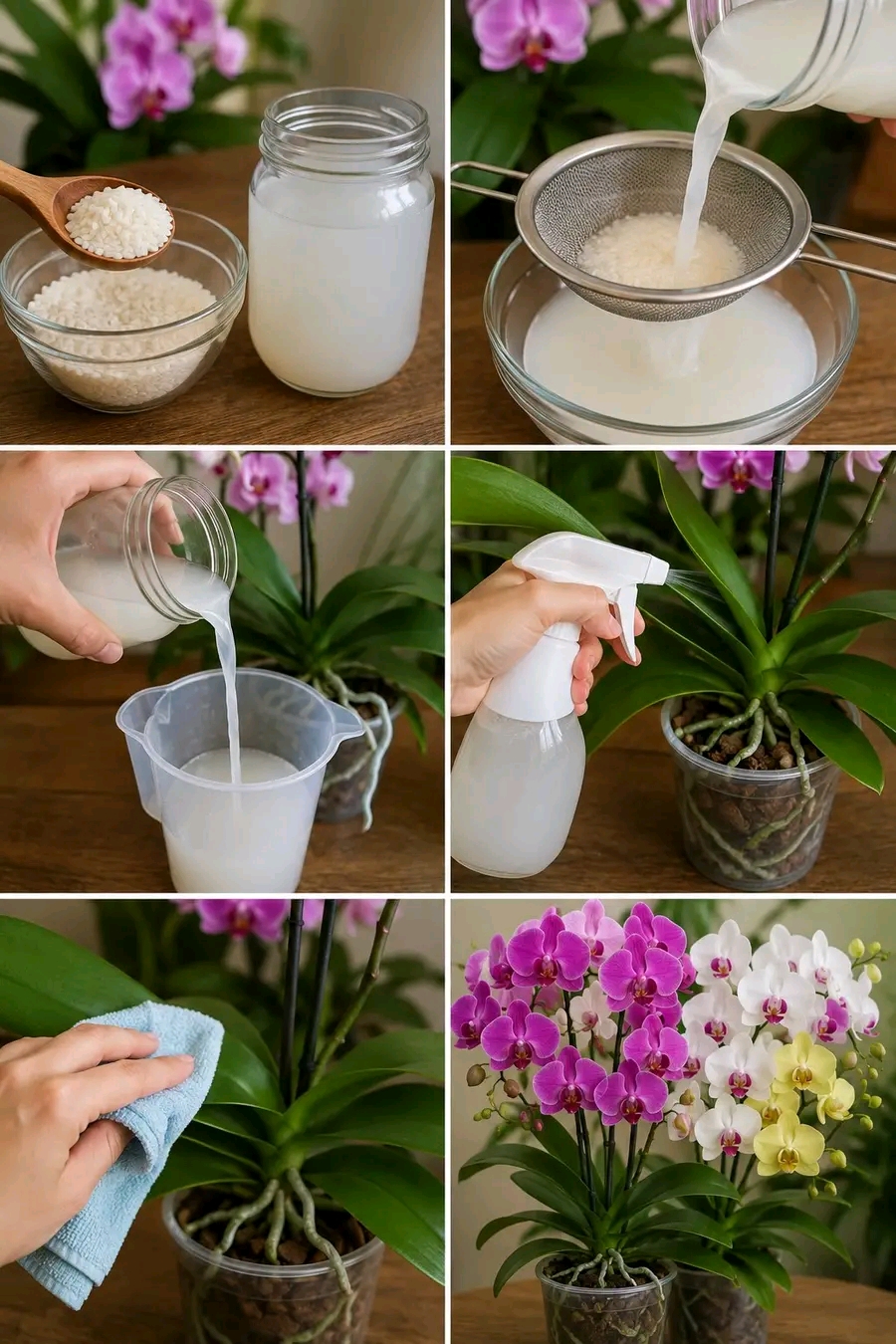
One orchid-care idea that often catches attention is using cloudy rice water as a light spray or gentle leaf-cleaning solution. The method usually begins by soaking or rinsing plain rice in water, straining the cloudy liquid, pouring it into a spray bottle, and applying it lightly around the orchid leaves or root area. Some homeowners also use the diluted liquid to wipe leaves with a soft cloth. The idea is that rice water may contain small traces of minerals and starches that can support a cleaner plant-care routine when used carefully.
However, orchids are sensitive plants. Their roots need air, their leaves should stay clean, and their potting medium should never become sour or sticky. Rice water can be useful only when it is fresh, diluted, strained well, and used sparingly. Thick rice water, fermented rice water, or repeated spraying can leave residue, attract fungus gnats, encourage mold, and make the orchid pot smell unpleasant. This is why rice water should never be treated as a miracle bloom booster. It is only a small optional support step in a much bigger orchid-care routine.
The real foundation of beautiful orchids is bright indirect light, healthy roots, fresh airy orchid bark, good drainage, stable warmth, proper watering, clean leaves, and weak balanced orchid fertilizer during active growth. If those basics are missing, rice water will not force the plant to bloom. If the roots are already damaged, rice water may even make the problem worse. Safe orchid care always begins with the roots and the growing environment.
Understanding Why Rice Water Became Popular
Rice water became popular in home plant care because it is inexpensive, easy to prepare, and looks gentle. Many gardeners like using kitchen-based plant-care ideas because they feel natural and accessible. When rice is rinsed or soaked, the water becomes cloudy. This cloudiness comes mostly from starch, along with tiny amounts of minerals and organic particles from the rice surface. Some plant lovers believe this mild liquid can support plant growth or improve leaf appearance.
For orchids, the idea needs more caution than it does for ordinary outdoor garden plants. Orchids do not grow in dense garden soil. Most common indoor orchids, especially Phalaenopsis orchids, grow in bark, moss, charcoal, or other airy materials. Their roots are thick and exposed to air. This makes them vulnerable to residue and poor drainage. A liquid that might disappear quickly in a garden bed can linger inside a small orchid pot.
Rice water may offer a mild support effect when used very lightly, but it can also feed microbes if left sitting in the medium. This is why fresh diluted rice water is much safer than thick or fermented mixtures. The liquid should never smell sour. It should never look slimy. It should never be used so often that the bark becomes coated or sticky.
What Rice Water Can Actually Do
Fresh diluted rice water may provide a very mild organic wash for leaves or a light root-zone rinse. It may help remove dust when used with a soft cloth, and it may add tiny traces of nutrients. If the orchid is already healthy and actively growing, a rare application may not harm it when the pot drains well. The visible benefit is often cleaner leaves, not instant flowers.
Rice water does not directly force orchids to bloom. Blooming depends on light, maturity, root health, temperature rhythm, and steady care. A healthy orchid with good roots and enough bright indirect light is much more likely to produce flower spikes than an orchid treated repeatedly with cloudy rice water but kept in low light or old wet bark.
Many times, the improvement people notice after using rice water comes from the extra care around the process. They clean the leaves, check the roots, refresh the water, move the plant to better light, and pay closer attention to watering. These habits can help the orchid more than the rice water itself.
Why Orchids Need Extra Care With Homemade Liquids
Orchid roots are not like the fine roots of many common houseplants. They are thick and covered with a sponge-like layer called velamen. This layer absorbs moisture quickly and then needs to breathe. When the root environment stays wet or coated, the roots can decline. Healthy orchid roots are usually firm and green when wet or silvery when dry. Unhealthy roots may become brown, black, mushy, hollow, or sour-smelling.
Homemade liquids can leave organic residue in bark and around roots. Rice water contains starch, and starch can support microbial growth. In a fresh outdoor compost pile, microbial activity is normal. In a small indoor orchid pot, too much microbial activity can create mold, odor, fungus gnats, and root stress.
This does not mean rice water must always be avoided, but it means the method must be gentle. The liquid should be thin, fresh, and used only occasionally. It should drain away fully. The orchid should never sit in a saucer filled with cloudy water. Any leftover liquid in a cover pot should be emptied immediately.
How to Prepare Rice Water More Safely
The safest rice water for orchids is fresh rinse water from plain uncooked rice. The rice should be free from salt, oil, seasoning, sugar, and flavoring. The water should be strained carefully so no rice grains or broken particles enter the spray bottle. Rice pieces left in the bottle can clog the nozzle, and rice particles left in the pot can spoil.
The cloudy water should be diluted with more clean water before use. A very faint cloudy liquid is safer than thick white water. If it looks heavy, milky, or starchy, dilute it more. Orchids prefer weak treatments. Strong homemade mixtures are more likely to create residue than benefits.
The rice water should be used soon after preparation. It should not be stored for days. Stored rice water can ferment and smell sour. Fermented rice water is much less predictable and can be too strong for orchid roots. If the liquid smells unpleasant, discard it and use plain water instead.
Using Rice Water as a Leaf Spray
When used as a spray, rice water should be applied lightly. The goal is a fine mist, not soaking wet leaves. Spray in the morning or during a time when the plant can dry before night. Wet orchid leaves sitting overnight can increase the risk of fungal issues, especially if water collects in the crown.
Do not spray the center crown of the orchid heavily. Water trapped in the crown can cause crown rot, which is dangerous for Phalaenopsis orchids. Aim around the leaves lightly, or spray the cloth instead of spraying directly onto the plant. A soft cloth dampened with diluted rice water may be safer than spraying the whole plant.
After wiping, the leaves should look clean, not coated. If the leaves feel sticky or show white marks after drying, the mixture was too strong. Wipe again with plain water and reduce or stop the method. Orchid leaves should look naturally glossy and fresh, not dusty or filmed.
Using Rice Water Near Orchid Roots
If rice water is used near the roots, it should be treated like a light watering, not an extra treatment added on top of normal watering. The orchid medium should be ready for moisture. If the roots are still green and the bark is damp, wait. Adding rice water to already wet bark can increase the risk of sour conditions.
Pour only a small amount through the medium and allow it to drain completely. Do not let the pot sit in the liquid. If the orchid is inside a decorative outer pot, remove the inner pot after watering and empty all collected liquid. Standing rice water can sour quickly and create odor.
Plain water should be used between any rice water applications. This helps rinse the medium and prevents buildup. Rice water should never replace normal watering or proper orchid fertilizer. It should be rare and mild.
When Rice Water Should Be Avoided
Rice water should be avoided if the orchid has mushy roots, wrinkled leaves from root loss, yellowing leaves, black spots, crown rot, sour-smelling bark, fungus gnats, mold, or a pot that stays wet too long. These are signs of stress or poor root conditions. Adding starchy liquid can worsen the problem.
It should also be avoided during cold or dark periods when the orchid is not growing actively. In low light and cool rooms, the plant uses less water and fewer nutrients. Extra organic liquid may sit around the roots longer than it should. During winter or low-light conditions, plain water and careful drying are safer.
Do not use rice water on freshly repotted orchids immediately. Fresh roots and newly disturbed plants need stability. Let the orchid settle into fresh bark before adding any optional tonic. A weak plant should recover with simple care first.
Best Orchid Medium for Safe Care
A proper orchid medium is airy, chunky, and clean. Bark-based orchid mix is popular because it allows water to drain and air to move around the roots. Charcoal, perlite, pumice, and coarse bark can all support airflow. Sphagnum moss may be useful in dry homes, but it must not be packed too tightly or kept constantly wet.
If the medium is old, broken down, dark, compacted, or sour-smelling, rice water should not be used. The orchid may need repotting instead. Old bark can hold too much moisture and reduce oxygen around the roots. Fresh bark can improve root health far more than a homemade spray.
Clear pots are useful because they allow the grower to monitor root color and moisture. When roots are green, the orchid is still hydrated. When roots are silvery and the medium is dry, the plant may be ready for water. This visual check is one of the best ways to prevent overwatering.
Watering Orchids Correctly
Correct watering is more important than rice water. Orchids should be watered when the roots and medium indicate they are ready. In many homes, this means watering when the bark has mostly dried and the roots look silvery. The exact timing depends on temperature, humidity, pot size, medium type, and light.
When watering, let water run through the pot freely. This refreshes the roots and helps remove buildup. After watering, the pot should drain completely. Water should not remain in the saucer or decorative cover pot. Roots that sit in water can rot quickly.
Never pour water into the crown and leave it there. If water accidentally collects in the center, blot it gently with tissue or a soft cloth. Crown rot can destroy an orchid even when the roots look healthy.
Light for Strong Orchid Blooms
Bright indirect light is one of the most important factors for orchid reblooming. A Phalaenopsis orchid can survive in moderate indoor light, but it usually needs brighter filtered light to bloom well. A spot near a window with gentle morning light or bright filtered daylight can support strong growth.
Too much direct sun can burn orchid leaves. Burn marks may appear as pale, yellow, or brown patches. Too little light may cause dark green leaves and no flower spikes. A healthy balance often gives the plant medium green leaves and steady root growth.
If the orchid has not bloomed for a long time, improve light before adding rice water or any tonic. Light gives the plant the energy to bloom. A homemade mixture cannot replace that energy.
Feeding Orchids the Right Way
Orchids benefit from weak, balanced fertilizer during active growth. A fertilizer designed for orchids is more predictable than rice water because it provides known nutrients in measured amounts. Orchids do not need strong feeding. Weak feeding is safer and usually more effective.
Fertilizer should be diluted according to the product instructions, and many indoor growers use less than the full strength. Too much fertilizer can burn roots, especially in a clear pot where salts can build up. Plain water should be used between feedings to rinse the medium.
Rice water is not a complete fertilizer. It does not provide a reliable balance of nitrogen, phosphorus, potassium, calcium, and trace nutrients. It should not replace fertilizer if the plant truly needs feeding. It may be used as an occasional homemade support, but balanced nutrition should remain controlled and simple.
Continue to Page 2
Continue to page 2 for more details about this article and the key points many readers miss on the first page.