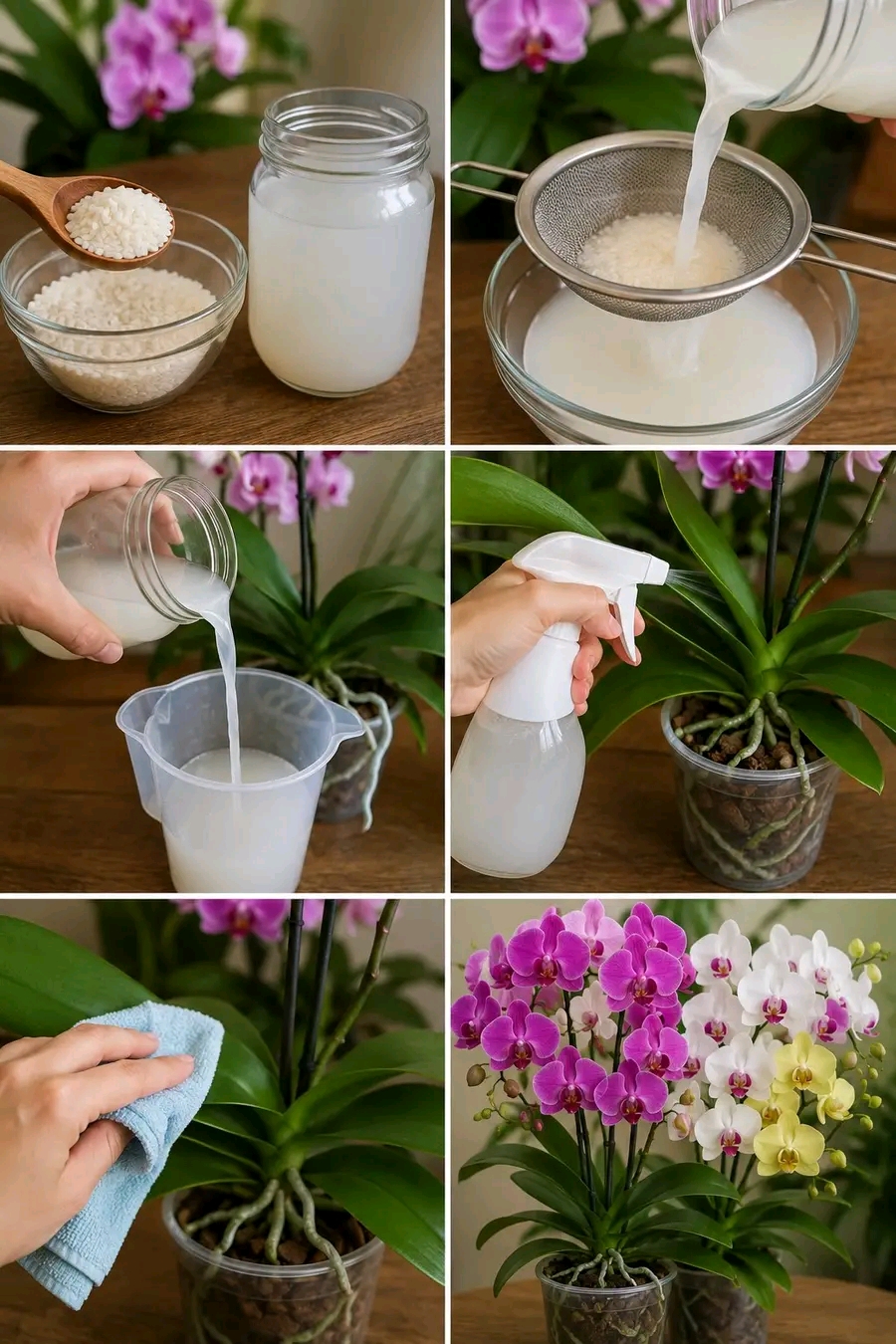
Cleaning Orchid Leaves With a Cloth
Wiping orchid leaves is one of the safest and most useful parts of the routine. Dust can block light and make leaves look dull. A soft damp cloth can restore the natural shine and help the plant look healthier. If diluted rice water is used, the cloth should be only lightly damp, not dripping.
Wipe the top and bottom of each leaf gently while supporting the leaf with the other hand. Do not pull or bend the leaf sharply. Avoid getting liquid into the crown. After wiping with rice water, a second wipe with plain water may be helpful if any residue remains.
Clean leaves are important for premium orchid displays. A blooming orchid with dusty leaves looks less elegant. A non-blooming orchid with clean glossy foliage and healthy roots can still look beautiful in a modern indoor setting.
Protecting Orchid Flowers
Rice water should not be sprayed on open orchid flowers. Petals can spot easily, and any residue can shorten the clean look of the blooms. Orchid flowers last longest when kept dry, clean, and protected from strong sun, cold drafts, and sudden environmental changes.
If the plant is blooming, focus any cleaning on the leaves and visible pot area. Avoid moving the plant too often while buds are developing. Sudden changes in light, temperature, or moisture can cause bud blast, where buds drop before opening.
A blooming orchid already has the result most growers want. During blooming, care should be stable and gentle. Heavy experiments are better avoided until the flowering cycle is finished.
Common Mistakes With Rice Water
One common mistake is using rice water too thick. Thick cloudy liquid can leave starch residue. Another mistake is storing rice water until it ferments. Sour liquid should not be used on orchids. A third mistake is spraying the crown heavily, which can lead to rot.
A fourth mistake is using rice water every few days. Repeated use can build up residue in the medium and on leaves. A fifth mistake is using it on a sick orchid with root problems. Damaged roots need clean recovery care, not starchy liquid. A sixth mistake is expecting rice water to force blooms without enough light.
A seventh mistake is leaving rice grains in the spray bottle or pot. Rice particles can spoil, clog sprayers, and attract pests. The liquid should always be strained well. A clean method is safer than a messy one.
What to Do If Residue Appears
If white marks, sticky film, or dull residue appears on the leaves after using rice water, wipe the leaves with plain clean water. Do this gently and avoid leaving water in the crown. Reduce the strength of the mixture or stop using it altogether.
If the bark begins to smell sour or mold appears, stop using rice water immediately. Flush the pot with plain water and let it drain fully. If the medium remains sour, repot into fresh orchid bark. Mold and smell are signs that the root environment is not clean enough.
If fungus gnats appear, allow the medium to dry properly and remove any organic residue. Sticky traps can help monitor adult gnats, but the root cause is usually damp organic material. Rice water can contribute to the issue when overused.
How Often to Use Rice Water
If used at all, rice water should be occasional. Once a month during active growth is already enough for many cautious routines, and many orchids do not need it at all. Plain water and weak orchid fertilizer are more reliable for regular care.
Do not use rice water during every watering. Orchids need clean wet-and-dry cycles. Repeated starch exposure can create buildup. The plant’s response should guide the routine. If the orchid looks healthy with plain care, there is no need to add extra treatments.
Less is safer. Orchids often decline because of too much attention, not too little. Overwatering, overfeeding, and over-treating are common problems. A gentle routine protects roots and supports long-term blooming.
Indoor Decor and Styling Benefits
An orchid display looks best when leaves are clean, roots are healthy, and the pot is tidy. A clear pot can show the root system, while a decorative cover pot can match the room. Pink, white, yellow, and purple orchids all create a luxury effect when combined with simple containers and soft light.
In a living room, an orchid can sit on a side table or near a bright window. In a bedroom, it can create a calm, spa-like feeling. In a home office, it adds elegance without taking much space. In a kitchen or dining area, it brings color and freshness to the room.
For commercial interiors, orchids are often used in reception spaces, salons, boutique displays, hotel-style arrangements, and staged homes. In these settings, homemade treatments should never leave smell, residue, or pests. The plant should look clean and effortless. Professional-looking orchid care is quiet and controlled.
Balcony Orchid Care
Orchids can grow beautifully on a balcony if the conditions are right. They need bright filtered light, protection from harsh midday sun, good airflow, and shelter from strong wind or cold. A balcony with gentle morning light can be excellent, but a hot exposed balcony can burn leaves and dry roots too quickly.
Rice water on a balcony orchid should still be used carefully. Outdoor airflow may help the plant dry faster, but heat can also make residue dry onto leaves. If spraying outdoors, choose a cool time of day and avoid direct sun. Keep flowers dry and protect the crown.
Balcony plants may face more pests and dust, so leaf cleaning can be useful. A plain damp cloth may be enough most of the time. Rice water should remain optional, not routine.
Professional Orchid Care Note
In professional orchid care, root health is always the priority. A beautiful orchid display depends on clean roots, fresh medium, correct watering, bright filtered light, and gentle nutrition. Homemade treatments are judged by whether they support or disturb that balance. If a treatment creates residue, odor, mold, or pest pressure, it is not suitable for a premium plant display.
Professionals usually prefer predictable fertilizer and clean water over kitchen liquids. This does not mean every homemade method is harmful, but it does mean the method must be mild and controlled. Rice water can be too organic for repeated use in a small orchid pot.
The most elegant orchid care routine is simple. Water when the roots are ready. Let the pot drain. Keep the leaves clean. Provide enough light. Feed weakly during active growth. Repot when the bark breaks down. These steps create stronger results than dramatic shortcuts.
Final Thoughts
A light rice water spray can be used cautiously on orchids when it is fresh, diluted, strained, and applied sparingly. It may help with gentle leaf cleaning or provide a mild occasional support, but it is not a miracle bloom booster and it is not a complete fertilizer. Thick, fermented, sour, or repeated rice water can leave residue, attract fungus gnats, encourage mold, and harm the clean root environment orchids need.
The real foundation of healthy orchids is bright indirect light, firm roots, airy orchid bark, good drainage, proper watering, clean leaves, stable warmth, and weak balanced orchid fertilizer during active growth. If the orchid is weak, fix root health first. If the orchid is not blooming, improve light and patience before adding extra treatments.
With careful maintenance and elegant styling, orchids can remain stunning indoor plants for living rooms, bedrooms, home offices, apartments, balconies, windowsills, commercial interiors, luxury home staging, and premium plant displays. Healthy roots, glossy leaves, clean pots, graceful flower spikes, and steady care will always create a more beautiful result than relying on any risky shortcut.