Warning Signs After Shaping
After shaping, the plant should be checked regularly. Some marks may be harmless, but other signs show stress.
Watch for:
- Leaf cracking
- Soft spots
- Yellowing near the base
- Black marks
- Wrinkled leaves
- Mushy crown tissue
- Leaves collapsing after bending
- Bad smell from the soil
If these appear, stop shaping and focus on plant recovery.
Spiral Snake Plant Styling Table
| Styling Element | Purpose | Why It Matters |
|---|---|---|
| Young flexible leaves | Safer shaping | Reduces cracking and damage |
| Soft plant ties | Gentle guidance | Prevents pressure marks |
| Support stake | Shape control | Helps form the spiral slowly |
| Fast-draining soil | Root protection | Prevents rot while the plant adjusts |
| Bright indirect light | Healthy growth | Keeps leaves firm and colorful |
| Decorative pot | Premium display | Turns the plant into a focal decor piece |
Frequently Asked Questions
Can a snake plant really be trained into a spiral?
It may be possible to guide younger, flexible leaves slowly, but mature leaves should not be forced. Snake plant leaves are thick and can crack if bent too aggressively.
Is a spiral snake plant a different variety?
It may be a styled snake plant, a selected unusual growth form, or a plant trained for decorative effect. The exact origin can vary, but the visual result is a twisted sculptural snake plant display.
Will bending the leaves hurt the plant?
It can hurt the plant if done too quickly or too tightly. Gentle gradual shaping is much safer than forcing a hard bend.
Do spiral snake plants need special watering?
No. They should still be watered like regular snake plants: allow the soil to dry well and avoid soggy conditions.
What should I do if a leaf cracks?
Stop shaping that leaf. Keep the area dry and monitor it. If it becomes soft or rotten, the damaged leaf may need to be removed.
Where should I place a spiral snake plant indoors?
Place it in bright indirect light where the spiral shape can be seen clearly. A plant stand, console, shelf, or open corner works well.
Best Places to Display a Spiral Snake Plant
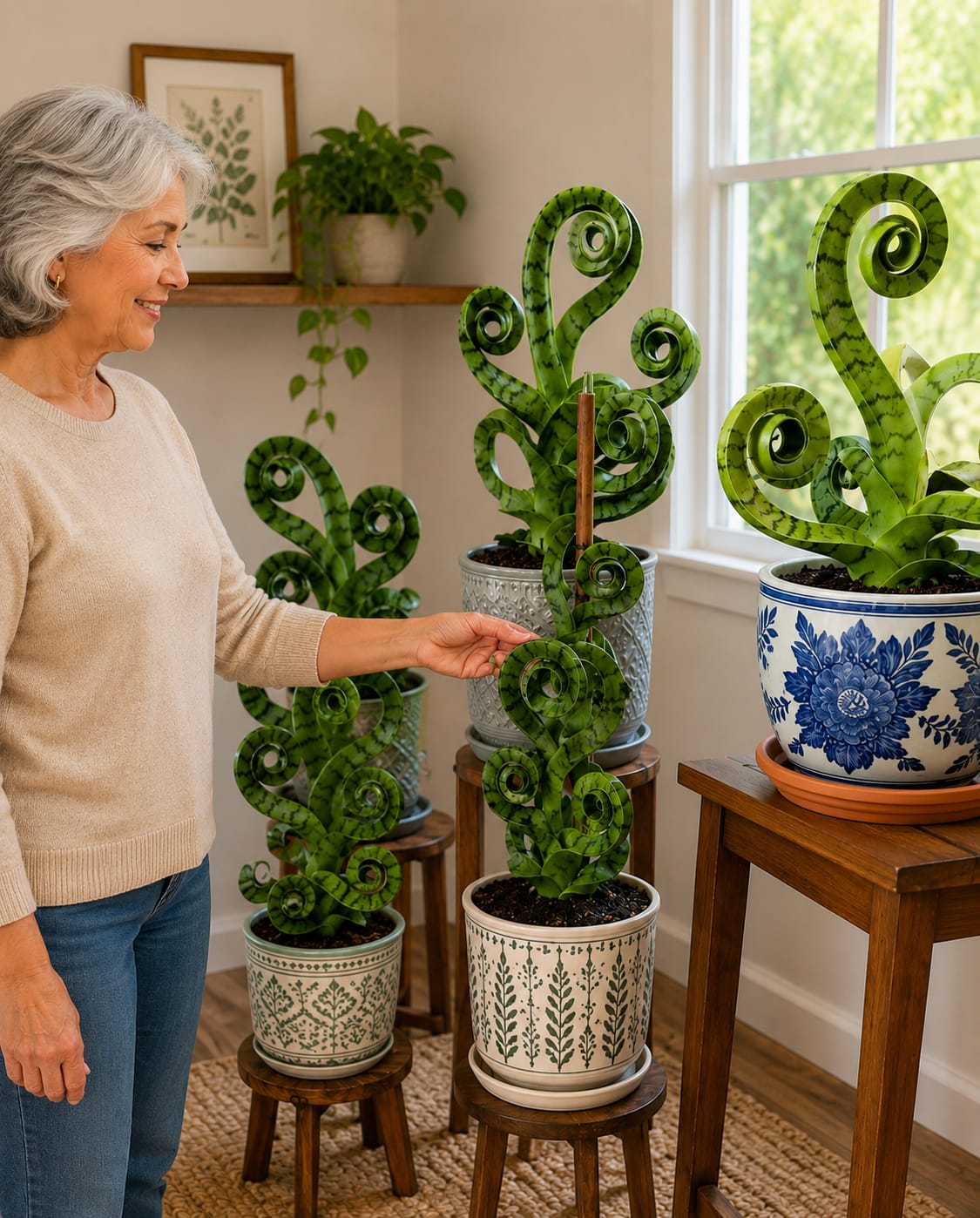
A spiral snake plant needs visual space. It should not be hidden in a crowded plant shelf where the shape disappears. The curves and spirals are the main feature.
Good places include:
- A side table near a bright window
- A living room plant stand
- An entryway console
- A bedroom dresser
- A home office shelf
- A minimalist corner
- A ceramic pot on a wooden stool
The best location gives the plant enough light and enough room to be appreciated as a sculptural piece.
How to Make the Display Look More Expensive
A spiral snake plant already looks unusual, so the surrounding styling should be clean and intentional.
- Use a pot that matches the room style
- Keep the soil surface tidy
- Remove damaged leaves quickly
- Use a simple plant stand
- Place it against a clean wall or bright background
- Avoid clutter around the pot
- Group with simpler plants for contrast
- Let the twisted shape remain the main focus
Too much surrounding decor can compete with the plant. A simple setup often looks more premium.
Why This Style Works in Modern Interiors
Modern interiors often rely on clean lines, sculptural objects, and intentional shapes. A spiral snake plant fits that style beautifully because it feels like both a plant and a design object.
It works especially well with:
- Neutral walls
- Wood furniture
- Minimalist shelving
- Ceramic planters
- Modern apartments
- Office interiors
- Boho plant corners
- Luxury home decor styling
The plant adds shape without clutter and movement without softness becoming messy.
Final Thoughts
A spiral snake plant is one of the most eye-catching ways to turn a familiar houseplant into a sculptural indoor decor feature. The twisted leaves create movement, personality, and a rare collector-style look that can make any room feel more styled and intentional.
But the beauty of the display depends on patience and plant health. Snake plant leaves are not soft vines, so they should never be forced into tight curls. The safest approach is gentle shaping, young flexible growth, soft support, strong roots, fast-draining soil, careful watering, and bright indirect light.
When those details work together, the result can be stunning. A spiral snake plant becomes more than greenery. It becomes living sculpture, premium indoor decor, and a bold conversation piece that brings structure, creativity, and natural beauty into the home.