Best Potting Medium for Orchids
Orchid bark is one of the most common choices because it allows air to reach the roots. Sphagnum moss holds more moisture and may work well in dry homes, but it can cause rot if packed too tightly or watered too often.
A good orchid mix may include bark, charcoal, perlite, coconut husk, and sometimes a little moss. The mix should hold some moisture but still dry enough for air to move through.
If the bark is broken down, smells sour, or stays wet too long, repot the orchid. Old medium is one of the main reasons orchids decline indoors.
When to Repot an Orchid
Repot when the bark has decomposed, when roots are rotting, when the plant has outgrown the pot, or after flowering if the medium is old. Do not repot just because the plant has aerial roots. Aerial roots are normal for orchids.
When repotting, remove old bark, trim dead roots, and place the orchid in fresh medium. Keep the base of the plant above the medium, not buried deeply. The crown should stay dry and open.
After repotting, water gently and keep the plant stable. Avoid heavy fertilizer or homemade treatments for a few weeks while the roots adjust.
Can Lemon Juice Make Orchids Bloom?
No homemade lemon rinse can guarantee blooms. Orchids bloom when their overall needs are met. Light, temperature changes, root health, maturity, and feeding all play a role.
For many Phalaenopsis orchids, a slight nighttime temperature drop can help trigger a flower spike. Bright indirect light and patient care are also important. If the plant is producing healthy leaves and roots, it is building energy for future blooms.
Use the lemon rinse only as a cleaning-style support, not as a bloom command.
Signs the Lemon Rinse Is Too Strong
If roots become brown, shriveled, or soft after using lemon water, the mixture may have been too strong or the plant may have already been stressed. If leaves develop spots or the base becomes soft, stop using the rinse immediately.
Flush the pot with plain water, let it drain well, and return to basic care. If root rot appears, repot into fresh bark and remove damaged roots.
With orchids, gentle care is always safer than dramatic treatment.
A Safer Monthly Orchid Refresh Routine
For a clean and elegant orchid display, use this simple monthly routine. First, remove dead flowers, old leaf sheaths, and debris from the pot. Second, check the roots through the clear pot if possible. Third, flush the medium with plain water. Fourth, wipe the leaves with a damp cloth. Fifth, clean the outer decorative pot. Sixth, rotate the plant slightly so the leaves grow evenly toward the light.
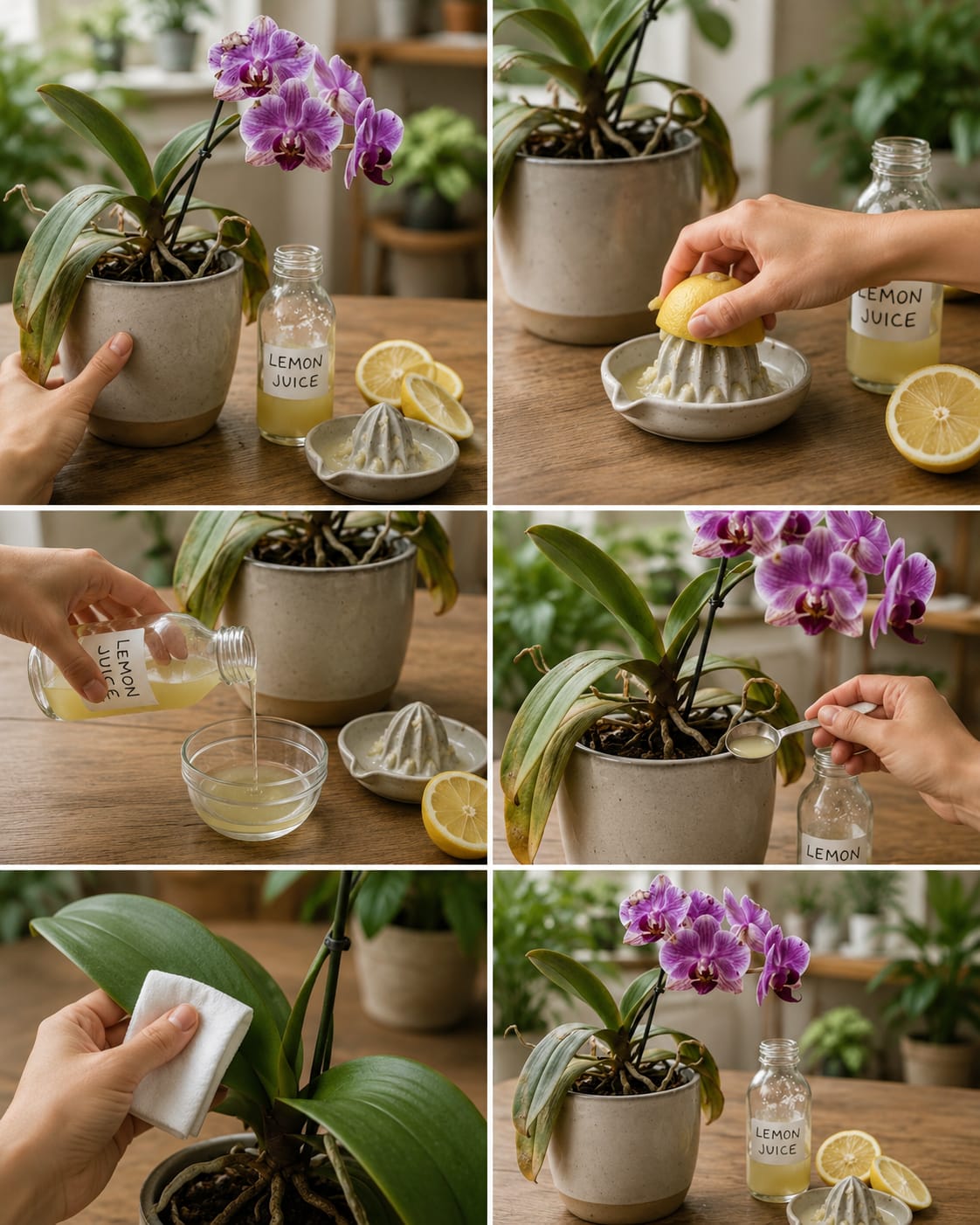
If mineral buildup is visible, use the very diluted lemon rinse only once in a while, then follow with plain water the next time you water.
This routine keeps the plant attractive without overwhelming it.
How to Style Orchids for a More Expensive-Looking Interior
Orchids naturally look luxurious, but the right styling makes them even more beautiful. A simple ceramic pot in white, beige, gray, black, or stone texture can instantly elevate the plant. Avoid overly bright plastic pots unless they are hidden inside a decorative cover pot.
Place the orchid on a wooden table, windowsill, plant stand, console table, or bathroom shelf with bright filtered light. Pair it with natural materials such as bark, moss, glass, stone, or woven baskets. Keep the surrounding area uncluttered so the flowers become the focal point.
For a refined look, use a slim black or green stake to support the flower spike. Clip the spike gently without forcing it into an unnatural shape.
Common Mistakes to Avoid
The biggest mistake is watering too often. Orchid roots need moisture and air. Constant wetness causes rot. Another mistake is using heavy soil instead of orchid bark. A third mistake is pouring homemade mixtures directly into the crown or onto leaves in strong sunlight.
Do not use strong lemon juice, vinegar, soda, sugar water, or concentrated kitchen liquids on orchids. These can attract pests, damage roots, or create fungal problems.
Simple orchid care almost always works better than extreme tricks.
What to Do With a Weak Orchid
If your orchid has limp leaves, yellowing foliage, or weak roots, remove it from the pot and inspect the roots. Trim dead roots with clean scissors. Repot in fresh airy medium. Keep the plant in bright indirect light and water carefully.
Do not focus on flowers immediately. A weak orchid needs to rebuild roots first. Once the roots improve, leaves become stronger, and future blooming becomes more likely.
A healthy orchid may take time to recover. Patience is part of successful orchid care.
Final Thoughts
A light lemon-based orchid rinse can be an interesting occasional trick for refreshing the root zone and reducing the dull look of mineral buildup, but it must be used carefully. The safe version is extremely diluted: only a few drops of lemon juice in a full liter of water. Pure lemon juice is too strong and can harm orchid roots.
The true secret to beautiful orchids is not lemon. It is healthy roots, airy bark, proper drainage, bright indirect light, gentle feeding, and patient care. When those basics are right, an orchid can produce glossy leaves, strong roots, and elegant blooms that make any indoor space feel more refined.
Use the lemon rinse as a rare finishing touch, not a miracle solution. Keep the pot clean, let the roots breathe, water with care, and style the plant beautifully. That is how orchids become not only healthier, but also more expensive-looking and graceful in the home.