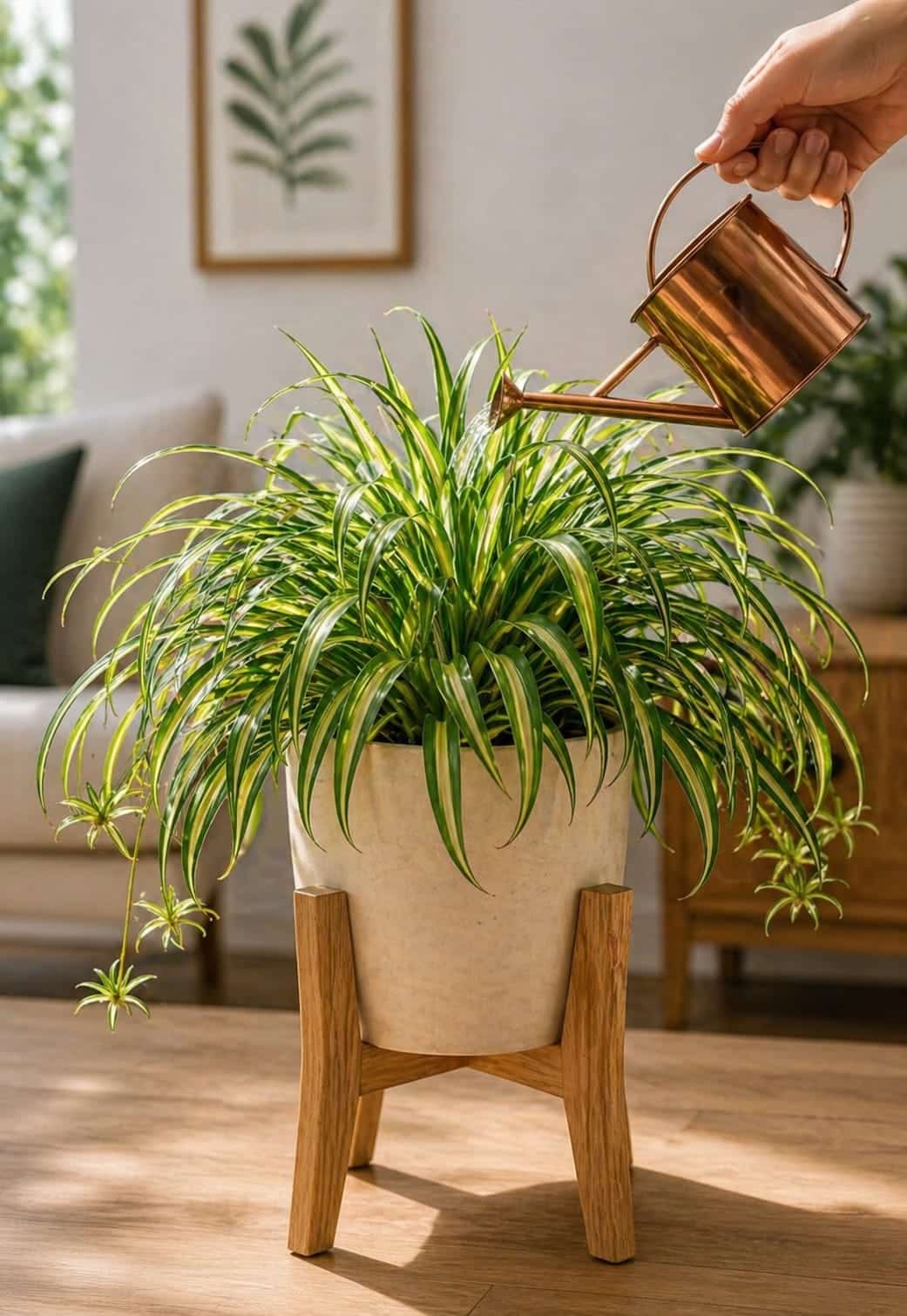
Why Spider Plant Leaves Turn Pale
Pale leaves may mean the plant needs more light, more nutrients, or better overall care.
If the variegation looks faded and growth is weak, move the plant to brighter indirect light. If the plant is already in good light but still pale, consider light feeding during the growing season.
Avoid strong direct sun, which can bleach or burn the leaves.
Healthy spider plant leaves should look bright, clean, and firm. Variegated varieties should have strong contrast between green and pale stripes.
Why Spider Plants Get Brown Tips
Brown tips are probably the most common spider plant issue.
They can be caused by:
Dry air
Inconsistent watering
Mineral-heavy tap water
Too much fertilizer
Salt buildup in soil
Heat or direct sun stress
Old leaf aging
Brown tips do not usually mean the plant is dying. But they can affect the plant’s appearance.
Trim them neatly and adjust care if they keep appearing.
How to Encourage More Spiderettes
If you want your spider plant to produce more babies, focus on maturity and conditions.
Spider plants are more likely to produce spiderettes when they are:
Mature
Slightly root-bound
Getting bright indirect light
Healthy and actively growing
Not overfed with nitrogen
Too much fertilizer can create lots of leaf growth but fewer plantlets. Balanced care is better.
Once your plant begins producing long stems, let them grow. The baby plants will develop at the ends, creating the beautiful cascading effect.
Should You Mist a Spider Plant?
Misting can temporarily increase moisture around the leaves, but it does not replace proper humidity or watering.
Spider plants can tolerate normal indoor humidity, but very dry air may contribute to brown tips. If your home is dry, you can improve humidity by grouping plants together or placing the pot near a humidity tray.
Misting occasionally is fine, but do not keep the leaves wet all the time. Good airflow is still important.
How to Clean Spider Plant Leaves
Dust can collect on spider plant leaves, especially indoors. Dust blocks light and makes the plant look dull.
Clean leaves gently with a damp cloth or rinse the plant lightly in the shower. If rinsing, allow the plant to drain well afterward.
Clean leaves absorb light better and look much more vibrant.
For a large spider plant, leaf cleaning can instantly improve its appearance.
The Best Temperature for Spider Plants
Spider plants prefer comfortable indoor temperatures. They grow best in moderate warmth and should be protected from extreme cold or heat.
Avoid placing them near:
Cold drafts
Heating vents
Air conditioners
Hot windows
Freezing balcony nights
Stable conditions help the plant grow evenly and avoid stress.
How to Style Spider Plants in the Home
Spider plants are very flexible for decor. Their arching leaves make them suitable for both modern and natural interiors.
You can style them:
On a wooden plant stand
In a hanging basket
On a balcony table
On a bright shelf
In a bathroom with good light
Near a reading corner
Beside a window
In a neutral ceramic pot
For a clean look, pair spider plants with simple pots in white, terracotta, matte black, beige, or stone finishes.
A lush spider plant can soften sharp furniture lines and add movement to a room.
Common Mistakes That Stop Spider Plants From Becoming Huge
Many people keep spider plants alive, but they never become large and impressive. Usually, one of these mistakes is the reason:
Keeping the plant in too little light
Using a pot with no drainage
Watering too often
Using heavy compact soil
Never refreshing the soil
Overfertilizing
Ignoring brown tips
Leaving the plant in extreme heat
Cutting off all spiderettes too soon
Never rotating the pot
Fixing even two or three of these issues can create a big improvement.
A Simple Weekly Spider Plant Routine
A beautiful spider plant does not require daily care. A simple weekly routine is enough.
Once a week:
Check soil moisture
Rotate the pot
Remove dead leaves
Look for brown tips
Check light exposure
Empty any standing water
Inspect for pests
Wipe dusty leaves if needed
Once a month during the growing season:
Feed lightly
Flush the soil if needed
Trim damaged growth
Check if roots are crowded
This routine keeps the plant healthy without making care complicated.
Spider Plant Care Table
| Care Factor | Best Condition | Why It Matters |
|---|---|---|
| Light | Bright indirect light | Encourages fuller growth |
| Water | Deep watering, then slight drying | Prevents root stress |
| Soil | Light and airy | Supports healthy roots |
| Pot | Drainage holes | Prevents waterlogging |
| Fertilizer | Light monthly feeding in growing season | Supports steady growth |
| Rotation | Every 1–2 weeks | Keeps shape even |
| Humidity | Average to moderate | Helps reduce brown tips |
| Repotting | When roots are crowded | Refreshes growth |
| Styling | Raised stand or hanging basket | Shows off cascading leaves |
| Maintenance | Trim and clean regularly | Keeps plant attractive |
Frequently Asked Questions About Growing Giant Spider Plants
Why is my spider plant not growing big?
Your spider plant may not be getting enough bright indirect light, or it may be in compact soil, poor drainage, or a pot that restricts healthy root growth. Move it to a brighter spot and check the soil and roots.
How do I make my spider plant fuller?
Give it bright indirect light, rotate the pot regularly, trim damaged leaves, refresh the soil, and allow healthy baby plantlets to grow. You can also plant rooted spiderettes back into the same pot for a fuller look.
Do spider plants like direct sunlight?
Spider plants prefer bright indirect light. Some gentle morning sun can be fine, but harsh direct afternoon sun may burn the leaves.
How often should I water a spider plant?
Water when the top inch of soil feels dry. Always water deeply and let extra water drain out. Avoid keeping the soil constantly wet.
Why are the tips of my spider plant turning brown?
Brown tips can happen because of inconsistent watering, dry air, too much fertilizer, mineral-heavy tap water, or direct sun stress.
Should I cut brown tips off my spider plant?
Yes, you can trim brown tips with clean scissors. Cut along the natural shape of the leaf so it looks neat.
What is the best soil for spider plants?
A light, well-draining potting mix is best. Regular indoor potting soil mixed with perlite works well.
Do spider plants like small pots?
Spider plants can tolerate being slightly root-bound, but if the roots are extremely crowded, growth may slow and watering may become difficult.
When should I repot a spider plant?
Repot when roots come out of drainage holes, the plant dries out too fast, or growth slows despite good care. Choose a pot only slightly larger.
How do I get more baby spider plants?
Give the plant bright indirect light, keep it healthy, and let it become mature. Slightly root-bound spider plants often produce more spiderettes.
Can spider plants grow on balconies?
Yes, they can grow beautifully on balconies if protected from harsh direct sun, extreme heat, and cold. Bright filtered light is ideal.
Are spider plants good for beginners?
Yes, spider plants are excellent beginner plants. They are forgiving, adaptable, and easy to propagate.
Why are my spider plant leaves curling?
Curling leaves can mean the plant is too dry, too hot, getting too much sun, or root-bound. Check soil moisture and light conditions first.
Can I hang a spider plant?
Yes, spider plants are perfect for hanging baskets because their leaves and baby plantlets cascade naturally.
How do I keep my spider plant looking neat?
Trim brown tips, remove old leaves, rotate the pot, clean dust from leaves, and avoid overcrowding the plant.
Final Thoughts
Spider plants may be easy to grow, but they can become truly stunning when given the right care. The difference between an ordinary spider plant and a giant showpiece often comes down to a few simple habits.
Bright indirect light gives the plant energy. Proper watering keeps the roots healthy. Good drainage prevents soggy soil. Airy potting mix supports strong root growth. Light feeding helps during the growing season. Rotating the pot creates an even shape. Trimming brown tips keeps the plant looking clean. Allowing baby spider plants to grow adds drama and fullness.
None of these steps are complicated, but together they can completely change the way your spider plant looks.
A healthy spider plant can become more than a houseplant. It can become a living decoration, a balcony centerpiece, a hanging waterfall of leaves, or a fresh green focal point in your home.
If your spider plant looks ordinary right now, do not give up on it. Move it to better light, improve the soil, water correctly, and give it consistent care. Over time, those thin leaves can become fuller, stronger, and more beautiful.
With the right routine, your spider plant can grow from a simple beginner plant into a giant green showpiece that instantly makes your space feel brighter, fresher, and more alive.