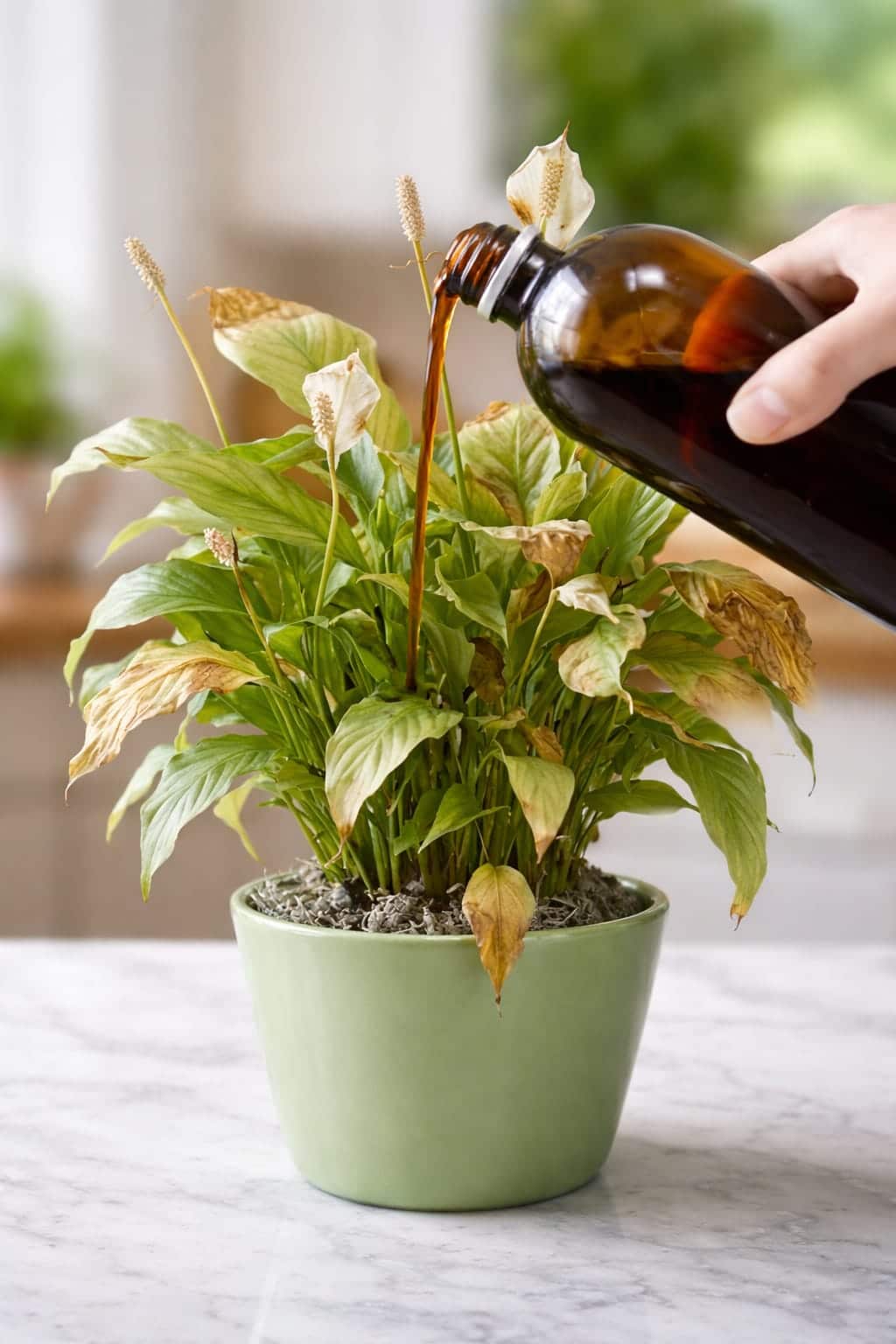
What to Do:
· Use a balanced, water‑soluble fertilizer (e.g., 20-20-10 or 10-10-10) diluted to half strength.
· Feed once a month during the growing season (spring and summer).
· Stop fertilizing in fall and winter.
Why It Works:
A balanced fertilizer provides the phosphorus needed for flower development without promoting excessive leafy growth.
Pro tip: If you see brown leaf tips or a white crust on the soil, you’re over‑fertilizing. Flush the soil with plain water.
- Well‑Draining Soil – The Foundation of Health
Root rot is a common killer of peace lilies, and it directly prevents blooming. The right soil ensures roots get oxygen and don’t sit in water.
What to Do:
· Use a high‑quality, well‑draining potting mix. A mix designed for African violets or a standard houseplant mix with added perlite works well.
· Ensure the pot has drainage holes.
Why It Works:
Healthy roots absorb water and nutrients efficiently, which supports flower production. Compacted or waterlogged soil leads to root rot and energy loss.
Pro tip: Add 20% perlite to regular potting soil to improve drainage.
- Right‑Sized Pot – Snug Is Better
Many people assume a bigger pot means a bigger plant, but peace lilies actually prefer to be slightly root‑bound. A pot that is too large encourages root growth at the expense of flowers.
What to Do:
· Choose a pot that is only 1–2 inches larger than the root ball.
· Repot only when necessary – every 1–2 years or when roots are circling the pot.
· Avoid moving to a much larger pot.
Why It Works:
When roots are slightly crowded, the plant senses it’s running out of space and shifts energy toward reproduction (flowering).
Pro tip: If your peace lily hasn’t bloomed in over a year, try moving it to a slightly smaller pot.
- Regular Pruning – Redirect Energy
Dead or dying leaves and spent flowers drain energy from the plant. Removing them allows the plant to focus on new growth and blooms.
What to Do:
· Trim yellow or brown leaves at the base with clean scissors.
· Remove spent flowers – cut the flower stalk at the base once the white spathe turns green and fades.
· Prune during spring or early summer.
Why It Works:
Pruning eliminates energy drains and improves airflow, reducing disease risk. The plant redirects its resources toward healthy leaves and flowers.
Pro tip: Don’t remove more than ⅓ of the leaves at once – too much pruning can stress the plant.
- Temperature Consideration – Keep It Stable
Peace lilies are sensitive to temperature extremes and drafts. Sudden changes can cause bud drop and prevent blooming.
What to Do:
· Maintain temperatures between 65–80°F (18–27°C).
· Keep away from cold drafts (air conditioners, open windows in winter) and hot heaters.
· Avoid placing near exterior doors that open frequently.
Why It Works:
Stable, warm temperatures mimic the plant’s natural tropical environment, allowing it to focus energy on flowering rather than stress recovery.
Pro tip: A slight night‑time temperature drop (60–65°F) can actually encourage blooming, but avoid sudden swings.
- Seasonal Variations – Respect the Rest Period
Peace lilies naturally have cycles of growth and rest. They may not bloom year‑round, and that’s normal. Understanding and respecting these cycles prevents frustration.
What to Do:
· Accept that your peace lily may have natural resting periods with no flowers.
· During rest periods (often in winter), reduce watering and stop fertilizing.
· When new growth appears in spring, resume normal care.
Why It Works:
Forcing a plant to bloom when it wants to rest can stress it. Working with its natural rhythm leads to healthier, more abundant blooms in the long run.
Pro tip: Keep a plant journal to track when your peace lily blooms – you’ll learn its personal cycle.
- Avoid Using Chlorine in the Water – Use Filtered or Rainwater
Peace lilies are sensitive to chemicals found in tap water, especially chlorine and fluoride. These can cause brown leaf tips and inhibit blooming.
What to Do:
· Use reverse osmosis (RO) water, distilled water, or rainwater.
· If you must use tap water, let it sit out overnight to allow chlorine to dissipate (note: fluoride will remain).
· Alternatively, use a water filter that removes chlorine and fluoride.
Why It Works:
Clean, chemical‑free water prevents leaf damage and root stress, allowing the plant to channel energy into flower production.
Pro tip: If your peace lily has brown tips despite good care, switch to filtered water – you’ll likely see improvement.
Bonus: Common Reasons Your Peace Lily Won’t Bloom (Quick Troubleshooting)
Problem Likely Cause Solution
No blooms for over a year Insufficient light Move to brighter indirect light
Leaves are lush but no flowers Too much nitrogen (over‑fertilizing) Switch to balanced fertilizer, stop feeding for 2 months
Buds form but drop before opening Temperature swings or dry air Stabilize temperature, increase humidity
Plant looks healthy but small Pot too large or too small Repot to appropriate size
Brown leaf tips Chlorine/fluoride or low humidity Use filtered water, increase humidity
Frequently Asked Questions (FAQs)
Q: Why does my peace lily not bloom?
A: The most common reasons are insufficient light, improper watering (too much or too little), and a pot that is too large. Also check humidity, fertilizer balance, and water quality.
Q: Can peace lilies bloom all year round?
A: With ideal conditions – bright indirect light, consistent moisture, proper feeding, and stable temperatures – peace lilies can bloom multiple times a year. However, they may have natural resting periods, especially in winter.
Q: How long do peace lily blooms last?
A: Each white spathe can last for 2–4 weeks or longer. After it fades and turns green, cut it off at the base to encourage new blooms.
Q: Should I cut off the brown tips on my peace lily leaves?
A: Yes – trim just the brown part, following the natural shape of the leaf. This improves appearance and prevents further damage.
Q: Can I use coffee grounds to help my peace lily bloom?
A: Coffee grounds are acidic and can alter soil pH. Use sparingly, if at all. A balanced fertilizer is more reliable.
Q: Is Epsom salt good for peace lilies?
A: Epsom salt provides magnesium, which can help with chlorophyll production, but it won’t directly cause blooms. Use a balanced fertilizer instead.
Printable Peace Lily Bloom Checklist
☐ Place in bright, indirect light (east/north window)
☐ Water when top inch of soil is dry – keep consistently moist
☐ Increase humidity (pebble tray, misting, humidifier)
☐ Fertilize with balanced liquid fertilizer once a month (spring/summer)
☐ Use well‑draining potting mix (add perlite)
☐ Keep pot slightly snug – repot only when necessary
☐ Prune yellow/brown leaves and spent flowers
☐ Maintain temperature 65–80°F, avoid drafts
☐ Respect seasonal rest periods – reduce care in winter
☐ Use filtered, distilled, or rainwater (avoid chlorine/fluoride)
Final Thoughts – A Little Attention Goes a Long Way
Getting your peace lily to bloom more often isn’t about complicated tricks or expensive products. It’s about understanding what this tropical plant needs and providing consistent, gentle care.
· Give it bright indirect light – that’s the #1 bloom trigger.
· Water consistently – keep soil slightly moist, never soggy.
· Boost humidity – your peace lily will thank you.
· Feed lightly – balanced fertilizer once a month in spring/summer.
· Keep it snug – a slightly root‑bound pot encourages flowers.
· Use clean water – avoid chlorine and fluoride.
· Be patient – respect natural rest cycles.
With these 10 tips, your peace lily will reward you with those elegant, pure white blooms that make this plant so beloved. And when that first spathe unfurls, you’ll know all your gentle care paid off.
Now it’s your turn! Have you tried any of these tips? What worked best for your peace lily? Drop a comment below – I’d love to hear your experience.
And if you found this guide helpful, share it with a friend who’s struggling with a non‑blooming peace lily. Pin it for later, and subscribe to our newsletter for more plant care wisdom.
Stay bright, stay consistent, and enjoy those beautiful blooms. 🌿🤍✨