Discover how a simple garlic clove can boost your snake plant’s health, encourage growth, and even help it bloom. Learn two easy methods to use garlic safely and naturally.
Let me introduce you to the surprising kitchen ingredient that can take your snake plant from surviving to thriving.
Snake plants (Dracaena trifasciata, formerly Sansevieria) are famous for being nearly indestructible. They tolerate low light, infrequent watering, and general neglect. But even the toughest plants can sometimes look dull, grow slowly, or never produce new pups. What if there was a simple, natural way to give your snake plant a boost—using something you probably already have in your kitchen?
Enter garlic. This humble bulb isn’t just for cooking. Packed with natural sulfur compounds, antibacterial properties, and pest‑repelling abilities, garlic can help create a healthier soil environment for your snake plant. When used correctly, it can support stronger roots, encourage new growth, and even help protect against common pests.
In this guide, I’ll walk you through exactly how to use garlic to benefit your snake plant, including two simple methods, safety tips, and what results you can realistically expect. Whether you’re a beginner or a seasoned plant parent, this natural trick is worth adding to your plant care routine.
Why Snake Plants Sometimes Struggle
Even though snake plants are hardy, they’re not completely invincible. Over time, you may notice:
· Slow or stagnant growth – No new leaves for months.
· Pale or dull leaves – Loss of that vibrant green color.
· Lack of new shoots (pups) – The plant doesn’t multiply.
· Weak root development – The plant feels loose in its pot.
· Occasional pest issues – Fungus gnats, mealybugs, or scale.
These problems often come from poor soil quality, lack of nutrients, or environmental stress. Even a resilient plant like the snake plant benefits from occasional care improvements. That’s where garlic comes in.
The Garlic Trick Explained
The idea is simple: placing garlic cloves in the soil or using garlic‑infused water can give your plant a natural boost. This method introduces natural compounds into the soil that can benefit the plant in several ways.
When used correctly, garlic can:
· Help protect roots from harmful microbes
· Support stronger plant growth
· Improve overall plant vitality
· Reduce the chances of pests
It’s a natural, affordable, and chemical‑free way to support your plant’s health.
Why Garlic Works for Plants
Garlic is packed with beneficial compounds that go beyond cooking.
Benefit How It Helps
Natural antibacterial properties Sulfur compounds in garlic help reduce harmful bacteria and fungi in the soil, preventing root issues and keeping the plant healthier over time.
Pest repellent effect The strong scent of garlic naturally deters certain pests like fungus gnats, aphids, and small insects that can damage roots or leaves.
Supports root health A cleaner, healthier soil environment allows roots to grow stronger and absorb nutrients more efficiently.
Boosts overall growth When roots are healthy, the entire plant benefits—leading to greener leaves and more vigorous growth.
How to Use Garlic for Your Snake Plant
There are two simple methods you can try. Both are safe when used in moderation.
🧄 Method 1: Garlic Cloves in Soil
This is the simplest method—just tuck a clove or two into the soil.
Steps:
- Take 1–2 fresh garlic cloves. (Use organic if possible to avoid pesticides.)
- Peel them lightly (you can leave the skin on if you prefer).
- Make a small hole in the soil near the edge of the pot, away from the main root ball.
- Place the clove just beneath the soil surface and cover lightly.
- Water normally.
Important: Replace the cloves every 2–3 weeks, as they will eventually decompose. Don’t bury too many cloves at once—one or two per pot is plenty.
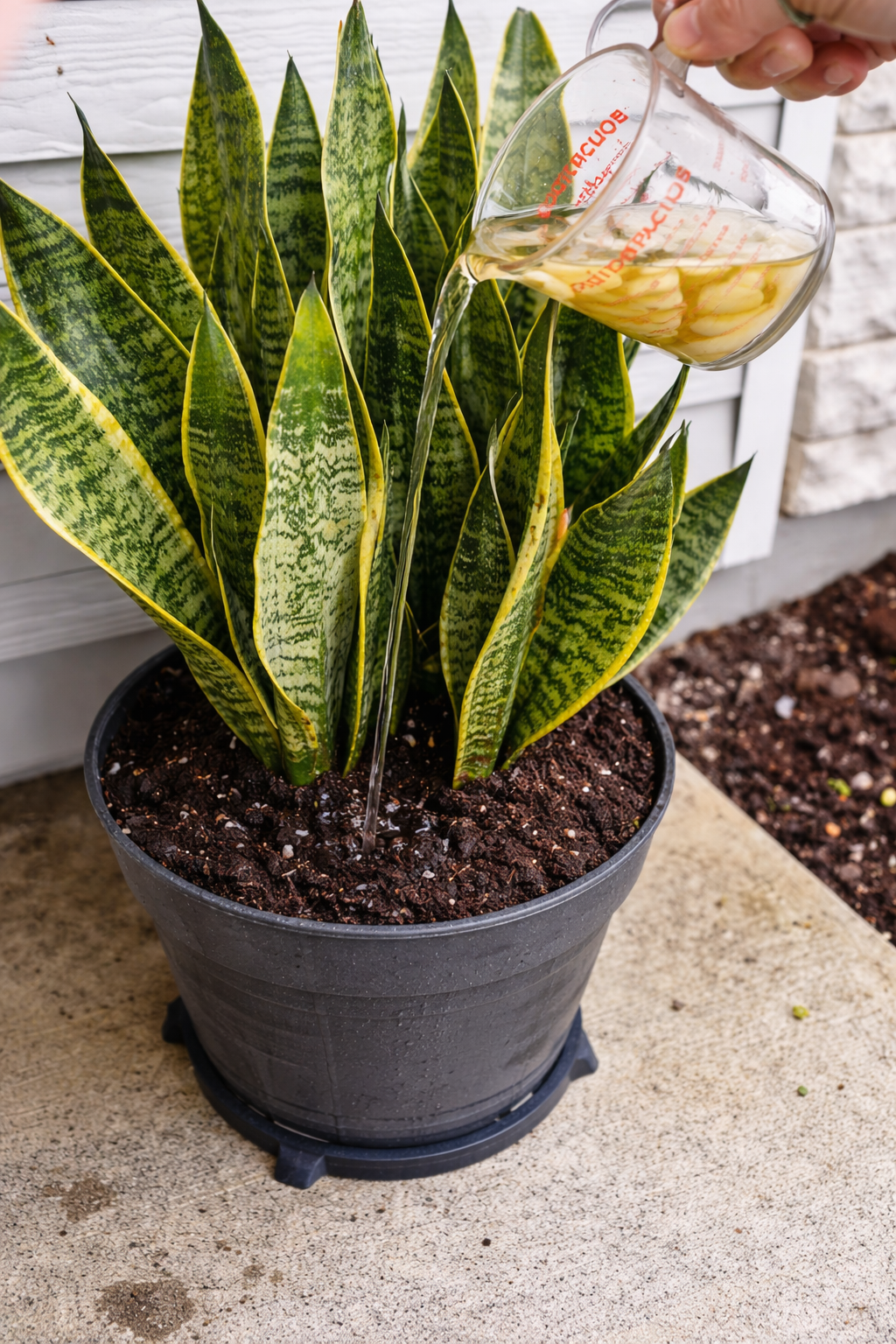
💧 Method 2: Garlic Water
This method creates a gentler, diluted solution that you can use as part of your regular watering routine.
Steps:
- Crush 2–3 fresh garlic cloves.
- Soak them in 1 liter of water for 24 hours.
- Strain out the garlic solids.
- Use the garlic‑infused water to water your snake plant lightly, replacing one regular watering.
Frequency: Use once every 2–4 weeks, alternating with plain water. This method is especially good if you want to give a gentle boost without introducing solids into the soil.
Important Tips for Safe Use
While garlic is beneficial, moderation is key.
Do Don’t
Use 1–2 cloves per medium pot. Don’t bury cloves directly against the roots.
Replace cloves every 2–3 weeks. Avoid leaving old cloves to rot for too long.
Dilute garlic water with plenty of water. Don’t use garlic more than once every 2 weeks.
Monitor your plant for changes. Don’t use garlic on plants that are already stressed or overwatered.
If you notice any negative signs—yellowing leaves, a strong rotting smell, or sudden wilting—stop using garlic and flush the soil with plain water.
What Results Can You Expect?
With consistent use and proper care, you may notice:
· Faster growth of new leaves – The plant seems more energetic.
· Stronger, more upright structure – Leaves become firmer and more vibrant.
· Healthier root system – Less chance of rot or fungal issues.
· Reduced pest problems – Fungus gnats and other small pests are less likely to take hold.
· In some cases, flowering – Yes, snake plants can bloom under the right conditions, producing tall stems with delicate white flowers. While garlic alone won’t guarantee blooms, it can contribute to the overall health needed for flowering.
Ideal Care Conditions for Snake Plants
Garlic is a supplement, not a replacement for good care. To get the most out of this trick, make sure your snake plant has:
Care Factor Ideal Condition
Light Bright, indirect light. They can tolerate low light but grow best near an east‑ or north‑facing window.
Watering Allow soil to dry completely between waterings. Overwatering is the #1 cause of snake plant problems.
Temperature Thrives in normal indoor temperatures (65–85°F / 18–29°C). Protect from cold drafts.
Soil Use a well‑draining cactus or succulent mix.
Pot Always choose a pot with drainage holes. Snake plants prefer to be slightly root‑bound.
Common Mistakes to Avoid
Even a good method can fail if these mistakes are made:
Mistake Why It’s a Problem
Overwatering The number one cause of snake plant issues. Wet soil plus garlic can promote rot.
Too much garlic More is not better. Excess can disrupt soil balance and harm roots.
Poor drainage Soggy soil = root rot. Always use pots with drainage holes.
Ignoring light needs Low light slows growth significantly; garlic can’t make up for it.
Natural Alternatives to Garlic
If you want to explore other natural methods, consider:
Alternative Benefit
Cinnamon Natural antifungal; sprinkle a little on the soil surface.
Neem oil Excellent for pest control; dilute and use as a soil drench or leaf spray.
Compost tea Provides gentle, balanced nutrients and beneficial microbes.
Banana peel water Rich in potassium; soak peels in water for 2 days and use the liquid.
Each option supports plant health in different ways, and you can rotate them to keep your plant happy.
Frequently Asked Questions (FAQs)
Q: Can garlic harm my snake plant?
A: Not if used in small amounts. Overuse can disrupt soil balance or cause a smell. Stick to 1–2 cloves per pot and replace them regularly.
Q: How often should I use garlic water?
A: Once every 2–4 weeks is enough. Use it in place of a regular watering, then return to plain water.
Q: Will this make my plant grow faster?
A: It can support healthier growth, especially when combined with proper light and watering. You may notice stronger leaves and new shoots.
Q: Can snake plants really bloom indoors?
A: Yes, but it’s rare. With optimal conditions—bright light, good nutrients, and sometimes a mild stress period—they can produce tall flower stalks with sweetly scented white flowers.
Q: Is this safe for other houseplants?
A: Yes, but always test small amounts first. Many flowering plants and leafy greens can benefit from a mild garlic boost.
Final Thoughts
Snake plants are already one of the easiest plants to grow, but with a few small improvements, they can become even more impressive. Using natural methods like garlic can help create a healthier soil environment, support stronger roots, and improve overall growth.
While it may seem like a simple trick, the results can be noticeable when combined with proper care. From greener leaves to stronger growth—and even the possibility of blooms—this method is worth trying if you want to take your plant care routine to the next level.
If your snake plant has been growing slowly or looking a bit dull, this could be the small change that makes a big difference.
Now it’s your turn! Have you tried using garlic on your houseplants? Share your experiences in the comments below.
And if you’re looking for more natural plant care tips, check out our guides for Reviving a Snake Plant, Homemade Fertilizers, and Natural Pest Control for Houseplants.
Happy growing! 🌿🧄✨
Did you try the garlic trick on your snake plant? We’d love to hear about your results! Leave a comment below and share your photos. Don’t forget to pin this guide for your plant care routine.
More Recipes You Might Like
-

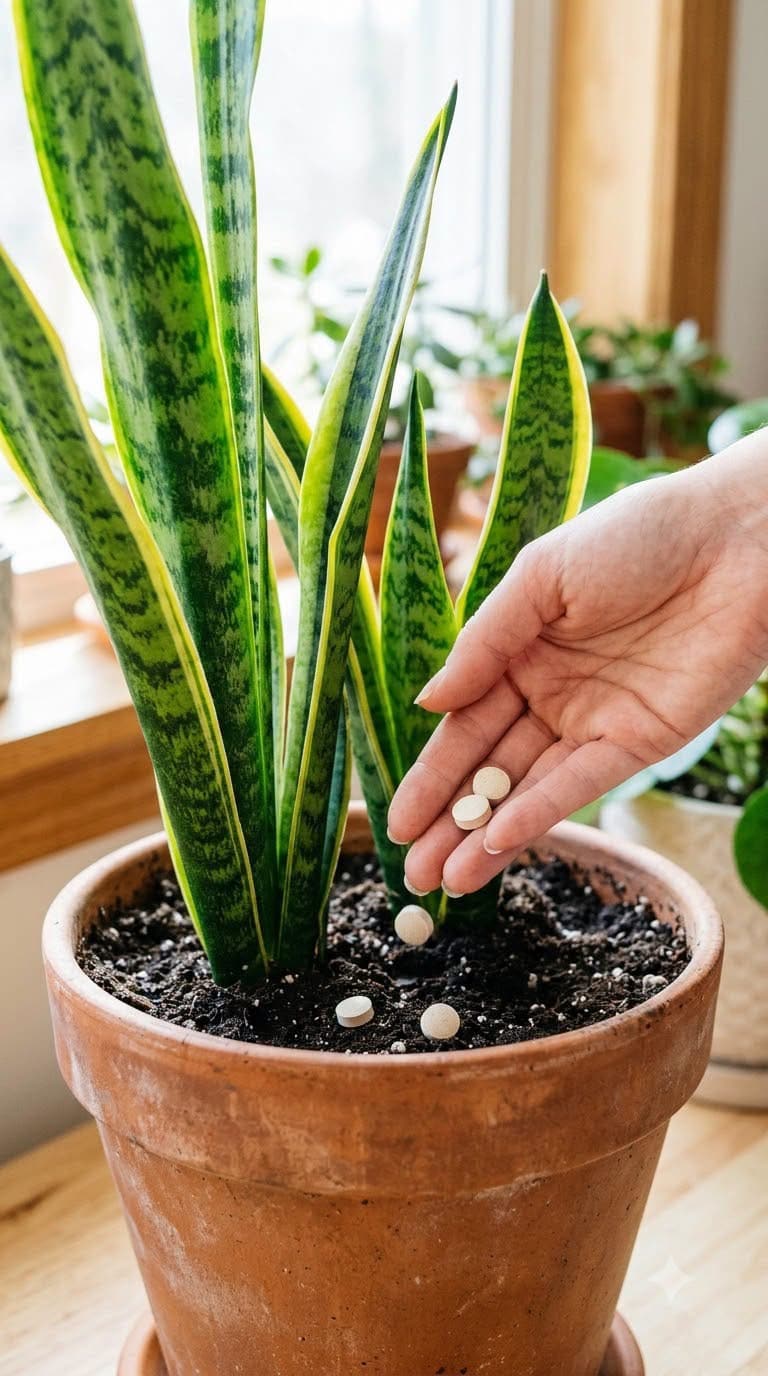
How to Use Slow-Release Fertilizer Tablets for Snake Plants Without Overfeeding
Snake plants are known for being low-maintenance houseplants, but that does not mean they never need nutrients. A small amount of fertilizer during their active growing season can support steady new growth and help leaves keep their deep green color and strong upright form. The image shows small fertilizer tablets being placed on the soil…
-
Orchid Care for Healthy Roots, Lasting Blooms, and Beautiful Indoor Displays
Orchids are elegant houseplants that can bring a refined, peaceful look to almost any room. Their long-lasting flowers, glossy leaves, and sculptural stems make them especially beautiful on bright tables, windowsills, kitchen counters, and living-room shelves. A healthy orchid does not need lemon water, sugary drinks, or homemade kitchen mixtures to bloom. Although lemon water…
-

Spider Plant Care: The Safe Way to Grow a Fuller, Healthier Houseplant
Spider plants are loved for their long striped leaves, easy-going nature, and charming baby plants that spill over the sides of the pot. They look beautiful on a bright windowsill, shelf, hanging basket, or small table, and they can quickly make a room feel fresher and more inviting. The image may suggest adding honey to…