A wilted orchid can look heartbreaking. One week it may be full of flowers, glossy leaves, and healthy green roots. Then, after a period of stress, the blooms fade, the leaves droop, and the roots begin to look dry, brown, or weak. Many orchid owners assume the plant is dead as soon as it loses flowers or looks tired, but that is not always true. In many cases, a wilted orchid can recover if there are still living roots, a healthy crown, and at least one firm leaf.
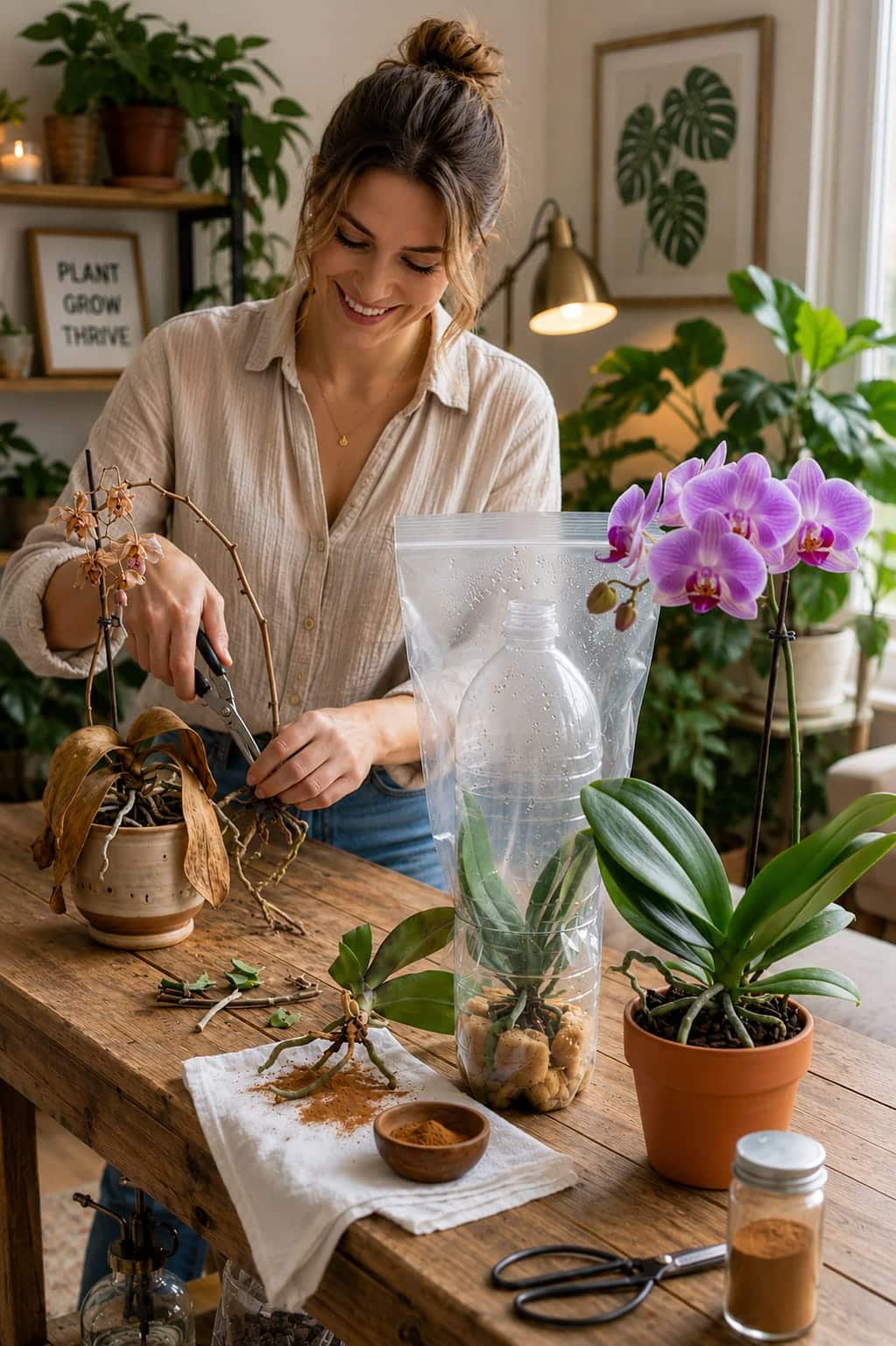
The image shows a common orchid rescue situation. There is one orchid that looks dry and damaged, another healthy orchid nearby, roots being trimmed, a clear humidity setup, pieces of banana or sponge-like material in a bottle, and a small bowl of brown powder that looks like cinnamon. This creates a strong recovery idea: the orchid is weak, but not necessarily finished. With careful trimming, a clean environment, humidity support, fresh bark, and a small amount of cinnamon used correctly, the plant may still have a chance.
But this method must be explained honestly. Cinnamon is not a magic ingredient that brings dead orchids back to life. It will not revive completely rotten roots, repair a dead crown, or make flowers appear overnight. It can, however, be useful as part of an orchid recovery routine because dry cinnamon powder is often used by plant growers on cut surfaces to help keep wounds dry. When roots or flower spikes are trimmed, a tiny amount of cinnamon may be applied to the cut area to help it stay dry while the plant heals.
The important word is “tiny.” Cinnamon should not be dumped into the orchid pot, mixed heavily into the bark, or rubbed all over living roots. It can be drying, and orchid roots are sensitive. Used incorrectly, cinnamon can damage the same roots you are trying to save. Used carefully, it can be one small step in a larger rescue plan.
This guide explains how to rescue a wilted orchid realistically, how to decide whether the plant still has hope, how to use cinnamon safely, and what to avoid if you want your orchid to grow new roots instead of declining further.
First, Is the Orchid Really Dead?
Before using any treatment, it is important to understand whether the orchid is truly dead or only stressed. Many orchids look worse than they really are after blooming. Old flowers naturally fade and fall. A dry flower spike can turn brown. One lower leaf may yellow and drop. These changes do not automatically mean the plant is dying.
A Phalaenopsis orchid can survive without flowers for many months. Flowers are temporary. Roots and leaves are the real signs of life. If the crown is firm, the leaves are not completely collapsed, and some roots are still firm, the orchid may recover.
Look at the crown first. The crown is the central area where the leaves meet. If it is firm and green, that is a good sign. If it is black, mushy, hollow, or smells rotten, the situation is much more serious.
Next, look at the roots. Healthy orchid roots are firm. They may be green when wet and silver-gray when dry. Dry roots can look pale, but if they are still firm, they may be alive. Dead roots are usually mushy, hollow, black, brown, or papery.
If the orchid still has living tissue, there is hope. If the entire crown is dead and all roots are rotten or hollow, cinnamon will not bring it back.
What Cinnamon Can Do for Orchids
Cinnamon is commonly used by many plant owners as a dry powder on cut areas. When you trim a dead root, cut a flower spike, or remove a damaged piece of tissue, the cut area is like a small wound. Moisture sitting on that wound can sometimes lead to more rot. A tiny dusting of cinnamon may help dry the cut surface.
This is why cinnamon is often included in orchid rescue routines. It is simple, cheap, and easy to apply. It should be used only on cut or damaged areas, not as a general fertilizer.
Cinnamon is not plant food. It does not contain balanced nutrients for orchids. It does not replace fertilizer. It does not create new roots by itself. It does not fix poor light or overwatering. It is only a wound-drying support.
The safest use is very specific: after trimming a rotten or dead root, touch a tiny amount of cinnamon powder to the cut end only. Keep it away from healthy green root tips and the active root surface.
What Cinnamon Cannot Do
Cinnamon cannot revive a dead orchid. If the crown is completely rotten, if all leaves have fallen, and if the roots are dead, there is no living system left for cinnamon to support.
Cinnamon cannot cure severe root rot by itself. Rotten roots must be removed. The orchid must be repotted into fresh, airy medium. Watering must be corrected. If the same wet conditions continue, the rot can return.
Cinnamon cannot replace fresh bark. If the orchid is sitting in old, broken-down, sour-smelling medium, sprinkling cinnamon on top will not solve the problem. Old bark holds too much moisture and reduces airflow around the roots.
Cinnamon cannot make an orchid bloom immediately. A recovering orchid should focus on roots and leaves first. Flowers come later, after the plant rebuilds strength.
Cinnamon cannot safely be used everywhere on the plant. It can dry tissue. If applied heavily to healthy roots, it may cause damage. This is why careful placement matters.
Why Wilted Orchids Usually Decline
Most wilted orchids decline because of root problems. The leaves may look like the main issue, but the roots are usually where the trouble begins. When roots are damaged, the orchid cannot absorb water properly. The leaves then become limp, wrinkled, or dull.
Root damage often comes from overwatering. Orchids need moisture, but they also need air. When the potting medium stays wet for too long, roots can suffocate and rot. This happens especially when orchids are planted in old bark, dense moss, or decorative pots without proper drainage.
Underwatering can also cause problems. If roots dry out for too long, they can shrivel and stop functioning. A dehydrated orchid may have wrinkled leaves, dry roots, and a weak flower spike.
Sometimes the problem is not watering alone. Low light, cold drafts, heat stress, pests, and old potting medium can all weaken the plant. A rescue routine should address the real cause, not just add one ingredient.
Step One: Remove the Orchid From the Pot
If your orchid is badly wilted, the first step is inspection. Gently remove the orchid from its pot. Do this carefully because weak roots can break easily. If the roots are stuck to the pot, squeeze the pot gently or soak the roots briefly in room-temperature water to loosen them.
Once the plant is out, remove old bark, moss, or broken-down potting material from around the roots. Be gentle. Do not rip healthy roots. If pieces of bark are strongly attached to living roots, it is better to leave them than to tear the root surface.
This step helps you see what is really happening. Sometimes a plant looks wilted because the roots are completely rotten inside the pot. Other times, the roots are dry but still alive. The correct treatment depends on what you find.
Step Two: Identify Living Roots
Healthy roots are firm. They may be green, silver, white, or slightly tan depending on moisture and age. A dry but firm silver root can still be alive. A green root after watering is usually a good sign.
Dead roots feel different. Mushy roots collapse when squeezed. Hollow roots feel empty, like a loose string inside a tube. Rotten roots may be brown or black and may smell unpleasant. Papery roots are usually dead.
Do not remove roots just because they are not bright green. Many healthy orchid roots look silver when dry. Remove only the roots that are clearly dead, mushy, hollow, or rotten.
If the orchid has at least a few firm roots, recovery is much easier. If it has no good roots but the crown is still firm, recovery is possible but slower. If the crown is also damaged, the chance is lower.
Step Three: Trim Dead Roots With Clean Tools
Use clean, sharp scissors or pruning shears. Sterilize the tool before cutting. You can wipe it with rubbing alcohol or use another safe cleaning method. Clean tools reduce the risk of spreading disease.
Cut away dead roots one by one. Do not cut healthy roots. If you are unsure whether a root is alive, leave it. A questionable firm root is better left than removed too aggressively.
After cutting, inspect the plant again. Remove old flower spikes if they are completely dry and brown. If a spike is green and the plant is strong, you may leave it, but for a weak orchid, removing old spikes can help the plant focus on roots and leaves.
This is where cinnamon may be used carefully. After trimming, you can apply a tiny dusting of cinnamon to the cut ends only.
How to Use Cinnamon Safely on Cut Orchid Roots
Pour a small amount of cinnamon into a clean dish. Do not dip the whole root system into cinnamon. Do not sprinkle it all over the pot.
Use a clean cotton swab, a small brush, or your fingertip to pick up a tiny amount of cinnamon powder. Touch it only to the cut end of the trimmed root. The goal is to dust the wound, not coat the entire root.
Avoid applying cinnamon to healthy green root tips. Root tips are active growing tissue and can be sensitive. If cinnamon dries them out, growth may slow or stop.
Also avoid putting cinnamon inside the crown. The crown should stay dry and clean, but filling it with powder is not a good idea. If there is crown rot, the plant needs careful treatment and drying, not a heavy cinnamon pile.
Use cinnamon like a small bandage on cuts, not like fertilizer.
⚠️ Important: Use only a tiny pinch of cinnamon on fresh cut ends. Never coat healthy roots or dump cinnamon into the potting mix.
Why You Should Not Mix Cinnamon Into Orchid Bark
Some people sprinkle cinnamon heavily into the potting mix because they believe more will protect the plant better. This can be risky. Orchid roots need moisture and airflow. Cinnamon is drying, and too much around healthy roots may cause stress.
Orchid bark should remain clean and airy. If you mix a lot of powder into bark, it can settle into small spaces, hold uneven moisture, and create residue. It may also come into contact with active root tips.
If your bark is moldy or smells bad, do not try to fix it with cinnamon. Replace the bark. Fresh orchid mix is much more important than adding powder to old medium.
The best practice is simple: fresh bark for the roots, tiny cinnamon dusting only on cut wounds.
Step Four: Let the Orchid Dry Briefly
After trimming and applying cinnamon to cut ends, let the orchid rest for a short time before repotting. This allows cut areas to dry slightly. You do not need to leave the plant out for days. A short drying period of a few hours is usually enough for light trimming.
If many roots were removed, be extra careful with watering afterward. A plant with fewer roots cannot absorb water as quickly. Keeping it too wet can cause new rot.
During this time, keep the orchid out of direct sun. Exposed roots can dry too quickly in hot light. Place it in a bright but shaded area while preparing the pot and medium.
Step Five: Repot Into Fresh Orchid Bark
A wilted orchid needs a clean, airy environment. Use fresh orchid bark or a suitable orchid mix. Do not use regular potting soil for Phalaenopsis orchids. Regular soil is too dense and holds too much water.
Choose a pot with drainage holes. A clear orchid pot is helpful because it lets you see the roots and moisture level. If the old pot is dirty, wash it well before reusing it, or use a clean pot.
Place the orchid in the pot and gently arrange the roots. Add bark around the roots without packing it too tightly. The plant should be stable, but the roots still need airflow.
Do not bury the crown. The crown should sit above the potting medium. If bark covers the crown, moisture may collect and cause rot.
Step Six: Water Carefully After Repotting
Watering after rescue depends on the condition of the roots. If the orchid still has several healthy roots, you can water lightly after repotting and let the pot drain completely. If many roots were cut and only a few remain, wait a short time before watering heavily.
When you water, use room-temperature water. Let water run through the bark and drain fully. Do not leave the orchid sitting in water. Standing water is one of the quickest ways to restart root rot.
Keep water out of the crown. If water accidentally collects between the leaves, blot it dry with a tissue.
After repotting, the orchid should be kept slightly on the careful side. It needs moisture, but it should not stay wet for long periods.
Using a Humidity Chamber for a Rootless Orchid
The image shows a clear plastic setup around an orchid base. This suggests a humidity recovery method. A humidity chamber can help a weak orchid that has very few roots because it reduces moisture loss from the leaves while the plant tries to grow new roots.
However, humidity chambers must be used carefully. High humidity without airflow can cause mold and rot. The plant should not be sealed in a wet bag with no ventilation for long periods.
If using a humidity chamber, make sure the orchid is not sitting in water. Use damp but not soaking materials nearby to raise humidity. Open the chamber daily for fresh air. Keep the plant in bright indirect light, not direct sun, because a sealed container can heat up quickly.
A humidity chamber supports recovery by reducing stress. It does not replace root growth. The goal is to help the orchid survive long enough to produce new roots.
Continue to Page 2
Continue to page 2 for more details about this article and the key points many readers miss on the first page.