Should You Use Banana Pieces in Orchid Recovery?
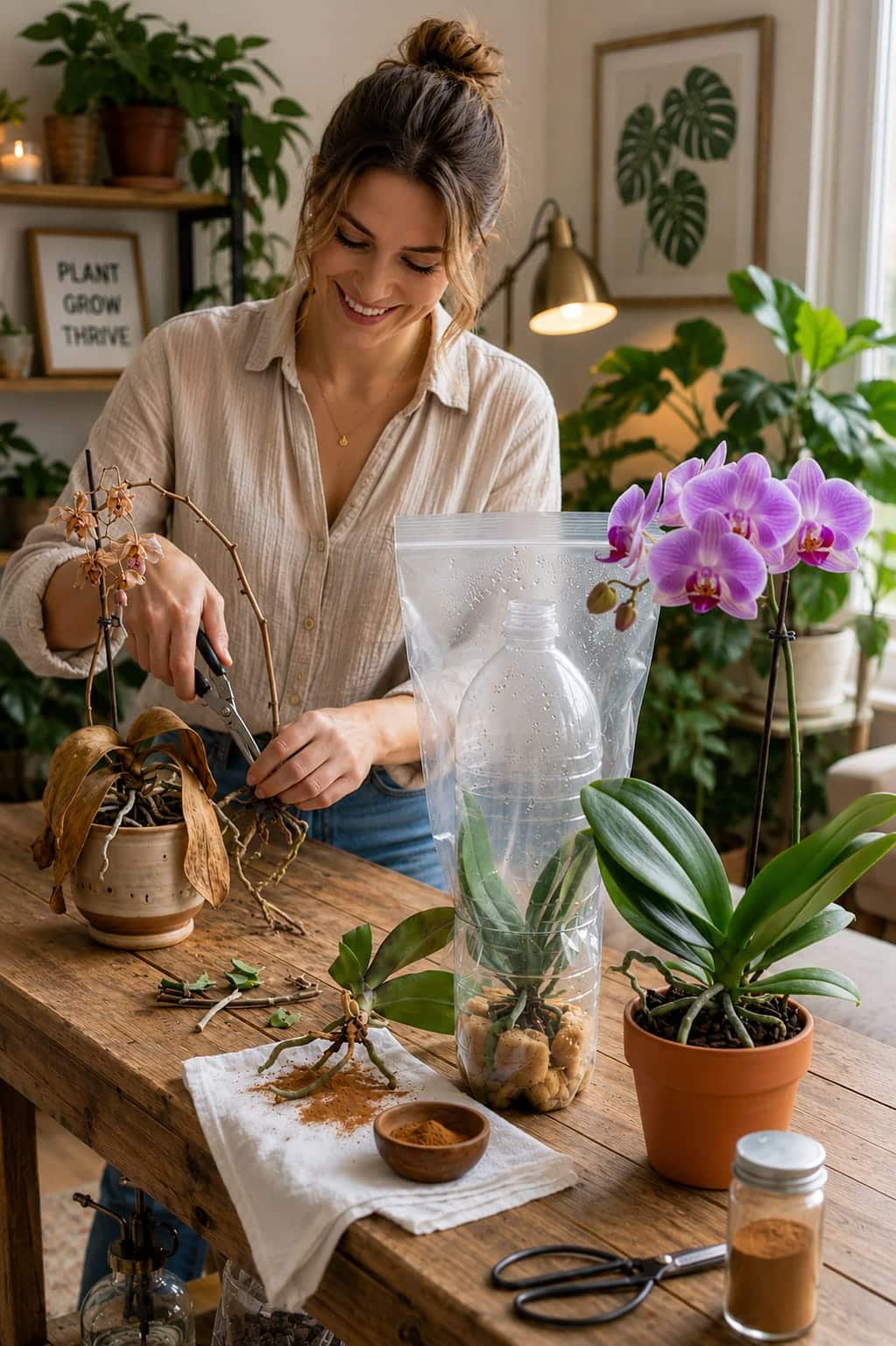
The image appears to show pieces of banana or a soft organic material in the recovery bottle. Banana is often used in plant-care videos because it is associated with potassium and natural nutrients. However, fresh banana pieces should be used cautiously around orchids.
Fresh banana can ferment, smell, attract insects, and grow mold. In a closed humidity setup, it can create problems quickly. Orchid recovery already requires cleanliness, so adding decomposing food can be risky.
If you want to use banana in plant care, it is safer to make a weak, strained banana peel water separately and use it only on healthy plants occasionally. For a weak rootless orchid, plain humidity and clean conditions are usually safer than banana pieces.
A recovering orchid needs fresh air, clean bark, and careful moisture more than sugary organic material.
How to Know If the Orchid Can Recover
A wilted orchid has a better chance if the crown is firm, at least one or two leaves are still partly green, and some roots are still alive. New root growth is the strongest sign of recovery.
Look for small green root tips emerging from the base of the plant. These tips may appear weeks after repotting. Do not disturb them. New roots are delicate and can break easily.
Leaves may not improve immediately. Wrinkled leaves can stay wrinkled for a long time, even after the plant begins recovering. Judge progress by new roots and new leaves, not by old damaged leaves becoming perfect again.
If the crown turns black, soft, or collapses, recovery becomes much less likely. If all leaves fall and no growing point remains, the plant may be lost.
How Long Orchid Recovery Takes
Orchid recovery is slow. A wilted orchid will not become full and blooming in a week. If the plant has lost many roots, it may need months to rebuild. The first goal is survival. The second goal is new roots. The third goal is new leaves. Flowers come much later.
After a rescue, it is normal for the orchid to look unchanged for several weeks. This does not always mean failure. Orchids often work slowly below the surface before visible growth appears.
Do not keep changing treatments because you are impatient. Constant changes can stress the plant. Once you have trimmed dead roots, applied cinnamon carefully to cuts, repotted into fresh bark, and placed the orchid in good light, give it time.
Patience is one of the most important parts of orchid recovery.
Light Conditions for a Recovering Orchid
A recovering orchid needs bright indirect light. It needs enough light to make energy, but not harsh sun that dries or burns the leaves. A bright room near a window with filtered light is usually ideal.
Direct afternoon sun can stress a weak orchid. If the leaves are already dehydrated, strong sun can make them lose moisture faster. Use a sheer curtain or place the plant slightly away from the window if the light is intense.
If the orchid is kept in a dark corner, recovery will be slower. Without enough light, the plant cannot produce energy for new roots. Light is more important than any rescue ingredient.
Watering After Rescue
After repotting, water carefully. The plant’s root system may be reduced, so it cannot absorb as much water as before. If the bark stays wet too long, rot can return.
Water when the bark is nearly dry and the roots look silver-gray. If the plant has very few roots, you may need to maintain humidity around the leaves rather than soaking the pot often.
Never let the orchid sit in a saucer of water. Drainage is essential. If you use a decorative outer pot, remove any standing water after each watering.
A recovering orchid needs moisture balance: enough hydration to prevent further dehydration, but enough dryness and airflow to prevent rot.
Should You Fertilize a Wilted Orchid?
Do not fertilize heavily during early recovery. A wilted orchid with damaged roots cannot use fertilizer well. Strong fertilizer can burn weak roots or create buildup in the bark.
Wait until you see signs of new root growth before feeding. When new roots appear, you can use a very weak orchid fertilizer. Start with a much lower strength than normal.
Cinnamon is not fertilizer. Banana is not a reliable complete fertilizer. A recovering orchid needs root health first. Feeding comes later.
If you fertilize too early, you may slow recovery instead of helping.
What to Do With the Old Flower Spike
If the orchid is weak, it is usually best to cut off old flower spikes, especially if they are dry, brown, or no longer blooming. Flower spikes use energy. A recovering orchid should focus on roots and leaves.
Use clean scissors and cut the spike near the base, without damaging the leaves or crown. If the cut is on a dry spike, cinnamon is usually not necessary, but you may dust a tiny amount on a fresh green cut if desired.
Do not try to force a weak orchid to rebloom. Flowers are beautiful, but they require energy. A plant with poor roots needs recovery first.
Common Mistakes During Orchid Rescue
- Assuming the orchid is dead because flowers faded – flower loss is normal. Always check roots and crown.
- Cutting all roots that look silver – silver roots may simply be dry and healthy. Cut only mushy, hollow, rotten roots.
- Using too much cinnamon – apply only to cut ends, not all over healthy roots.
- Repotting into regular soil – Phalaenopsis orchids need airy bark or orchid mix, not dense potting soil.
- Overwatering after rescue – fewer roots means less water absorption. Wet bark can restart rot.
- Expecting flowers too soon – a rescued orchid needs roots before blooms.
Can Cinnamon Be Used on Orchid Leaves?
Cinnamon can be used carefully on small cut areas, but it should not be rubbed all over orchid leaves. If a leaf has a damaged cut edge, a tiny amount may be applied to the wound, but avoid coating large areas.
If a leaf has spreading disease or soft rot, the damaged tissue may need to be removed with a clean tool. The cut edge can be dusted lightly with cinnamon, but the plant should also be kept dry and monitored closely.
Do not mix cinnamon with water and spray it on the leaves. Wet cinnamon paste can become messy and may irritate tissue. Dry powder on a specific cut is the safer use.
Can Cinnamon Be Used on the Orchid Crown?
The crown is sensitive. If there is a small cut near the crown, use extreme caution. Do not fill the crown with cinnamon powder. Powder trapped in the crown can hold debris and may be difficult to remove.
If crown rot is present, the situation is serious. The first step is to dry the crown and remove any standing water. Some growers use specific treatments for crown rot, but heavy cinnamon use is not a guaranteed fix.
For prevention, keep water out of the crown during normal watering. This is much easier than treating crown rot later.
What If the Orchid Has No Roots?
An orchid with no roots but a firm crown may still have a chance, but recovery is slow and uncertain. A humidity chamber may help reduce moisture loss while the plant tries to produce new roots.
Place the rootless orchid above moist material, not sitting in water. Keep the crown dry. Provide bright indirect light and warmth. Open the chamber daily for airflow.
Do not apply cinnamon all over the base unless there are fresh cuts that need drying. Too much cinnamon may dry the tissue where new roots need to emerge.
Rootless orchid recovery can take months. If the crown remains firm and new root nubs appear, that is progress.
How to Prevent the Orchid From Wilting Again
Once the orchid recovers, prevention is easier than rescue. Use a clear pot with drainage holes. Grow the orchid in fresh bark. Water only when the roots turn silver and the bark is nearly dry. Let water drain completely.
Keep the orchid in bright indirect light. Avoid cold drafts, direct harsh sun, and standing water. Repot when bark breaks down, usually every one to two years depending on conditions.
Feed lightly during active growth with a diluted orchid fertilizer. Do not overfertilize. Do not use random kitchen ingredients too often.
Most orchid problems come from moisture imbalance. Learn to read the roots, and the plant becomes much easier to care for.
A Realistic Recovery Timeline
During the first week, the orchid may look the same or even slightly worse because it has been disturbed. This is normal after trimming and repotting.
After two to four weeks, the plant may begin stabilizing. Leaves may still look wrinkled, but the crown should remain firm. The bark should smell fresh.
After one to three months, you may see new root tips if conditions are good. This is the most important sign of recovery.
After several months, a new leaf may begin growing. This means the plant is rebuilding strength.
Flowering should not be expected until the orchid has a stronger root system. Depending on the damage, this may take many months or longer.
Frequently Asked Questions
Can cinnamon bring a wilted orchid back to life?
No. Cinnamon cannot bring a dead orchid back to life. It can be used carefully on cut root ends after trimming, but the orchid needs living tissue, fresh bark, correct watering, and good light to recover.
Where should I put cinnamon on an orchid?
Apply a tiny amount only to fresh cut ends after trimming dead roots or damaged tissue. Do not coat healthy roots or sprinkle heavily into the pot.
Can I mix cinnamon into orchid bark?
It is better not to. Too much cinnamon can dry healthy roots. Use fresh bark and apply cinnamon only to specific cut wounds.
Can a wilted orchid recover?
Yes, if the crown is firm and some living roots or growing tissue remain. Recovery depends on root health, fresh potting medium, careful watering, humidity, and bright indirect light.
Should I cut off all orchid roots?
No. Cut only roots that are mushy, hollow, rotten, or clearly dead. Silver roots may still be healthy if they are firm.
Should I fertilize a wilted orchid?
Not at first. Wait until new roots appear, then use a very weak orchid fertilizer. Damaged roots can be stressed by fertilizer.
Can I use banana with cinnamon for orchid recovery?
Fresh banana pieces are risky in orchid recovery because they can ferment, mold, and attract insects. Clean humidity and fresh bark are safer for weak orchids.
How long does orchid recovery take?
Recovery can take weeks to months. New roots may take one to three months or more to appear. Flowers should not be expected until the plant has rebuilt strength.
🌿 Remember: Cinnamon is a wound-drying support, not a miracle cure. A wilted orchid still has hope if the crown is firm and living tissue remains. Fresh bark, careful watering, bright indirect light, and patience are the real keys to recovery. Use cinnamon only on trimmed cut ends, and let consistent care do the rest.