Orchids are the kind of houseplant that can make any windowsill look elegant. A single Phalaenopsis orchid with glossy green leaves and soft pink blooms can turn a simple room into something calm, fresh, and full of life. But many orchid owners know the same frustration: the plant blooms beautifully once, then stops. The leaves remain green, the roots seem alive, but the flower spike does not return as quickly as expected.
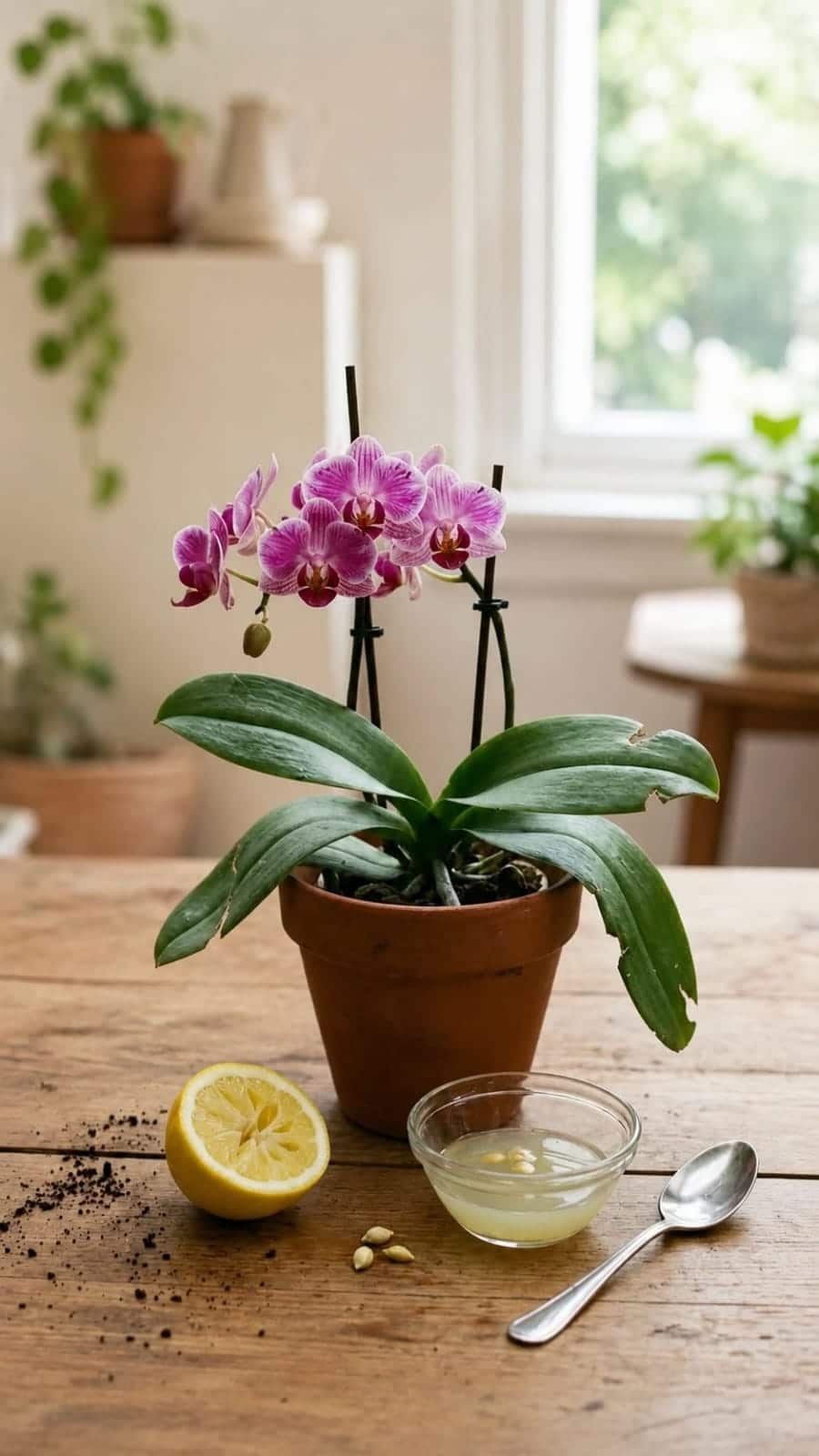
That is why simple orchid tricks are so popular. People want an easy, natural way to support bigger blooms, stronger roots, and a healthier plant without using complicated products. One common kitchen ingredient that often appears in orchid-care routines is lemon. The image shows a blooming orchid near a window, with a cut lemon and a small bowl of lemon water nearby. It suggests a gentle natural method that may support orchid care when used correctly.
Lemon water can be used carefully in orchid care, but it must be explained honestly. It is not a miracle bloom booster. It will not force an orchid to produce flowers overnight. It will not revive dead roots, fix crown rot, replace proper light, or solve overwatering. Used too strongly, lemon juice can actually harm orchid roots because it is acidic. But when it is highly diluted and used occasionally, lemon water may help refresh the potting medium, reduce mineral residue, and support a cleaner watering routine for orchids that are already healthy enough to grow.
The real secret to bigger orchid blooms is not one kitchen ingredient. It is healthy roots, bright indirect light, correct watering, fresh bark, good drainage, gentle feeding, and patience. Lemon water can be one small supportive step, but it should never replace proper orchid care.
This guide explains how to use lemon water safely for orchids, when it may help, when to avoid it, and what your orchid truly needs if you want stronger growth and more beautiful blooms over time.
Why Lemon Water Is Used in Orchid Care
Lemon juice is naturally acidic. In small, highly diluted amounts, some plant owners use it to slightly acidify water or help reduce mineral residue from hard water. Orchids, especially Phalaenopsis orchids, often prefer water that is not too alkaline. In some homes, tap water contains minerals that can build up in orchid bark or leave white deposits on roots and pots. A tiny amount of lemon juice in water may help make the watering routine gentler in certain situations.
However, this does not mean lemon juice should be poured directly into an orchid pot. Straight lemon juice is far too strong. It can irritate roots, damage sensitive tissue, and disturb the balance of the potting medium. Orchids have delicate roots with a spongy outer layer that absorbs water quickly. If a strong acidic liquid touches those roots, it may cause stress instead of helping.
For orchids, lemon water must be very weak. It should be closer to plain water than lemonade. The goal is not to feed the plant with lemon. The goal is to use a mild, occasional rinse that supports a cleaner root environment.
Can Lemon Water Make Orchid Blooms Bigger?
Lemon water will not directly make orchid flowers bigger. Flower size depends mostly on the orchid variety, plant maturity, root health, light, nutrition, and overall growing conditions. If your orchid naturally produces medium-sized blooms, lemon water will not turn them into giant flowers.
What lemon water may do is support the conditions that allow an orchid to grow better. If mineral buildup is stressing the roots, a very mild lemon-water rinse used occasionally may help reduce that problem. If the roots are healthier and the plant is receiving good light and proper feeding, the orchid may be better able to produce strong blooms in its next cycle.
This is an important difference. Lemon water does not create flowers by itself. It may support the plant indirectly when used carefully. Bigger and better blooms come from months of steady care, not from one dramatic application.
Understanding Orchid Roots Before Trying Lemon Water
Most indoor orchids, especially Phalaenopsis orchids, are epiphytes. In nature, they often grow attached to trees rather than buried in soil. Their roots are exposed to air, rain, and humidity. This is why orchid roots need a potting medium that is airy and well-draining.
Healthy orchid roots usually look green when wet and silver-gray when dry. They should feel firm and plump. The spongy outer layer of the root helps absorb water and protect the inner root. This layer is useful, but it also means orchid roots can react quickly to anything too strong.
Rotten roots look different. They may be brown, black, mushy, hollow, or foul-smelling. If your orchid has mostly rotten roots, lemon water is not the solution. The plant needs root trimming, fresh bark, and careful recovery.
Before using lemon water, always inspect the roots. A healthy orchid may tolerate a mild routine. A damaged orchid may become more stressed if treated with acidic liquid.
When Lemon Water May Be Useful for Orchids
Lemon water may be useful if your orchid is generally healthy but you notice mineral buildup from hard water. Signs of mineral buildup may include white crust on the pot, white residue on the bark, or roots that look coated after repeated watering. This can happen when tap water contains a lot of dissolved minerals.
A very diluted lemon-water rinse may also be useful as an occasional refresh for an orchid growing in bark, especially if you normally use tap water. It should be used rarely and followed by careful observation.
This routine is best for orchids with firm leaves, living roots, and a potting medium that drains well. If your orchid is actively growing, producing new root tips, or preparing for a bloom cycle, gentle care can support its natural rhythm.
Lemon water may also be useful for growers who want to avoid heavy chemical products and prefer simple, natural routines. But even natural methods must be measured and careful.
When You Should Avoid Lemon Water
Do not use lemon water on an orchid with root rot. If the roots are mushy, black, brown, hollow, or smelly, the plant needs repotting and root care first. Lemon water will not repair dead roots.
Do not use lemon water if the orchid has crown rot. The crown is the central area where the leaves meet. If this area is soft, dark, or wet, avoid adding any liquid near it. The crown must stay dry.
Avoid lemon water on a severely dehydrated orchid with shriveled roots. Strong or acidic treatments can stress dry roots. Rehydrate carefully with plain water first and focus on stabilizing the plant.
Do not use lemon water if your orchid is in old, broken-down bark that smells sour or stays wet too long. In that case, repotting is more important than any rinse.
Also avoid lemon water if you are already using strong fertilizer frequently. Too many treatments can stress the roots and make it difficult to understand what the plant actually needs.
⚠️ Important: Never pour straight lemon juice on orchid roots or into the crown. Always dilute heavily and use only rarely.
The Safe Lemon Water Ratio for Orchids
The safest lemon water for orchids is very diluted. A beginner-friendly mixture is one or two drops of fresh lemon juice in one cup of water. For a larger amount, use only a few drops in a liter of water. The water should not taste or smell strongly like lemon. If it smells like lemonade, it is probably too strong for orchid roots.
Never use straight lemon juice. Never squeeze half a lemon into a small bowl and pour it directly into the orchid pot. That is too acidic and can damage the roots.
Use fresh lemon juice, not sweetened lemon drinks, bottled lemonade, or anything with sugar. Sugar can attract insects and encourage microbial problems in the potting medium.
If your tap water is very hard, you may also consider using rainwater, distilled water, or filtered water instead of relying on lemon juice. Cleaner water is often safer than constantly adjusting tap water with kitchen ingredients.
How to Prepare Lemon Water Step by Step
Step 1: Use Clean Water
Start with room-temperature water. Cold water can shock orchid roots, especially in winter. If possible, use filtered water or rainwater. If using tap water, let it sit for a while if your local water contains chlorine.
Step 2: Add Only a Tiny Amount of Lemon
Add one or two drops of fresh lemon juice to one cup of water. Stir well. The mixture should be very mild. More lemon does not mean better results.
Step 3: Test on a Healthy Plant First
If you are trying this for the first time, use it only on a healthy orchid, not your weakest plant. This helps you see how your orchid responds without risking a stressed plant.
Step 4: Apply to the Bark, Not the Crown
Pour the diluted lemon water through the potting medium, keeping it away from the crown and leaf joints. The liquid should pass through the bark and drain out.
Step 5: Let the Pot Drain Completely
Never let the orchid sit in lemon water. After watering, allow all excess liquid to drain. Empty any saucer or decorative pot.
Step 6: Observe Before Repeating
Do not repeat the treatment quickly. Watch the roots and leaves for several weeks. If the roots remain healthy and the plant continues growing, the mixture was likely mild enough. If you notice stress, stop using lemon water.
How Often Should You Use Lemon Water?
Lemon water should be used rarely. Once every four to eight weeks is enough if you are using it at all. Many orchids do not need it. If your orchid is growing well with plain water and occasional fertilizer, there is no reason to add lemon water regularly.
Do not use lemon water every time you water. Frequent acidic watering can disturb the potting medium and potentially stress the roots. Orchids prefer consistency.
If you use lemon water because of hard water residue, consider flushing the pot with plain clean water occasionally. This can help remove mineral buildup without relying too heavily on lemon juice.
During winter or low-light months, use fewer treatments. Orchids grow more slowly when light is lower, so they need less intervention.
Continue to Page 2
Continue to page 2 for more details about this article and the key points many readers miss on the first page.