Can Lemon Water Replace Orchid Fertilizer?
No. Lemon water is not fertilizer. It does not provide balanced nutrients for orchid growth. Orchids still need nitrogen, phosphorus, potassium, calcium, magnesium, and trace elements in appropriate amounts.
If your orchid is actively growing, use a balanced orchid fertilizer diluted according to the label. Many orchid growers use weak fertilizer during the growth period and reduce feeding when the plant is resting.
Lemon water can be an occasional water-adjusting or refreshing routine, but it should not be the main feeding method. If your orchid lacks nutrients, lemon water will not solve that problem.
How to Combine Lemon Water With Fertilizer
Do not mix lemon water and fertilizer unless you understand water chemistry and know how your orchid responds. For most home growers, it is better to keep them separate.
For example, you might water with plain water most of the time, fertilize lightly during active growth, and use a very mild lemon-water rinse only occasionally if mineral buildup is present. Do not apply fertilizer and lemon water heavily in the same week.
Too many inputs can damage sensitive roots. Orchids do better with simple, predictable routines.
The Real Key to Bigger Orchid Blooms
If you want bigger and more reliable orchid blooms, focus first on light. Phalaenopsis orchids need bright indirect light. A windowsill with filtered light is often ideal. Too little light is one of the most common reasons orchids fail to rebloom.
Leaves can help you judge light. Very dark green leaves may mean the plant is not receiving enough light. Yellowish or scorched leaves may mean too much direct sun. Medium green leaves usually suggest a better balance.
After light, focus on roots. A plant with healthy roots can absorb water and nutrients. A plant with damaged roots cannot bloom well, no matter what kitchen ingredient you use.
Then focus on feeding. Use a diluted orchid fertilizer during active growth. Flowers require energy, and energy comes from healthy leaves, roots, and light.
Finally, give the plant time. Orchids bloom in cycles. After blooming, they often spend months growing leaves and roots before producing another flower spike.
How Temperature Helps Orchids Rebloom
Many Phalaenopsis orchids respond to a slight drop in nighttime temperature. A gentle difference between day and night temperatures can encourage the plant to form a flower spike. This does not mean exposing the orchid to cold drafts. It means giving it a mild seasonal cue.
A safe approach is to keep the plant in bright indirect light and allow slightly cooler nights for a few weeks, especially in fall. Avoid temperatures that are too cold, as orchids can suffer from chilling damage.
If your orchid has healthy roots and leaves but refuses to bloom, temperature cues may help more than lemon water. Lemon water can support the root environment, but it does not replace seasonal signals.
Watering Orchids Correctly
Correct watering is essential. Orchids should not be watered like regular houseplants in soil. They are usually grown in bark or moss, and each medium dries differently.
In bark, roots often dry faster. In moss, moisture can remain much longer. A clear pot helps you see root color. When roots are green, they are still hydrated. When they turn silver-gray and the medium is nearly dry, it may be time to water.
Water thoroughly, then let the pot drain completely. Avoid leaving the orchid in standing water. Avoid watering the crown. If water collects between the leaves, blot it dry with a tissue.
If using lemon water, treat it as one watering session. Do not water with plain water and then immediately add lemon water afterward. Too much liquid can keep the pot too wet.
Why Fresh Orchid Bark Matters
Orchid bark breaks down over time. Fresh bark is chunky and airy. Old bark becomes soft, compacted, and moisture-retentive. When bark breaks down, roots receive less oxygen and may rot.
If your orchid has not been repotted in a long time, and the bark looks dark, crumbly, or sour-smelling, repotting may be the best solution. Lemon water will not fix old bark.
Repotting into fresh bark gives the roots a better environment. After repotting, avoid strong treatments. Let the plant settle and resume gentle watering.
A healthy potting medium is one of the strongest foundations for future blooms.
Can Lemon Seeds or Pulp Be Used in Orchid Pots?
No. Do not place lemon seeds, pulp, peel, or slices directly in an orchid pot. These materials can rot, attract insects, and disturb the bark. Orchid pots are not compost bins.
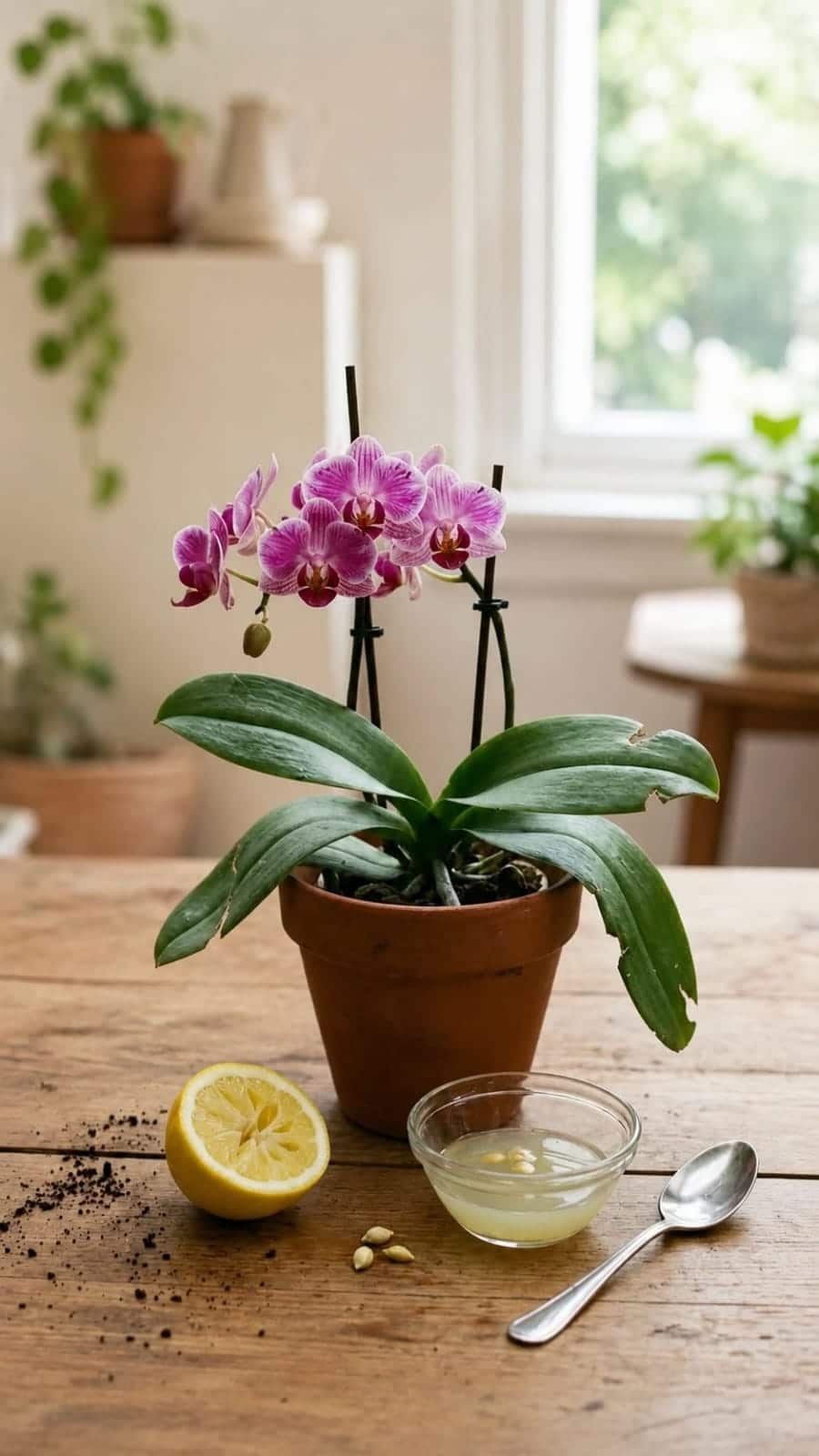
The image shows lemon seeds in a small bowl, but in real orchid care, any solid material should be strained out. Only a few drops of juice diluted in plenty of water should be used if you choose this method.
Lemon peel may smell fresh, but it can decompose and create problems in the pot. Keep solid kitchen scraps out of orchid bark.
Can You Spray Lemon Water on Orchid Leaves?
It is better not to spray lemon water on orchid leaves or flowers. Even diluted lemon juice can leave residue or irritate sensitive tissue if it is too strong. Spraying also increases the risk of liquid collecting in the crown.
Orchid leaves can be cleaned with plain water and a soft cloth. Keep flowers dry. If you want to remove dust, use clean water, not lemon juice.
Lemon water, if used at all, should be applied only to the potting medium and roots, and only in a very diluted form.
What Results Can You Realistically Expect?
Realistic results from lemon water are subtle. You may notice less mineral residue over time if your water was causing buildup. The roots may look cleaner if the potting medium is being flushed properly. The plant may continue growing steadily if all other care conditions are right.
You should not expect immediate blooms. You should not expect old flower spikes to suddenly produce giant flowers. You should not expect lemon water to rescue a dying orchid.
The best signs of progress are healthy root tips, firm leaves, and eventually a new flower spike when the plant is ready. Bigger blooms come from a strong plant, not from a single treatment.
Warning Signs After Using Lemon Water
If roots turn brown, dry, or damaged after using lemon water, the mixture may have been too strong. Stop using it immediately and flush the pot with plain water.
If leaves become limp while the pot is wet, inspect the roots. This may indicate root rot or root stress.
If the bark smells sour or stays wet too long, repotting may be needed. Lemon water should not be used to cover up bad potting medium.
If you see white residue continuing to build up, your water may be very hard. Consider switching to filtered water, rainwater, or distilled water occasionally.
A Safe Orchid Bloom-Support Routine
For a healthier orchid and better blooms, start with a simple routine. Place the orchid in bright indirect light. Use a clear pot with drainage if possible. Grow it in fresh orchid bark or an appropriate orchid mix. Water when the roots turn silver and the medium is nearly dry. Let the pot drain completely.
During active growth, feed with a diluted orchid fertilizer. Use plain water between fertilizer applications to prevent buildup. Keep the crown dry at all times.
If you notice mineral residue and want to try lemon water, use only one or two drops of lemon juice per cup of water, and apply it rarely. Watch the plant carefully afterward.
This balanced routine is much safer than relying on a strong lemon treatment.
Common Mistakes to Avoid
- Using too much lemon juice – Orchids need a very weak solution. Strong lemon water can damage roots.
- Using lemon water too often – This should be an occasional rinse, not a regular watering method.
- Putting lemon pulp, seeds, or peel in the pot – Solid kitchen scraps can rot and attract insects.
- Pouring lemon water into the crown – The crown must stay dry to prevent rot.
- Expecting instant blooms – Orchid flowering depends on light, roots, nutrition, temperature, and time.
- Using lemon water on sick roots – Rotten roots need trimming and fresh bark, not acid.
Frequently Asked Questions
Can lemon water make orchids bloom?
Lemon water cannot force orchids to bloom. It may help reduce mineral residue when used very weakly, but blooming depends mostly on light, healthy roots, proper watering, nutrition, temperature cues, and plant maturity.
How much lemon juice should I use for orchids?
Use only one or two drops of fresh lemon juice in one cup of water. The mixture should be extremely mild. Never pour straight lemon juice into an orchid pot.
How often can I use lemon water on orchids?
Use it rarely, about once every four to eight weeks if needed. Many orchids do not need lemon water at all.
Can I put lemon peels in orchid bark?
No. Lemon peels can rot, attract insects, and disturb the potting medium. Keep solid kitchen scraps out of orchid pots.
Can lemon water save a dying orchid?
No. A dying orchid needs diagnosis first. Check for root rot, crown rot, dehydration, old bark, pests, or low light. Lemon water is not a rescue treatment.
Can I spray lemon water on orchid leaves?
It is better not to spray lemon water on orchid leaves or flowers. It can leave residue and may collect in the crown. Clean leaves with plain water instead.
Is lemon water better than fertilizer?
No. Lemon water is not fertilizer. Orchids need balanced nutrition during active growth. Lemon water is only an occasional mild rinse if mineral buildup is an issue.
What should I do if I used too much lemon?
Flush the pot with plain water and let it drain completely. Do not use lemon water again until the plant is stable. If roots look damaged, inspect the root system and consider repotting.
🌿 Remember: Lemon water is a gentle, rare supplement, not a miracle treatment. Healthy roots, bright indirect light, fresh bark, careful watering, and patience are the true foundations of beautiful orchid blooms. Use lemon water only as a cautious support if needed, and let consistent care do the real work.