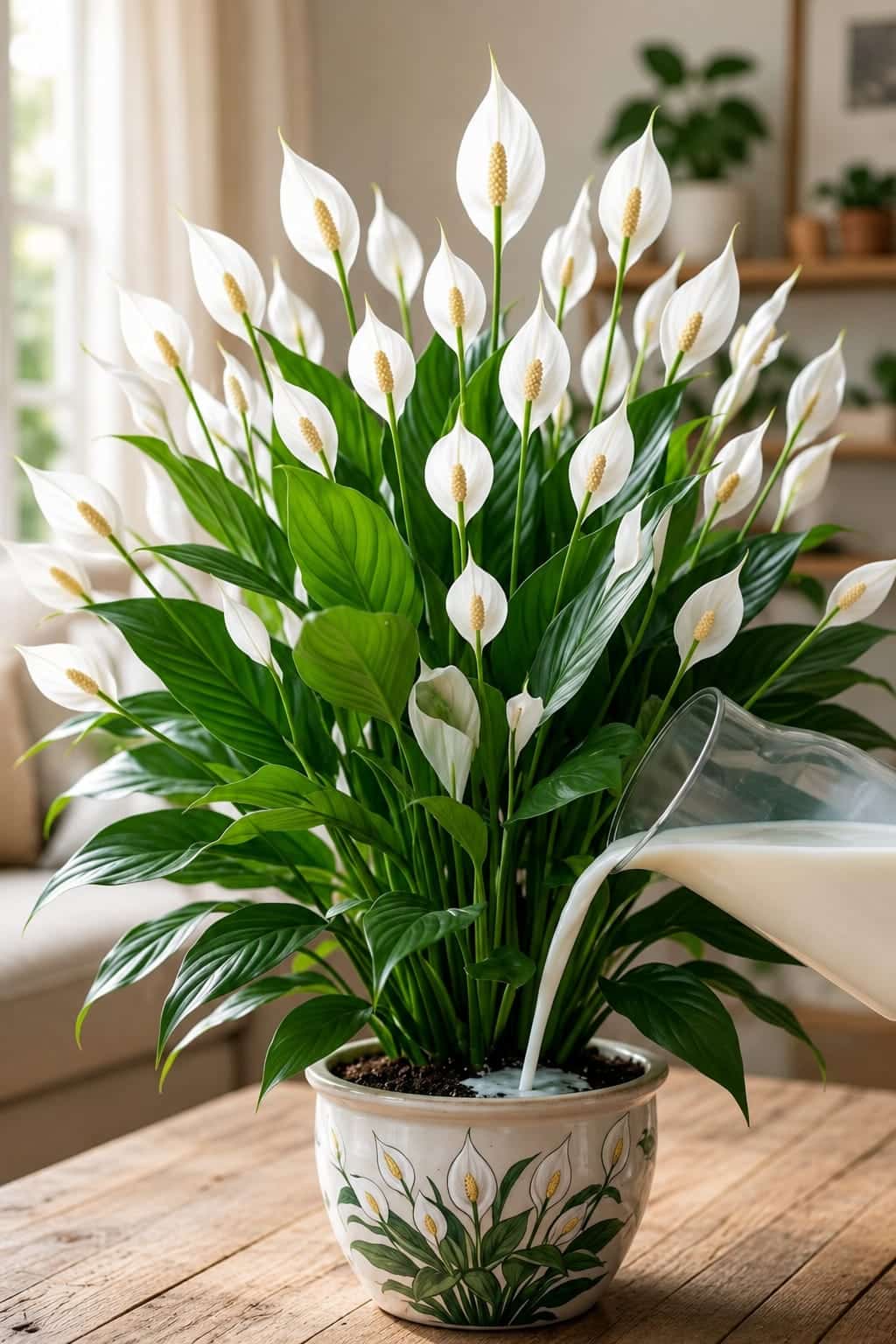
Peace lilies are some of the most elegant houseplants you can grow indoors. Their deep green leaves, graceful white blooms, and soft tropical shape make them look clean, calm, and luxurious in almost any room. When a peace lily is healthy, it can stay full and glossy for years, producing white spathes that rise above the foliage like little flags of freshness.
But peace lilies can also be dramatic. One day they look perfect, and the next day the leaves droop, yellow, curl, or stop producing flowers. Because of this, many plant lovers search for a simple natural trick to keep their peace lily green, full, and blooming. One popular homemade idea is using a diluted milk-water mixture around the soil.
The image shows a full, healthy peace lily near a bright window while a white liquid is being poured carefully into the pot. This creates a beautiful plant-care idea, but it needs to be explained honestly. Milk water is not a magic bloom booster. It will not force a peace lily to flower overnight, and it will not fix root rot, poor light, dry air, or soggy soil. However, when used in a very diluted form and only occasionally, it may serve as a gentle natural supplement for a peace lily that is already healthy and actively growing.
The real secret to a beautiful peace lily is not one single ingredient. It is the combination of bright indirect light, careful watering, good drainage, moderate humidity, clean leaves, healthy roots, and light feeding. A diluted milk-water routine can be one small supportive step, but it should never replace proper care.
This guide explains how to keep your peace lily full, green, and blooming beautifully using safe, realistic care habits. It also explains how to use milk water carefully, when to avoid it, and what your plant truly needs if you want strong leaves and long-lasting white blooms.
Understanding Peace Lily Blooms
Before using any homemade plant-care method, it helps to understand what peace lily flowers really are. The white “flower” is not actually a true flower in the way many people imagine. It is a modified leaf called a spathe. The true flowers are tiny and grow on the central spike, called the spadix.
This is why peace lily blooms look smooth, white, and leaf-like. When the plant is healthy, these spathes can last for several weeks. As they age, they may turn green, cream, brown, or dry at the edges. This is normal. Old blooms should be removed once they fade so the plant can focus energy on new growth.
A peace lily blooms best when it has enough light and stable care. It does not bloom simply because something white is poured into the pot. Milk water may support the plant gently, but the real bloom trigger is good growing conditions.
Can Milk Water Help a Peace Lily?
Milk contains water, small amounts of minerals, and organic compounds. Some gardeners use very diluted milk water as a homemade plant supplement. The idea is that a tiny amount of milk diluted in plenty of water may add mild organic support to the soil.
However, milk must be used very carefully with indoor plants. Undiluted milk can spoil, smell bad, attract insects, encourage mold, and create a sticky layer in the soil. It can also make the potting mix sour if used too often. A peace lily’s roots need oxygen, so anything that makes the soil heavy, smelly, or overly wet can harm the plant.
That is why the only safe way to use this method is with a very weak dilution. Think of it as milk-tinted water, not a bowl of milk. The mixture should be light, fresh, and used occasionally. It should never be poured heavily into a pot as a regular watering routine.
Milk water is not a complete fertilizer. It does not provide balanced nutrition in a predictable way. If your peace lily needs proper feeding, a diluted balanced houseplant fertilizer is more reliable. Milk water should only be used as a gentle occasional supplement, not as the main source of plant nutrition.
⚠️ Important: Never use milk water on a sick or rotting plant. If your peace lily is drooping, yellowing, or sitting in wet soil, diagnose and correct the problem first.
The Most Important Rule: Do Not Use Milk on a Sick Plant
This may sound surprising, but a weak peace lily should not automatically receive milk water. If your plant is drooping, yellowing, smelling sour, or sitting in wet soil, the first step is diagnosis, not feeding.
A peace lily with root rot cannot be helped by milk water. Root rot usually happens when the soil stays wet too long and the roots lose oxygen. The plant may droop even though the pot is wet. Leaves may yellow quickly, the base may smell bad, and the soil may feel heavy. In this case, adding milk water can make things worse.
A peace lily that is thirsty may droop dramatically, but it usually recovers after proper watering. A peace lily that is overwatered may also droop, but watering more will not help. This is why checking the soil matters before adding anything.
Use milk water only on a peace lily that is stable, healthy, and already growing. If the plant is struggling, fix the care problem first.
How to Make a Safe Diluted Milk-Water Mixture
The safest milk-water mixture for a peace lily should be very weak. A good beginner ratio is one part milk to ten parts water. This means one tablespoon of milk mixed into about ten tablespoons of water, or a small splash of milk in a full watering can. The final liquid should look only slightly cloudy.
Use plain milk only. Do not use sweetened milk, flavored milk, chocolate milk, condensed milk, or milk mixed with sugar. Sugar can attract insects and encourage microbial problems in the soil.
Low-fat milk is usually safer than very rich milk because it leaves less residue. Some growers prefer using skim milk for this type of routine. The goal is to keep the mixture light and clean.
Prepare the mixture fresh and use it immediately. Do not store milk water for days. It can spoil quickly, especially in warm rooms. If it smells sour, do not use it.
How Often Should You Use Milk Water?
Milk water should be used rarely. Once every six to eight weeks during active growth is enough for most peace lilies. It should not be used weekly, and it should not replace normal watering.
If your plant is not actively growing, do not use it. Peace lilies often slow down in colder or darker months. During slow growth, the plant uses less water and fewer nutrients. Extra organic liquids can sit in the soil and create problems.
If you already fertilize your peace lily with a balanced houseplant fertilizer, use milk water even less often. Too many feeding methods can overwhelm the soil. A simple routine is safer.
More is not better. With peace lilies, too much care often causes more damage than neglect.
Step-by-Step: How to Use Milk Water on a Peace Lily
Step 1: Check the Soil First
Before using milk water, touch the soil. If the top inch is still wet, wait. Peace lilies like moisture, but they do not like soggy soil. Applying milk water to already wet soil increases the risk of sour smells, mold, and root stress.
The best time to use a diluted mixture is when the plant is already due for watering. The soil should feel slightly dry on top but not completely bone-dry throughout the pot.
Step 2: Prepare a Very Weak Mixture
Mix one part milk with ten parts water. Stir well. The mixture should be watery and only lightly cloudy. If it looks thick, add more water.
Never pour straight milk into the pot. Straight milk can spoil quickly and create soil problems.
Step 3: Pour Around the Soil Only
Apply the mixture to the soil around the base of the plant. Do not pour it over the leaves or flowers. Milk residue on leaves can attract dust, smell unpleasant, or leave marks.
Keep the crown area as clean as possible. Peace lilies grow from the base, and wet organic residue trapped there can encourage problems.
Step 4: Let the Pot Drain
If your pot has drainage holes, allow excess liquid to drain out. Do not let the peace lily sit in a saucer full of milk water. Empty the saucer after watering.
If your decorative pot has no drainage, be extremely careful. A no-drainage pot is risky for peace lilies because water can collect around the roots. In that case, it is better to avoid milk water completely.
Step 5: Observe the Plant
After using milk water, watch the plant for one to two weeks. The soil should not smell sour. The surface should not grow mold. Fungus gnats should not appear. The leaves should remain firm and green.
If you notice mold, gnats, or odor, stop using milk water and let the soil dry more between waterings. You may need to remove the top layer of soil or repot if the problem continues.
What Milk Water Can and Cannot Do
Milk water may offer mild support to a healthy peace lily, but it cannot solve every problem. It may be part of a natural care routine, but it is not a miracle bloom formula.
- It cannot fix low light. A peace lily kept in a dark corner may survive, but it may not bloom well. For flowers, the plant needs bright indirect light.
- It cannot fix root rot. If roots are damaged, the plant needs fresh soil, better drainage, and careful watering.
- It cannot replace fertilizer. Peace lilies need balanced nutrition over time. Milk water is not complete plant food.
- It cannot make old yellow leaves green again. Once a leaf turns yellow, it usually will not return to deep green. The goal is to support new healthy growth.
- It cannot force constant blooming. Peace lilies bloom in cycles. A healthy plant may bloom repeatedly, but it still needs rest and leaf growth.
The Real Secret to a Full Peace Lily
A full peace lily comes from strong roots and steady leaf growth. To keep the plant full, it needs the right balance of light, water, and space.
Bright indirect light is one of the biggest factors. Peace lilies tolerate lower light, but tolerance is not the same as thriving. In low light, the plant may stay alive but grow slowly and bloom rarely. In bright indirect light, it can produce more leaves and more flowers.
A good location is near a window with filtered light. Morning light is usually gentle. Harsh direct afternoon sun can burn the leaves, especially if the plant is close to the glass.
If your peace lily looks thin or stretched, it may need more light. Move it gradually to a brighter spot rather than shocking it with sudden sun.
How to Water Peace Lily Correctly
Watering is the most important part of peace lily care. These plants like evenly moist soil, but they do not want to sit in water. The top inch of soil should begin to dry before you water again.
When the plant is thirsty, it may droop dramatically. This is one reason peace lilies are popular with beginners: they often tell you when they need water. However, you should not wait until the plant collapses every time. Repeated severe wilting can stress the plant.
Water thoroughly until excess drains from the bottom, then empty the saucer. If water does not drain, the roots may stay too wet. A pot with drainage holes is strongly recommended.
If leaves droop while the soil is wet, do not add more water. This can indicate root stress. Check the roots and soil condition instead.
Continue to Page 2
Continue to page 2 for more details about this article and the key points many readers miss on the first page.