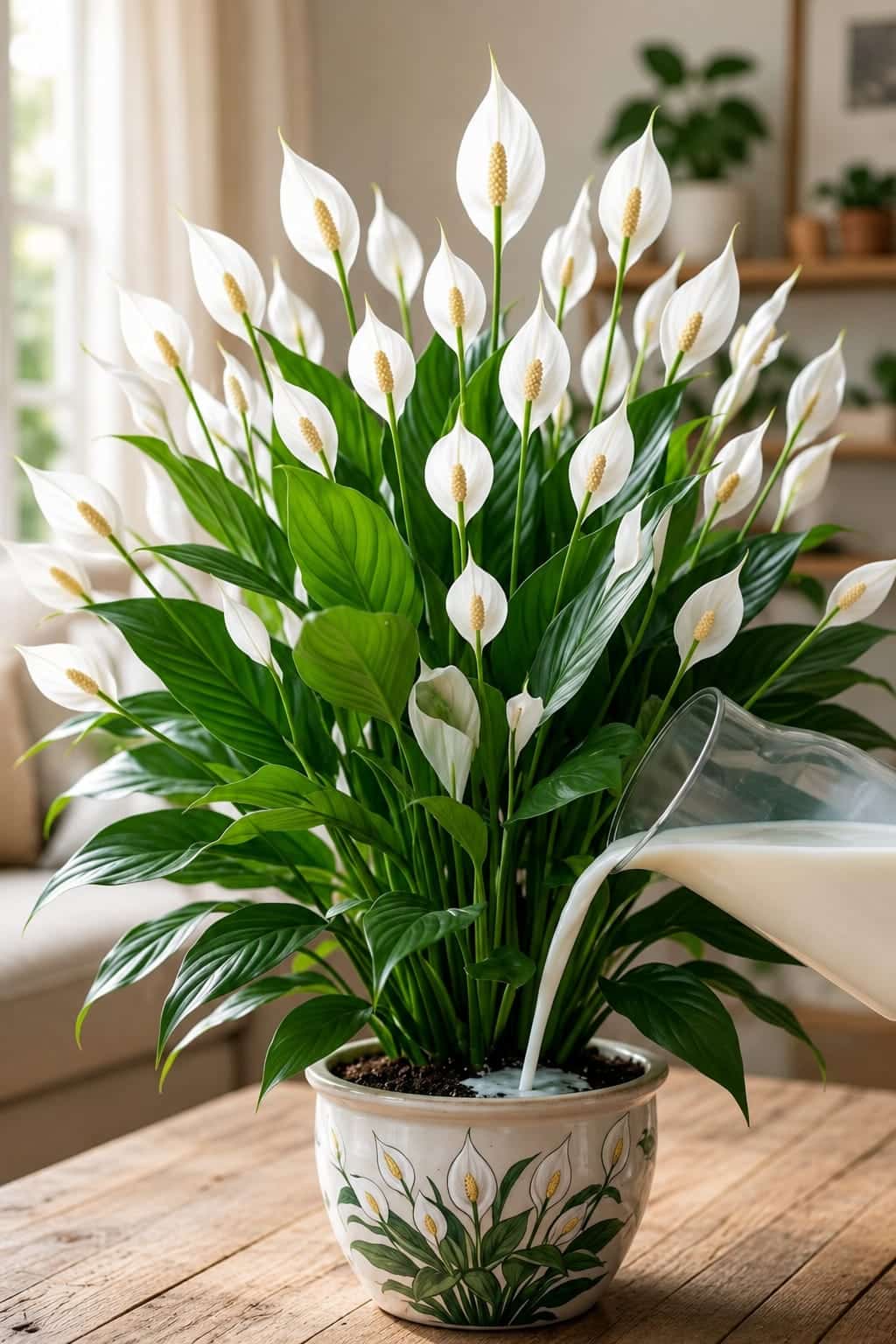
Best Soil for Peace Lily
Peace lilies prefer a potting mix that holds some moisture but still drains well. A regular indoor potting mix can work if it is not too dense. You can improve it by adding perlite, orchid bark, coco coir, or other airy materials.
The soil should not become compacted. Compacted soil holds water too long and reduces oxygen around the roots. If your peace lily’s soil stays wet for many days, smells sour, or pulls away from the pot in hard clumps, it may be time to refresh the mix.
Good soil helps the plant absorb water and nutrients properly. Without healthy soil, no homemade mixture will work well.
How Light Affects Peace Lily Blooming
If your peace lily has beautiful leaves but no flowers, light is usually the first thing to check. Peace lilies can survive in lower light, but they bloom much better in bright indirect light.
Place the plant near a bright window where sunlight is filtered through a curtain or softened by distance. Avoid strong direct afternoon sun, which can scorch the leaves and flowers.
If the leaves are very dark green and the plant never blooms, it may be in too little light. If the leaves are pale, yellowing, or scorched, it may be getting too much direct sun.
Milk water cannot replace light. Flowers require energy, and light is the plant’s energy source.
Feeding Peace Lily the Right Way
Peace lilies do not need heavy feeding. Too much fertilizer can burn roots and cause brown leaf tips. A light feeding routine during active growth is usually enough.
A balanced houseplant fertilizer diluted to half strength can be used every six to eight weeks during spring and summer. Some plants may need less. Always follow the label, but use caution because indoor plants are often sensitive to overfeeding.
If you use milk water, do not apply it at the same time as fertilizer. Keep them separate. For example, you might fertilize one month and use diluted milk water much later, or skip milk water completely if the plant is already doing well.
The safest feeding routine is simple and light.
Why Peace Lily Leaves Turn Yellow
Yellow leaves are common, and they do not always mean the plant needs fertilizer. Older lower leaves naturally yellow and die as the plant grows. This is normal.
However, many yellow leaves at once can mean overwatering, underwatering, low light, poor drainage, root stress, or nutrient imbalance. Before adding milk water or fertilizer, check the soil and roots.
If the soil is wet and yellowing is spreading, overwatering may be the problem. If the soil is very dry and the plant droops often, underwatering may be the cause. If the plant is in a dark corner, low light may be slowing growth.
Do not treat yellow leaves blindly. Diagnosis matters.
Why Peace Lily Gets Brown Tips
Brown tips can happen for several reasons. Common causes include dry air, inconsistent watering, too much fertilizer, mineral-heavy water, or root stress.
Milk water will not automatically fix brown tips. In fact, if used too often, it may contribute to buildup or soil issues. The better approach is to improve the basics.
Use room-temperature water. Keep watering consistent. Avoid overfertilizing. Increase humidity if the air is very dry. Trim brown tips with clean scissors if they bother you, following the natural shape of the leaf.
New growth is the best sign of improvement. Old brown tips will not turn green again.
Humidity for a Fuller Peace Lily
Peace lilies appreciate moderate humidity. If your home is very dry, leaves may develop crispy edges or look less glossy. Increasing humidity can help the plant look fresher.
You can raise humidity by grouping plants together, using a pebble tray, or placing a humidifier nearby. A bathroom with bright indirect light can also work well because the air is naturally more humid.
However, humidity is not the same as wet soil. Do not water more often just because the air is dry. Overwatering the roots is more dangerous than dry air.
The ideal situation is slightly humid air and well-drained soil.
How to Keep Peace Lily Leaves Glossy
Peace lily leaves collect dust, especially indoors. Dust blocks light and makes the plant look dull. Cleaning the leaves helps them absorb light better and keeps the plant looking fresh.
Use a soft damp cloth and plain water. Wipe the leaves gently, supporting each leaf with your hand. Do not use milk, oil, mayonnaise, or commercial leaf shine products on peace lily leaves. These can clog pores, attract dust, or leave residue.
Clean leaves can make a big difference in the plant’s appearance. A peace lily with clean leaves looks greener and healthier immediately.
How to Encourage More Blooms Naturally
To encourage peace lily blooms, start with better light. Move the plant to bright indirect light and give it time to adjust. Do not expect flowers the next day. Blooming is a process.
Next, keep watering consistent. A peace lily that repeatedly wilts from dryness may become stressed. A peace lily that sits in wet soil may develop root problems. Both situations can reduce flowering.
Feed lightly during active growth. Use a diluted balanced fertilizer occasionally. If you choose to use milk water, keep it rare and weak.
Remove old blooms once they fade. Cut the flower stem close to the base with clean scissors. This keeps the plant tidy and may help it direct energy toward new growth.
Finally, be patient. Peace lilies bloom when they have enough energy and stable conditions.
Should You Pour Milk Water While the Plant Is Blooming?
If your peace lily is already blooming beautifully, you do not need to do anything dramatic. A blooming plant is already showing that conditions are good. Changing the routine too much can create unnecessary stress.
If you want to use milk water while the plant is blooming, keep it extremely diluted and use it only when the plant is due for watering. Do not pour it over the white spathes. Do not splash it on the leaves. Do not use it repeatedly.
In many cases, plain water and stable care are better while the plant is blooming. Save feeding or supplements for active leaf growth if needed.
What to Do If You Used Too Much Milk
If you accidentally poured too much milk into the pot, act quickly. First, remove any visible residue from the soil surface. If the soil smells sour or looks slimy, it may need to be replaced.
Flush the pot with plain water if it has drainage holes. Let water run through the soil and drain out completely. This may help remove some of the milk residue. After flushing, allow the soil to dry appropriately before watering again.
If the pot has no drainage or the smell continues, repot the plant into fresh well-draining soil. Check the roots during repotting. Healthy roots are firm and pale. Rotten roots are brown, black, mushy, or foul-smelling. Trim rotten roots with clean scissors.
After repotting, do not fertilize or use milk water immediately. Let the plant recover.
When to Repot a Peace Lily
A peace lily may need repotting when roots fill the pot, the soil breaks down, water runs straight through without absorbing, or the plant dries out very quickly after watering. It may also need repotting if the soil stays wet too long and smells bad.
Choose a pot only slightly larger than the current one. A pot that is too large holds extra soil and extra moisture, which can increase the risk of root rot.
Repot into fresh, airy potting mix. Water gently after repotting and keep the plant in bright indirect light. Avoid strong fertilizer or milk water for several weeks while the roots settle.
How to Divide a Peace Lily for a Fuller Look
If your peace lily is mature and crowded, you can divide it. Division is a way to create new plants and refresh an older plant. However, if your goal is a very full pot, do not divide too aggressively. A crowded peace lily often looks lush, but it still needs enough root space and healthy soil.
To divide, remove the plant from the pot and gently separate sections with roots attached. Each section should have several leaves and a healthy root system. Repot each division into fresh soil and water lightly.
After division, the plant may look less full for a while. It needs time to regrow. If you want one large full plant, simply repotting into fresh soil may be better than dividing.
Common Mistakes to Avoid
- Pouring straight milk into the pot: This can spoil, smell bad, and attract pests.
- Using milk water too often: Once every 6–8 weeks is enough, many peace lilies do not need it at all.
- Applying to wet soil: If the soil is already moist, wait.
- Expecting instant flowers: Peace lily blooming depends mostly on light, roots, watering, and overall health.
- Using milk water on a sick plant: A plant with root rot or sour soil needs recovery care, not extra organic liquid.
- Ignoring drainage: A pot without drainage makes every watering routine riskier.
A Simple Monthly Peace Lily Care Routine
- Every week: Check soil moisture. Water when the top inch begins to dry. Look at leaves for drooping, yellowing, dust, or pests.
- Every month: Clean leaves with a damp cloth. Rotate the pot slightly so the plant grows evenly toward light. Remove dead leaves and faded blooms.
- During active growth: Feed lightly every 6–8 weeks with diluted balanced fertilizer. If you want to try milk water, use it rarely and not together with fertilizer.
- Every year: Check soil quality and root space. Repot when necessary, but do not rush to repot a healthy plant.
🌱 Remember: A consistent, gentle routine always beats dramatic interventions. Peace lilies thrive on balance, not on sudden fixes.
Frequently Asked Questions
Can milk water make a peace lily bloom?
Milk water cannot force blooms by itself. It may act as a mild occasional supplement, but peace lilies bloom best with bright indirect light, healthy roots, correct watering, and gentle feeding.
Can I pour straight milk into my peace lily?
No. Straight milk can spoil in the soil, smell bad, attract insects, and encourage mold. Always dilute heavily if you choose to use it.
How much milk should I use?
Use a very weak mixture, such as one part milk to ten parts water. The liquid should look only slightly cloudy.
How often should I use milk water?
Once every six to eight weeks during active growth is enough. Do not use it weekly or every time you water.
Can milk water save a dying peace lily?
No. A dying peace lily needs diagnosis first. Check for root rot, poor drainage, underwatering, pests, low light, or compacted soil.
Why is my peace lily not blooming?
The most common reason is low light. Peace lilies tolerate low light but bloom better in bright indirect light. Root health and gentle feeding also matter.
Should I spray milk water on the leaves?
No. Do not spray milk water on peace lily leaves. It can leave residue and attract dust. Clean leaves with plain water instead.
What should I do if the soil smells sour after using milk?
Stop using milk water. Flush the soil with plain water if the pot drains well. If the smell continues, repot into fresh soil and check the roots.
🌿 A healthy peace lily is a joy to grow. Use the gentle milk-water routine only as a rare supplement, but rely on bright indirect light, proper watering, clean leaves, and good drainage for lasting beauty. Consistency, not quick fixes, creates the full, green, blooming peace lily you love.