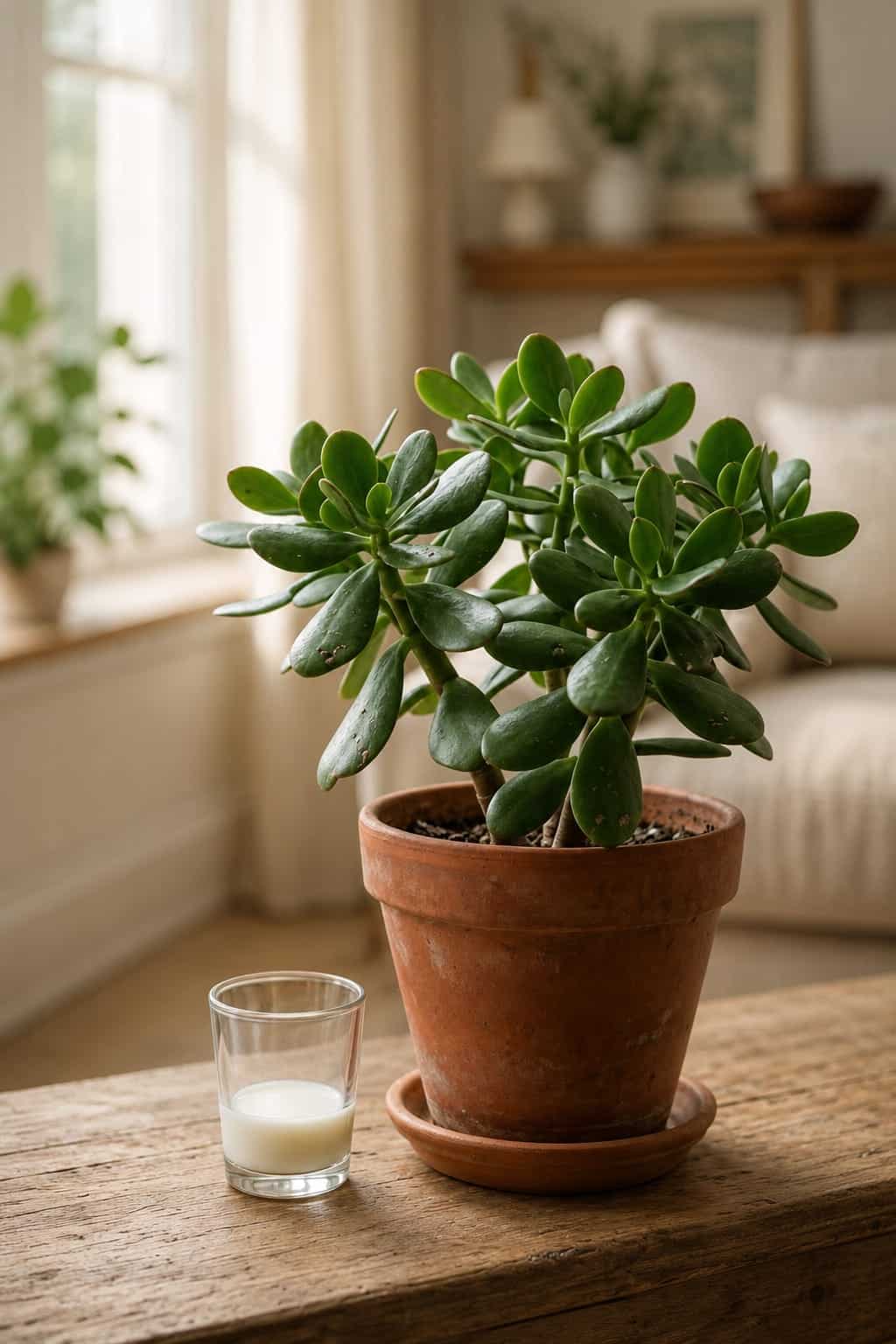
Jade plants are loved for their thick, glossy leaves, sculptural stems, and calm, elegant appearance. A healthy jade plant can sit on a sunny windowsill for years, slowly becoming fuller, stronger, and more tree-like with age. Some mature jade plants can even produce clusters of tiny star-shaped flowers, usually white or pale pink, when the conditions are right. Those flowers may have a light, delicate fragrance, making the plant feel even more special.
Because jade plants are slow growers, many people look for simple ways to encourage more growth, more fullness, and eventually more blooms. One natural idea that often appears in houseplant care is using diluted milk water. In the image, a mature jade plant is placed near a bright window with a small glass of milky liquid beside it. This suggests a gentle homemade routine that may support the plant when used carefully.
However, this method needs to be explained realistically. Milk water is not a magic bloom formula. It will not make a young jade plant flower overnight. It will not create fragrance instantly. It will not fix root rot, poor light, overwatering, compacted soil, or a pot without drainage. In fact, if milk is used too strongly or too often, it can spoil in the soil, smell bad, attract insects, encourage mold, and harm the roots.
Used correctly, a very diluted milk-water mixture may be used as an occasional mild supplement for a healthy jade plant. But the true secret to jade plant flowers is not milk. It is age, strong light, correct watering, a dry rest period, good drainage, and patience. This article explains how to use diluted milk water safely, how to avoid common mistakes, and how to care for your jade plant in a way that supports long-term health and possible blooming.
Understanding the Jade Plant
The jade plant, also known as Crassula ovata, is a succulent. This means it stores water in its thick leaves and stems. Those plump leaves are not just decorative; they are part of the plant’s survival system. Because jade plants store moisture, they do not need the same watering routine as tropical houseplants like peace lilies, pothos, or calatheas.
A jade plant prefers bright light, a well-draining soil mix, and periods of dryness between waterings. It is much more likely to suffer from too much water than from a little neglect. Many jade plants die because their owners love them too much: too much watering, too much fertilizer, too much repotting, or too many homemade treatments.
This is why any natural trick must be used carefully. A jade plant does not want rich, constantly moist soil. It wants a root zone that dries out and breathes. If a homemade mixture makes the soil wet, sour, or sticky, it can harm the plant instead of helping it.
Can Jade Plants Really Bloom Indoors?
Yes, jade plants can bloom indoors, but not always easily. A jade plant usually needs to be mature before it flowers. Young plants often focus on growing leaves, stems, and roots. It may take several years before a jade plant is old enough and strong enough to bloom.
Even a mature jade plant will not flower unless conditions are suitable. It usually needs bright light, cooler nights, and a drier rest period to encourage flower formation. In many homes, jade plants stay warm and receive the same care all year, so they keep growing slowly but never receive the seasonal signal to bloom.
When jade plants do flower, the blooms are usually small and star-shaped. They appear in clusters, often during cooler months or after a period of bright light and reduced watering. The fragrance is usually subtle, not strong like jasmine or gardenia. This is why it is more honest to describe the goal as “supporting possible blooms” rather than promising instant flowers.
What Milk Water Can and Cannot Do
Milk contains water, small amounts of minerals, proteins, fats, and natural compounds. Some gardeners use highly diluted milk water as a mild homemade supplement. The idea is that a tiny amount of milk in plenty of water may add a little organic support to the soil.
But milk water is not a balanced fertilizer. It does not provide complete nutrition in a predictable way. It does not replace light. It does not replace proper soil. It does not trigger flowering by itself. It is only an occasional supplement, and even then it should be used very carefully.
Milk can spoil. This is the biggest concern. If too much milk is poured into a pot, it can sour, smell unpleasant, attract fungus gnats, and encourage mold. In a succulent pot, this is especially risky because jade plants prefer dry soil. Anything that keeps the pot moist or encourages microbial buildup can lead to root problems.
So, milk water should only be used in a very weak dilution, only on a healthy jade plant, and only when the plant is already due for watering.
The Safest Milk-Water Ratio for Jade Plants
The safest approach is to use a very weak mixture. A beginner-friendly ratio is one part milk to ten or fifteen parts water. The final liquid should look only slightly cloudy. If it looks like actual milk, it is too strong.
For example, you can mix one teaspoon of milk into a cup of water. For an even gentler mixture, use half a teaspoon of milk in a cup of water. This is enough for a small test application. A jade plant does not need a large amount.
Use plain milk only. Do not use flavored milk, sweetened milk, condensed milk, chocolate milk, or milk mixed with sugar. Sugar can attract insects and create sticky residue in the soil.
Low-fat or skim milk is usually safer than rich whole milk because it leaves less fatty residue. The goal is not to feed the plant with heavy dairy. The goal is a light, diluted liquid that does not disturb the soil.
When to Use Milk Water on a Jade Plant
Use milk water only when the jade plant is healthy. The leaves should be firm, the stems should be stable, and the soil should dry properly between waterings. The plant should be growing in a pot with drainage holes and a fast-draining succulent mix.
The best time to use a diluted milk-water mixture is during the active growing season, usually spring or summer. This is when the plant can use moisture and mild nutrients more effectively. During winter or a cool rest period, jade plants need less water and less feeding.
Apply milk water only when the soil is dry and the plant is already due for watering. Never pour milk water into damp soil. That increases the risk of sour smell, mold, and root stress.
If your jade plant is already doing well, you may not need milk water at all. Natural tricks should support good care, not replace it.
When You Should Avoid Milk Water
Do not use milk water if your jade plant has soft leaves, mushy stems, or a sour smell from the soil. These are warning signs of overwatering or root rot. Adding milk water can make the problem worse.
Do not use milk water if the pot has no drainage holes. A no-drainage pot is already risky for jade plants, and adding an organic liquid increases the danger. Jade roots should never sit in trapped moisture.
Avoid milk water if you see mold, fungus gnats, or wet soil that stays damp for many days. These are signs that the potting environment is already too moist or too rich.
Do not use milk water on a newly repotted jade plant. Freshly disturbed roots need time to settle. Wait several weeks before adding any supplement.
Also avoid milk water during the dry rest period if you are trying to encourage blooms. Jade plants often need reduced watering and cooler nights to prepare for flowering. Extra liquid at the wrong time may work against that rhythm.
Step-by-Step: How to Use Milk Water Safely
Step 1: Check the Soil
Before adding anything, check the soil. It should be dry at least several inches down. For many jade plants, the entire potting mix should be mostly dry before watering again. If the soil is still damp, wait.
Step 2: Check the Plant
Look at the leaves and stems. Healthy jade leaves should feel firm and slightly plump. If leaves are mushy or translucent, the plant may be overwatered. If leaves are wrinkled and the soil is dry, the plant may need water. If leaves are wrinkled while the soil is wet, root damage may be present.
Step 3: Make a Very Weak Mixture
Mix one teaspoon of plain milk into one cup of water. Stir well. For a smaller or more sensitive plant, use half that amount. The mixture should be thin and only slightly cloudy.
Step 4: Apply to the Soil Only
Pour a small amount around the soil surface, away from the stem base. Do not pour milk water over the leaves. Do not splash it into leaf joints. Do not soak the pot heavily.
Step 5: Let the Pot Drain Completely
If water drains from the bottom, let it drain fully. Empty the saucer after watering. The jade plant should never sit in standing liquid.
Step 6: Wait and Observe
Do not repeat the treatment quickly. Watch the plant and soil for several weeks. If the soil smells fresh and the plant remains firm, the mixture was likely mild enough. If there is odor, mold, gnats, or soft growth, stop using milk water.
How Often Should You Use Milk Water?
Milk water should be used rarely. Once every two or three months during active growth is enough, and many jade plants do not need it at all. It should not be a weekly routine.
Jade plants are slow-growing succulents. They do not need constant feeding. Overfeeding or overwatering can create weak growth and root problems.
If you already use a balanced succulent fertilizer, you may skip milk water completely. A diluted cactus or succulent fertilizer used during the growing season is more predictable than milk water.
During winter or during a bloom-preparation rest period, avoid milk water. Let the plant experience a drier, cooler phase if you are trying to encourage flowers.
The Real Secret to Jade Plant Blooms
The most important factor for jade plant blooms is strong light. A jade plant needs plenty of bright light to store enough energy for flowering. A sunny windowsill is often ideal. If your jade plant is kept in low light, it may stay alive but rarely bloom.
Another key factor is maturity. A very young jade plant usually will not flower. The plant needs time to develop woody stems and a strong root system.
Seasonal change also matters. Many jade plants bloom after experiencing cooler nights and reduced watering. This rest period helps signal the plant to produce flowers. If the plant is kept warm and watered the same way all year, it may not receive that signal.
Good drainage is also essential. A jade plant with unhealthy roots will not bloom well. The roots must be strong enough to support the plant’s energy needs.
Milk water is only a small optional supplement. Light, maturity, dryness, and temperature are far more important.
How Much Light Does a Jade Plant Need?
Jade plants grow best in bright light. A south-facing or west-facing window can be excellent if the plant is gradually adapted to the brightness. An east-facing window can also work, especially if it receives several hours of morning sun.
If a jade plant does not get enough light, it may become leggy. The stems may stretch, and the spaces between leaves may become longer. The plant may lean toward the window. In low light, blooming is unlikely.
However, sudden intense sun can burn leaves if the plant is not used to it. Move the jade gradually into brighter light over several days or weeks. Healthy light exposure should make the plant compact and strong, not scorched.
For blooms, bright light is much more important than any kitchen trick.
Continue to Page 2
Continue to page 2 for more details about this article and the key points many readers miss on the first page.