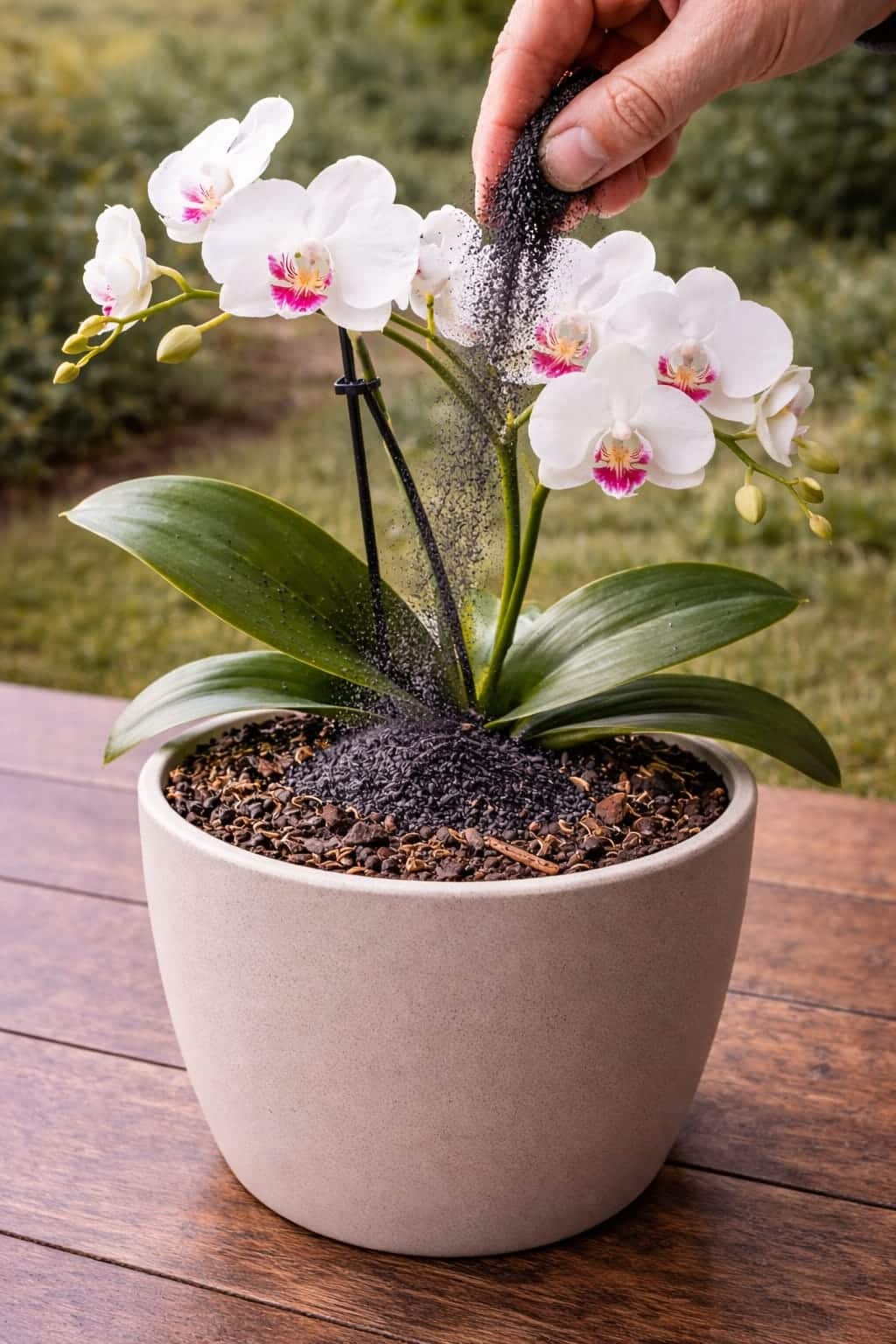
Discover why orchid growers use black powder (activated charcoal, biochar) on roots – to improve airflow, prevent rot, and support healthy root environments. Learn safe application tips and common mistakes.
Let’s be honest: orchids are among the most admired houseplants, valued for their elegant flowers and long‑lasting blooms. But they also have a reputation for being finicky. Unlike many houseplants that grow in soil, orchids are epiphytes – their roots need airflow, balanced moisture, and a clean growing medium to thrive. Get any of these wrong, and the plant quickly declines.
Recently, some orchid growers have begun experimenting with fine black powders applied lightly around orchid roots or growing media. These powders are typically natural soil amendments that may help support root health and maintain a balanced growing environment. When used properly, they can complement normal orchid care routines – and the results can be surprising.
In this guide, you’ll learn what this black powder is, why it’s used, how to apply it safely, and the ideal conditions for healthy orchids. No magic, just practical plant care.
🌿 What Is the Black Powder Used on Orchids?
The black powder often represents natural carbon‑based soil amendments. These materials are sometimes included in orchid potting mixes because they help support clean, well‑aerated root environments.
Common Types of Black Powder:
Powder What It Is Benefits for Orchids
Activated charcoal Processed carbon with high porosity Absorbs impurities, prevents odors, improves drainage
Biochar Charcoal used as a soil enhancer Enhances microbial life, retains nutrients, improves aeration
Finely ground organic compost blends Decomposed plant matter Adds trace nutrients slowly (use sparingly)
Carbon‑rich soil conditioners Various carbon-based products Improves soil structure, reduces compaction
Unlike traditional fertilizers, these powders usually work gradually by improving the structure of the growing medium rather than providing instant nutrients. They are not fertilizers – they are soil conditioners.
🌱 Why Orchid Roots Benefit from Carbon‑Based Amendments
Orchids are unique compared to most houseplants because their roots require excellent airflow and minimal water retention. In nature, they grow attached to trees, with roots exposed to air and rain. Bark‑based potting media mimic this, but over time, bark breaks down, becomes compacted, and can retain too much moisture.
Carbon‑rich materials may help by:
· Improving airflow around roots – porous charcoal particles create air pockets.
· Helping maintain balanced moisture levels – they absorb excess water and release it slowly.
· Supporting beneficial microbial activity – biochar provides a habitat for helpful microbes.
· Reducing organic breakdown odors – activated charcoal absorbs volatile compounds.
· Preventing root rot – by improving drainage and aeration.
Because orchids grow in bark‑based media rather than dense soil, maintaining a clean, well‑aerated root environment is especially important. A light dusting of activated charcoal or biochar can extend the life of your potting mix and keep roots healthier.
💧 How Orchid Growers Apply Black Powder – Safely
Experienced growers typically use these materials very lightly. Overusing soil additives can disrupt the balance of orchid media, so moderation is key.
Typical Application Method:
- Choose the right powder – horticultural activated charcoal or fine biochar (avoid BBQ charcoal, which contains additives).
- Sprinkle a small amount over the bark mix or root area – about 1 teaspoon for a 4‑inch pot.
- Avoid covering the orchid crown – keep the powder on the roots and bark, not the base of the leaves.
- Water normally afterward – the powder will settle into the mix.
- Use only occasionally – during repotting or once every 6–12 months
What to Avoid
· Using too much – a thick layer can block airflow and alter pH.
· Mixing with heavy soil – orchids need bark, not soil.
· Applying to already rotting roots – fix the rot first; powder is a preventive, not a cure.
Pro tip: When repotting, mix a small amount of activated charcoal (about 5–10% of the total mix volume) into your fresh orchid bark. This provides long‑term benefits without the need for frequent reapplication.
⚠️ Common Orchid Care Mistakes (That Powder Won’t Fix)
Even experienced growers sometimes struggle with orchid care. The black powder is a supplement – it will not fix poor care habits.
Common Mistakes to Avoid
Mistake Why It’s Harmful Correct Approach
Overwatering bark‑based media Roots rot, leaves yellow Water only when bark is nearly dry.
Poor airflow around roots Fungal issues, root suffocation Use pots with ventilation holes; ensure good air circulation.
Heavy compact soil Roots cannot breathe Use orchid bark mix, never regular potting soil.
Excess fertilizer buildup Salt burn, root damage Flush pot with plain water monthly.
Low light conditions No blooms, weak growth Provide bright, indirect light.
Orchids thrive best in loose bark mixes that allow roots to breathe freely. The black powder is an enhancer – not a replacement for proper care.
🪴 Ideal Growing Conditions for Orchids (Long‑Term Health)
Healthy orchids typically grow best under these conditions. The black powder can be a small boost, but these fundamentals matter far more.
Factor Ideal Condition Why It Matters
Light Bright, indirect (east/north‑east window) Encourages flowering
Growing medium Loose bark or orchid mix (never soil) Allows root airflow
Water Moderate cycles – water when bark is almost dry Prevents root rot
Airflow Good circulation (gentle fan or open space) Keeps roots healthy
Temperature Warm indoor climate (65–85°F / 18–29°C) Stable growth
Feeding Light orchid fertilizer (diluted, every 2–4 weeks in spring/summer) Supports blooms
Black powder Occasional, light dusting (optional) Improves aeration and root environment
Under the right conditions, orchids can produce spectacular blooms that last for weeks or even months.
How to Use Activated Charcoal for Orchids – A Simple Plan
If you want to try this method, follow this safe routine.
- Buy horticultural activated charcoal – available at garden centers or online. Do not use charcoal briquettes (they contain chemicals).
- Crush large pieces if needed – you want a fine to medium powder, not dust.
- At repotting time, mix 1 part charcoal with 10 parts orchid bark.
- For existing pots, sprinkle 1–2 teaspoons over the bark surface, avoiding the crown.
- Water normally – the charcoal will settle.
- Reapply only once a year – more is not better.
Pro tip: If you notice a sour smell from your orchid pot, that’s a sign of decaying organic matter. Activated charcoal can help absorb odors and slow further breakdown.
Orchid Care Overview – Quick Reference
Factor Ideal Condition Why It Matters
Light Bright, indirect Encourages flowering
Growing medium Bark‑based mix Allows root airflow
Water Moderate cycles Prevents root rot
Airflow Good circulation Keeps roots healthy
Feeding Light orchid fertilizer Supports blooms
Black powder Occasional, light dusting Improves aeration, reduces odors
Frequently Asked Questions (FAQs)
Q: Why do orchid roots grow outside the pot?
A: Orchid roots naturally grow toward light and air. Aerial roots are normal – do not cut them. They absorb moisture and nutrients from the air.
Q: How often should orchids be watered?
A: Usually every 7–10 days depending on environment. Water when the bark is almost dry (stick your finger in; if it feels dry, water).
Q: Can orchids grow in regular potting soil?
A: No – they require special bark‑based mixes. Soil suffocates orchid roots.
Q: Why are orchid leaves turning yellow?
A: Often due to excess water (overwatering) or aging leaves. Check roots for rot.
Q: Do orchids need fertilizer?
A: Yes, but in light diluted amounts. Use a balanced orchid fertilizer at half strength every 2–4 weeks in spring/summer.
Q: How long do orchid flowers last?
A: Many blooms last several weeks – some up to 3 months with good care.
Q: When should orchids be repotted?
A: Usually every 1–2 years, or when the bark breaks down and becomes soggy. Repot in spring.
Q: Do orchids like humidity?
A: Yes, moderate humidity (50–70%) helps them thrive. Use a pebble tray or humidifier.
Q: Why are orchid roots silver or gray?
A: This is normal when roots are dry. They turn green when wet – a sign they are healthy.
Q: Are orchids difficult to grow?
A: They require specific care (bark, airflow, moderate watering) but can be very rewarding. With the right conditions, they are not as hard as their reputation suggests.
Printable Orchid Care Checklist (with Black Powder)
☐ Use a clear pot with ventilation holes (for root monitoring)
☐ Fill with orchid bark mix (never soil)
☐ Optional: mix 5–10% activated charcoal into bark at repotting
☐ Place in bright, indirect light (east/north‑east window)
☐ Water when bark is almost dry (every 7–10 days)
☐ Water thoroughly, then drain completely
☐ Maintain humidity 50–70% (pebble tray or humidifier)
☐ Provide good air circulation (gentle fan)
☐ Fertilize lightly every 2–4 weeks in spring/summer with diluted orchid fertilizer
☐ Do not fertilize in fall/winter
☐ Sprinkle a light dusting of activated charcoal on bark surface once a year (optional)
☐ Repot every 1–2 years when bark breaks down
Final Thoughts – A Small Boost for Healthy Orchid Roots
The “black powder” trend is not magic. Activated charcoal or biochar can improve airflow, absorb impurities, and help maintain a cleaner root environment for your orchids. But it will never replace the fundamentals: bright indirect light, bark‑based medium, proper watering, good airflow, and light feeding.
If your orchid is struggling, don’t reach for charcoal first. Check the roots, adjust your watering, and ensure the pot has ventilation holes. Once those basics are right, a little black powder during repotting can be a gentle boost – but it’s never the cure.
With patience and the right care, your orchids will reward you with stunning blooms and healthy, silvery roots.
Now it’s your turn! Have you tried activated charcoal on your orchids? What results did you see? Drop a comment below – I’d love to hear your experience.
And if you found this guide helpful, share it with a friend who loves orchids. Pin it for later, and subscribe to our newsletter for more practical plant care.
Stay bright, stay airy, and watch your orchids thrive. 🌸✨