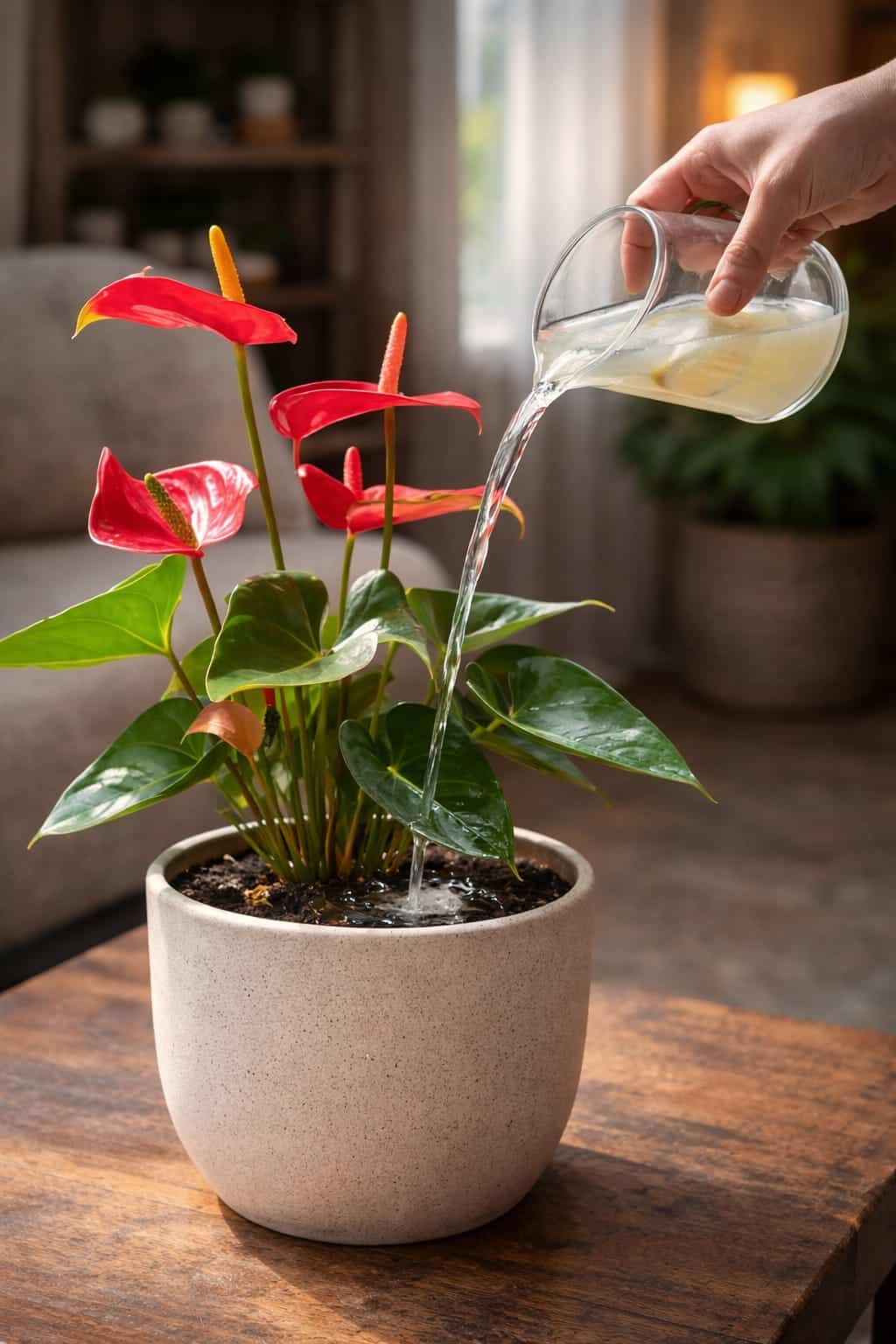
Want your Anthurium to bloom all year? Learn the secrets – proper watering, bright indirect light, humidity, fertilizing, and pruning. Keep your Flamingo Flower thriving with these expert tips.
Let’s be honest: Anthuriums, with their vibrant heart‑shaped blooms and glossy green leaves, are showstoppers. Known as the “Flamingo Flower” or “Laceleaf,” these tropical beauties have become favorites for indoor gardening enthusiasts. Their long‑lasting, waxy flowers in shades of red, pink, white, and even purple bring a touch of the exotic to any room. But keeping them blooming all year round can feel like a challenge. One month they’re covered in flowers; the next, just leaves.
The good news? Anthuriums are not as fussy as they seem. With the right balance of light, water, humidity, and feeding, you can enjoy continuous blooms throughout the year. In this complete guide, I’ll share everything you need to know – from watering and lighting to soil, fertilizing, pruning, and troubleshooting. Plus, you’ll get bonus tips on choosing the right container, grooming, and spotting signs of stress.
Let’s make your Anthurium the star of your indoor jungle.
Why Anthuriums Are Worth the Effort
Anthuriums are not just pretty faces. They are also excellent air purifiers, removing toxins like formaldehyde and ammonia from indoor air. Their blooms can last for weeks – sometimes up to two months – and a healthy plant can produce new flowers multiple times a year. With proper care, your Anthurium can become a long‑lived, ever‑blooming centerpiece.
- Watering – The Foundation of Health
Anthuriums thrive in a consistently moist but not waterlogged environment. Getting watering right is the single most important factor for year‑round blooming.
How to Water Correctly
· When to water: Water only when the top inch of soil feels dry to the touch. Stick your finger into the potting mix – if it feels dry, water; if damp, wait.
· How to water: Water thoroughly until it runs out the drainage holes. Empty the saucer immediately – never let the pot sit in standing water.
· Water quality: Use room‑temperature, filtered or distilled water if your tap water is hard. Anthuriums are sensitive to chlorine and fluoride, which can cause brown leaf tips.
Signs of Watering Problems
Problem Likely Cause Solution
Yellow leaves Overwatering Let soil dry out; improve drainage.
Wilting with wet soil Root rot Repot in fresh, dry mix; trim rotten roots.
Brown, crispy leaf edges Underwatering or low humidity Water thoroughly; increase humidity.
Pro tip: Use a well‑draining potting mix (see below) to prevent waterlogging. Anthuriums are susceptible to root rot, so drainage is non‑negotiable.
- Light – The Bloom Trigger
Anthuriums need the right amount of light to produce flowers. While they can tolerate lower light, blooming requires bright, indirect light.
Ideal Light Conditions
· Best location: Near a north or east‑facing window. These provide gentle morning sun and bright indirect light for the rest of the day.
· Acceptable: A few feet back from a south or west window, behind a sheer curtain.
· Avoid: Direct afternoon sun – it scorches leaves, causing brown patches.
· Too little light: Dark green leaves, long stems, no blooms.
Signs of Light Problems
Problem Likely Cause Solution
No blooms, dark green leaves Insufficient light Move closer to a window or add a grow light.
Yellow or bleached leaves Too much direct sun Move to indirect light or use a sheer curtain.
Leggy growth Low light Increase light exposure.
Pro tip: If your home lacks natural light, use a full‑spectrum LED grow light for 10–12 hours per day.
- Soil – The Right Foundation
Anthuriums prefer a well‑aerated, slightly acidic potting mix that retains moisture without becoming waterlogged.
Best Soil Mix
Component Purpose
Orchid bark Provides aeration, mimics natural epiphytic conditions
Perlite Increases drainage and airflow
Peat moss or coco coir Retains moisture without becoming soggy
DIY mix: 2 parts orchid bark + 1 part perlite + 1 part peat moss.
Commercial option: Look for an “aroid mix” or blend your own. Avoid heavy garden soil or regular potting soil alone.
Repotting
· How often: Every 2–3 years, or when roots are crowded.
· Best time: Spring.
· Pot size: Choose a container that accommodates the root ball with minimal extra space. Anthuriums prefer a slightly snug fit.
- Fertilizer – Feeding for Flowers
During the growing season (spring and summer), Anthuriums benefit from regular feeding. But over‑fertilizing can do more harm than good.
Continue to Page 2
Continue to page 2 for more details about this article and the key points many readers miss on the first page.