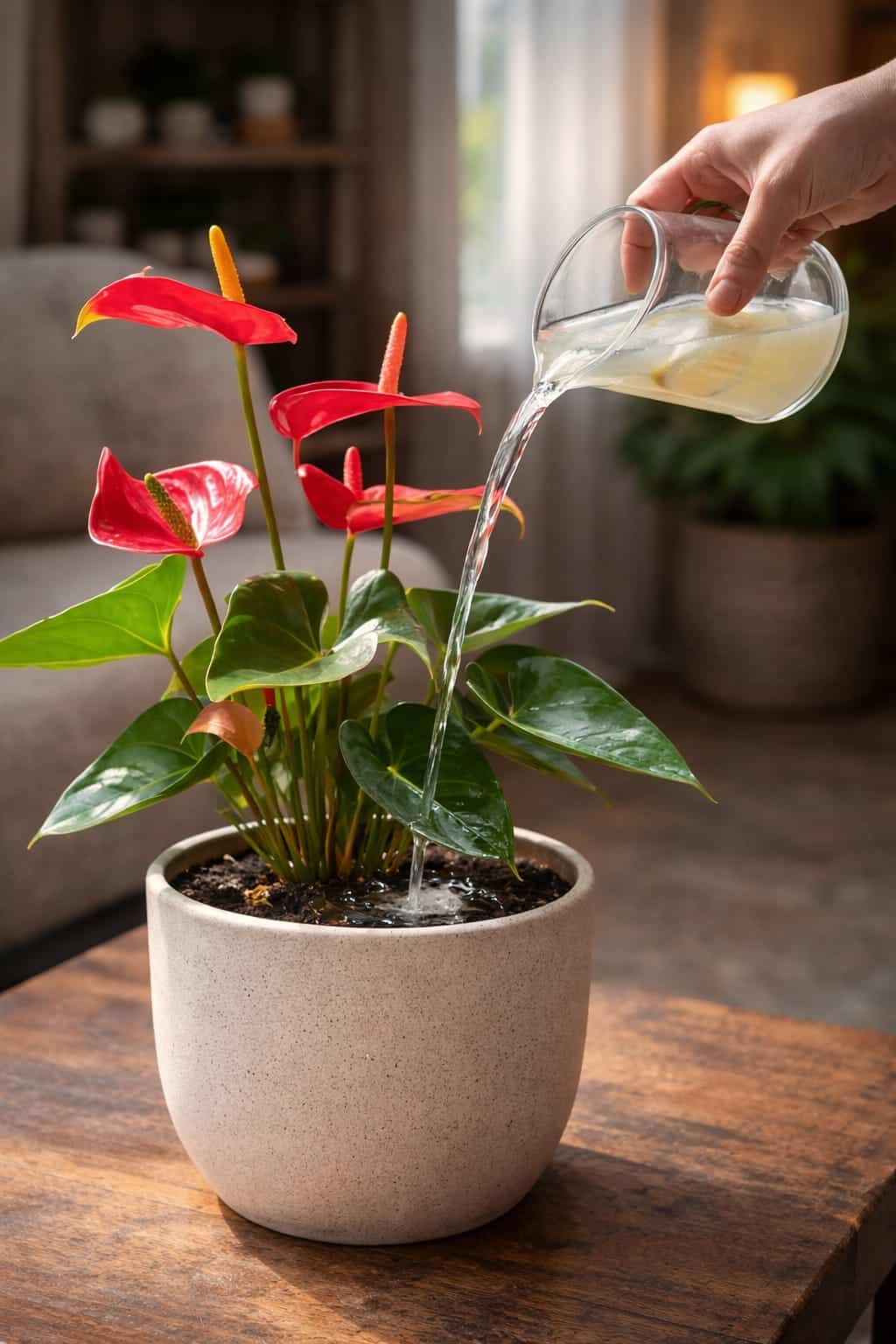
Fertilizer Guidelines
Factor Recommendation
Type Balanced liquid fertilizer (e.g., 20-20-10 or 10-10-10)
Strength Dilute to half or quarter strength
Frequency Every 6–8 weeks during spring and summer
High‑phosphorus option For extra blooms, use a fertilizer with higher phosphorus (middle number) once in early spring.
When to stop Reduce or cease in fall and winter (dormancy).
Pro tip: Too much fertilizer causes salt buildup, leading to brown leaf tips and weak growth. Flush the soil with plain water every few months.
How to Encourage Anthuriums to Bloom (6 Proven Steps)
- Provide Adequate Light
Ensure your Anthurium receives bright, indirect light for at least 6 hours a day. Adequate light exposure is crucial for stimulating flowering. Avoid direct sunlight, which can cause leaf burn.
- Maintain Optimal Temperature
Anthuriums thrive in temperatures between 65°F to 80°F (18°C to 27°C). Consistent warmth encourages flower production. Avoid exposing them to temperatures below 50°F (10°C) or cold drafts, as this can hinder blooming.
- Boost Humidity
Anthuriums prefer higher humidity levels (60–80%). If you live in a dry climate or during winter months when indoor heating reduces humidity, consider:
· Placing a tray filled with water and pebbles under the pot.
· Using a humidifier nearby.
· Grouping plants together to create a microclimate.
- Appropriate Fertilization
During the growing season, provide a balanced liquid fertilizer. A fertilizer higher in phosphorus (the middle number on the fertilizer label) can promote flower development.
- Remove Spent Blooms
To encourage the production of new flowers, promptly remove faded or spent blooms. Cut the flower stalk at the base. This redirects the plant’s energy toward the development of new buds.
- Prune and Shape
Pruning anthuriums helps maintain a desirable shape and encourages new growth. Remove yellow or damaged leaves, and trim any leggy stems. Be mindful not to remove healthy leaves, as they contribute to the overall vigor of the plant.
Bonus Tips for Thriving Anthuriums
🌿 Choose the Right Container
Anthuriums prefer a slightly snug fit. Choose a container that accommodates the root ball with minimal extra space. A pot that is too large holds excess moisture, leading to root rot.
🧼 Grooming and Cleaning
· Wipe leaves regularly with a damp cloth to remove dust, keeping them clean and allowing for better light absorption.
· Groom the plant by removing yellow or damaged leaves to promote overall health.
📏 Consider the Right Size
Anthuriums come in various sizes, from compact varieties suitable for tabletops to larger ones that make striking floor plants. Choose a size that complements your space and provides adequate room for growth.
👀 Watch for Signs of Stress
Pay attention to the plant’s response to its environment:
Symptom Possible Cause
Drooping leaves Overwatering or underwatering
Yellowing leaves Overwatering or nutrient deficiency
Brown leaf tips Low humidity or fluoride in tap water
No blooms Insufficient light or lack of phosphorus
Leaf spots Fungal issues from wet leaves or poor air circulation
Common Pests and How to Handle Them
Keep an eye out for pests such as aphids, spider mites, and mealybugs, as they can hinder the blooming process.
Pest Signs Treatment
Aphids Small green or black insects on new growth Insecticidal soap or neem oil
Spider mites Fine webbing, stippled leaves Increase humidity; neem oil
Mealybugs White cottony clusters Wipe with alcohol on a cotton swab
Treat any infestations promptly using appropriate insecticidal soaps or neem oil. Isolate the plant to prevent spread.
Troubleshooting – Why Isn’t My Anthurium Blooming?
Problem Likely Cause Solution
No blooms for over a year Insufficient light Move to brighter indirect light or add grow light.
Leaves are lush but no flowers Too much nitrogen (over‑fertilizing) Switch to high‑phosphorus fertilizer; stop feeding for 2 months.
Buds form but drop before opening Low humidity or temperature swings Increase humidity; stabilize temperature.
Plant looks healthy but small Pot too large or root‑bound Repot to appropriate size.
Brown leaf tips Low humidity or fluoride in tap water Use filtered water; increase humidity.
Frequently Asked Questions (FAQs)
Q: How often do anthuriums bloom?
With proper care, anthuriums can bloom several times a year. Each flower can last 2–3 months, so you can have continuous blooms.
Q: Can anthuriums grow in low light?
They can survive, but they will not bloom well. For flowers, provide bright indirect light.
Q: Should I mist my anthurium?
Light misting can help with humidity, but avoid wetting the flowers. A pebble tray or humidifier is more effective.
Q: Why are my anthurium leaves turning yellow?
Most common cause: overwatering. Check soil moisture and drainage. Also possible: nutrient deficiency or old age (lower leaves).
Q: How do I make my anthurium bloom more?
Provide bright indirect light, high humidity, consistent watering, and a high‑phosphorus fertilizer during the growing season.
Q: Are anthuriums toxic to pets?
Yes – anthuriums contain calcium oxalate crystals, which cause mouth irritation and vomiting. Keep out of reach of cats and dogs.
Q: When should I repot my anthurium?
Every 2–3 years, or when roots are crowded. Repot in spring with fresh, well‑draining mix.
Q: Can I propagate anthuriums?
Yes – by division during repotting. Separate rooted offsets and plant in fresh soil.
Printable Anthurium Care Checklist
☐ Place in bright, indirect light (east/north‑east window)
☐ Use a pot with drainage holes (slightly snug fit)
☐ Fill with airy tropical mix (orchid bark + perlite + peat moss)
☐ Water when top inch of soil is dry
☐ Water thoroughly, then empty saucer
☐ Use filtered or distilled water
☐ Maintain humidity 60–80% (pebble tray or humidifier)
☐ Keep temperature 65–80°F (18–27°C), avoid drafts
☐ Fertilize with diluted balanced fertilizer every 6–8 weeks in spring/summer
☐ Use high‑phosphorus fertilizer once in early spring for blooms
☐ Remove spent flowers and yellow leaves
☐ Wipe leaves with damp cloth monthly
☐ Check for pests weekly
☐ Repot every 2–3 years
Final Thoughts – Year‑Round Blooms Are Within Reach
Keeping your Anthurium happy and flowering all year isn’t about luck – it’s about understanding its tropical needs and providing consistent care. With the right balance of bright indirect light, proper watering, high humidity, light feeding, and regular grooming, your Flamingo Flower can reward you with glossy leaves and vibrant blooms for months on end.
Don’t be discouraged by an occasional setback. Adjust your care, be patient, and soon you’ll have an Anthurium that’s the envy of every plant lover.
Now it’s your turn! Have you struggled with getting your Anthurium to bloom? What worked for you – more light, higher humidity, or a different fertilizer? Drop a comment below – I’d love to hear your experience.
And if you found this guide helpful, share it with a friend who loves anthuriums. Pin it for later, and subscribe to our newsletter for more plant care wisdom.
Stay bright, stay humid, and watch your Anthurium thrive. 🌺✨