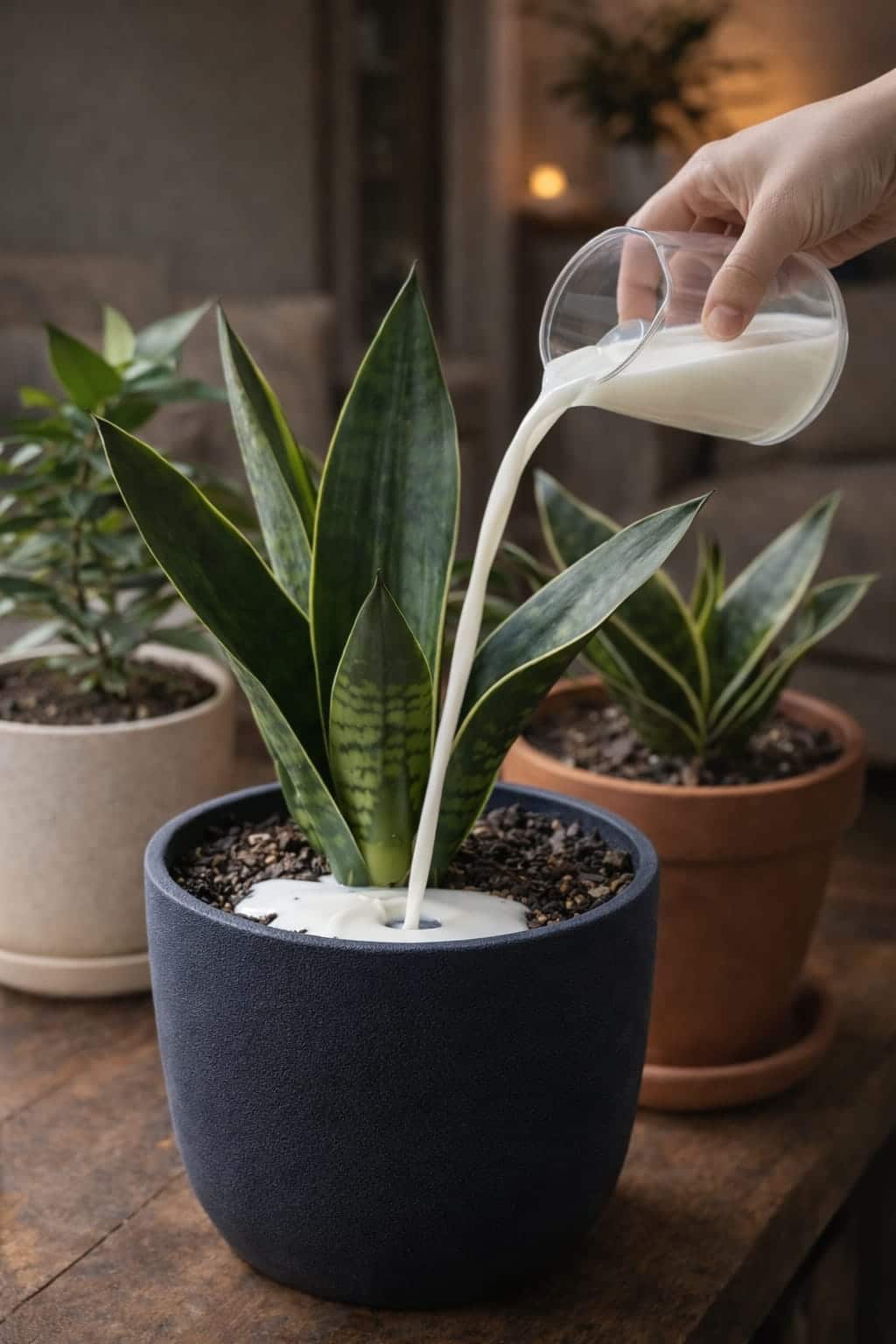
Discover why indoor plant experts use a diluted milky kitchen liquid on snake plants – to support soil minerals and root health. Learn safe dilution, application tips, and common mistakes to avoid.
Let’s be honest: snake plants (Sansevieria, now Dracaena) are famous for surviving almost anything – low light, irregular watering, and general neglect. But experienced indoor gardeners know that survival isn’t the same as structured, healthy growth. A surviving snake plant may stay alive for years without thriving, producing new leaves or pups. Recently, many homeowners have experimented with a diluted “milky” kitchen‑style liquid (like the one shown in the image) to support root balance and encourage steadier growth.
But here’s the truth: it’s not about pouring random liquids into your plant. It’s about understanding dilution, drainage, and timing. Used correctly, a light, diluted kitchen‑based liquid can support soil structure and mineral balance. Used incorrectly, it can cause root rot fast.
In this complete guide, I’ll give you an honest, science‑backed look at this trending method. You’ll learn what the white liquid is, how to use it safely, common mistakes that ruin snake plants, and – most importantly – what actually drives healthy growth. No hype, just practical advice for modern plant parents.
Let’s separate the viral trend from the horticultural reality.
What Is the White Liquid in the Image?
The white liquid typically represents a highly diluted, calcium‑based rinse – sometimes inspired by diluted milk‑water blends or mild mineral solutions. The idea is that milk contains calcium, which can strengthen plant cell walls, and small amounts of proteins that may benefit soil microbes.
Important Clarifications
· It should never be thick. Undiluted milk will sour, smell, and attract pests. The mixture should look lightly cloudy, not creamy and opaque.
· It should never be poured heavily. A small amount (¼ to ½ cup for a standard pot) is plenty.
· It should never sit in the crown of the plant. Snake plants are extremely sensitive to standing moisture in the center rosette. Liquid trapped between leaves causes rot.
The idea behind a diluted kitchen mineral rinse is to lightly refresh soil minerals – not saturate the roots or replace proper care.
Why Calcium Matters for Snake Plants (The Science)
Calcium is an essential secondary nutrient for all plants. It plays a critical role in:
· Cell wall structure – calcium strengthens cell walls, leading to firmer, more upright leaves.
· Root development – healthy roots absorb water and nutrients efficiently.
· Disease resistance – calcium helps plants resist bacterial and fungal infections.
· Overall vigor – calcium supports steady, balanced growth.
However, most commercial potting mixes already contain adequate calcium. A true calcium deficiency is rare in snake plants. Adding a little extra through diluted milk may offer a tiny boost, but it is not a substitute for proper light, water, and soil.
💧 How to Use a Diluted Kitchen Liquid Safely – Step by Step
If you try this method, follow these strict guidelines. Moderation is everything.
Step‑by‑Step Safe Application
- Extreme Dilution – Mix 1 part whole milk with 4–5 parts room‑temperature water. The liquid should look lightly cloudy – not creamy. (Example: ¼ cup milk + 1¼ cups water.)
- Apply to Soil Only – Pour around the edges of the pot, avoiding the center leaves and crown. Never pour directly into the rosette.
- Use Rarely – Once a month at most, and only during spring and summer (active growing season). This is an occasional support, not a weekly routine.
- Ensure Fast Drainage – The pot must have drainage holes. Empty the saucer after watering. Never let the plant sit in standing liquid.
- Avoid During Low Light Seasons – In fall and winter, growth slows. Plants under low light metabolize slower, and excess moisture lingers longer, increasing rot risk.
What to Avoid
· Pouring thick liquid directly into the crown – causes rot.
· Using undiluted milk or kitchen waste – sours, smells, attracts pests.
· Repeating the treatment too often – leads to salt buildup and brown tips.
· Using heavy soil with poor drainage – traps moisture, accelerates rot.
· Applying during winter dormancy – the plant rests and cannot use nutrients.
Snake plants thrive with dry cycles. Any liquid routine must respect that. When in doubt, less is safer.
❌ Common Mistakes to Avoid
Many indoor plant problems happen because of these errors. The white liquid will not fix them – only proper care will
Mistake Why It’s Harmful Correct Approach
Pouring thick liquid directly into the crown Crown rot – often fatal Apply only to soil, away from leaves.
Using undiluted milk Sours, smells, causes mold Dilute 1:4 or 1:5.
Repeating the treatment too often Salt buildup, brown tips, root burn Use once a month at most, only in spring/summer.
Using heavy soil with poor drainage Suffocates roots, traps moisture Use cactus/succulent mix with perlite.
Applying during winter dormancy Nutrients accumulate, burn roots Feed only in spring/summer.
Keeping soil constantly moist Root rot – #1 killer Let soil dry completely between waterings.
If soil stays wet for too long, roots suffocate. When in doubt, less is safer.
Continue to Page 2
Continue to page 2 for more details about this article and the key points many readers miss on the first page.