Discover how a simple slow‑release plant tablet can help peace lilies bloom more consistently. Learn safe application, common mistakes, and what actually triggers flowers – bright light, proper watering, and root health.
Let’s be honest: peace lilies (Spathiphyllum) are beloved for their elegant white blooms and rich green foliage. They bring a sense of calm and sophistication to any room. But when flowering slows down or leaves start to pale, many indoor gardeners begin searching for a simple, controlled way to restore balance. Recently, some have turned to a slow‑release plant nutrient tablet to support steady feeding without relying on heavy liquid fertilizers.
The results can be surprising – but not for the reasons you might think. This method is not about forcing dramatic growth overnight. The goal is clear: stabilize the root zone, provide gentle nutrient support, and encourage consistent blooming under proper indoor conditions. In this complete guide, I’ll explain why peace lilies struggle to bloom indoors, what the “simple tablet” method really is, how to use it safely, and – most importantly – what actually triggers those beautiful white spathes.
Let’s clear up the confusion and help your peace lily thrive.
Why Peace Lilies Struggle to Bloom Indoors
Before reaching for any tablet, it’s essential to understand why your peace lily might not be flowering. Bloom problems rarely come from “no fertilizer.” They usually come from stress in the root system or environment.
Common Causes of Poor Blooming
Cause Why It Matters
Low indirect light Peace lilies need bright, indirect light to produce flowers. Too little light = no blooms.
Overwatering in dense soil Soggy roots rot, and the plant focuses on survival, not flowers.
Poor drainage Waterlogged soil suffocates roots, leading to yellow leaves and no blooms.
Mineral buildup Excess salts from tap water or over‑fertilizing cause brown tips and weak growth.
Sudden temperature changes Drafts, cold windows, or heaters stress the plant, causing bud drop.
When roots remain stressed, the plant redirects energy toward survival instead of flowering. Fixing these fundamentals is far more important than any tablet.
💊 What Is the “Simple Tablet” Method?
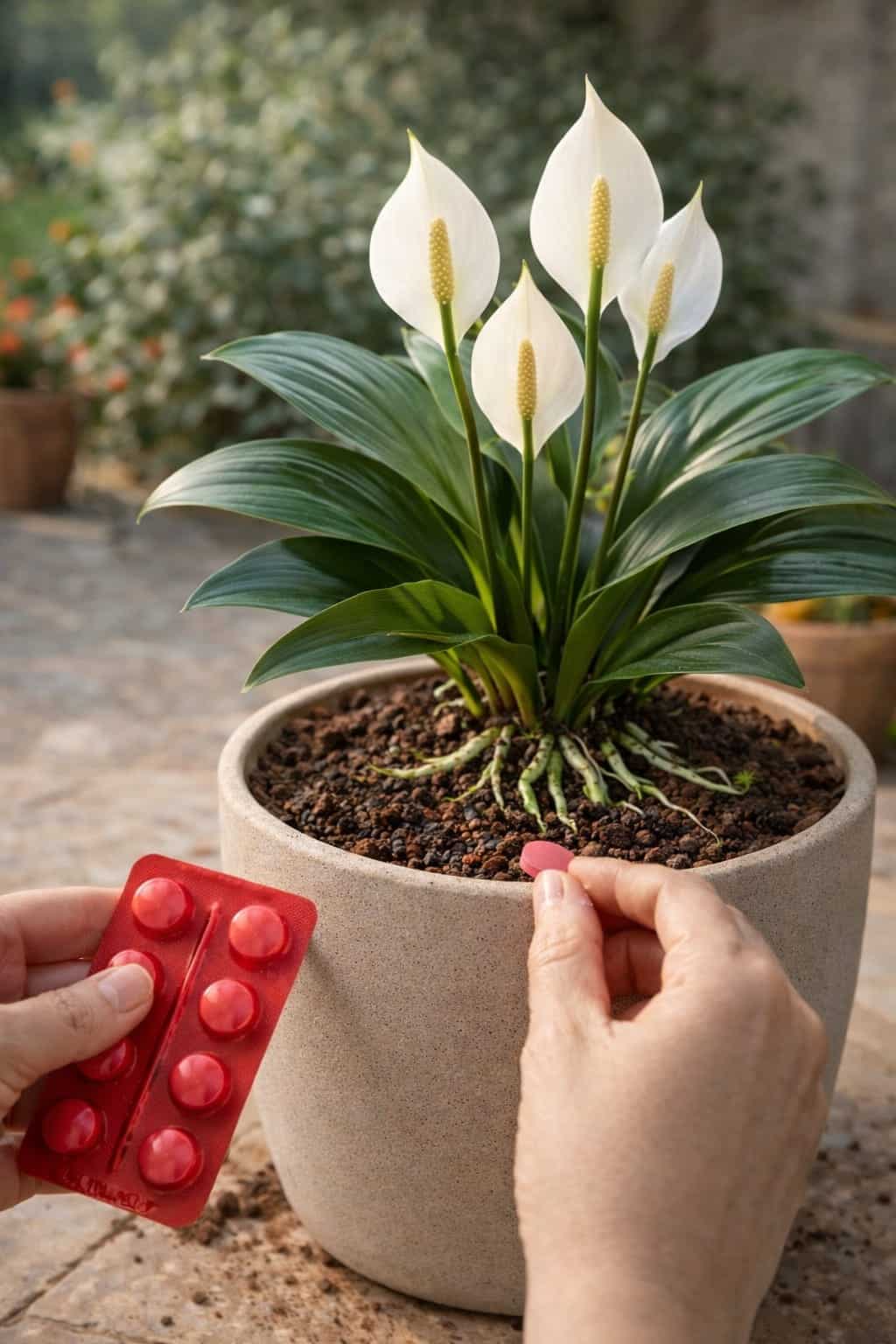
The image shows a small tablet placed into the soil near a peace lily. Some gardeners use plant‑formulated slow‑release fertilizer tablets designed specifically for indoor plants. These are not human medications or random pills – they are commercial products like Osmocote, Jobe’s Organics, or other slow‑release houseplant fertilizers.
Important Clarification
Only use products labeled for plant use. Human medication should never be placed in soil – this can poison the plant and harm soil microbes.
When used properly, slow‑release tablets can:
· Deliver gradual nutrient release – prevents nutrient spikes that burn roots.
· Reduce feeding inconsistency – one tablet can last for months.
· Support steady leaf growth – maintains healthy green foliage.
· Encourage stronger bloom cycles – when combined with bright indirect light.
However, a tablet alone will not make a peace lily bloom. It is a supplement, not a substitute for proper light, water, and soil.
✅ How to Use Plant Nutrient Tablets Safely – Step by Step
If you decide to try this approach, follow these steps carefully. Overfeeding can do more harm than good.
Step‑by‑Step Application
- Choose Indoor Plant‑Specific Tablets – Select balanced, mild nutrient formulas for houseplants (e.g., 10-10-10 or 14-14-14 slow‑release). Avoid high‑nitrogen lawn fertilizers.
- Follow Exact Dosage Instructions – One tablet per pot size (usually 4–6 inches) is enough. Overfeeding can burn roots and reduce blooming.
- Place Away From the Main Stem – Insert the tablet slightly off‑center in the soil, about 1–2 inches deep. Avoid direct contact with roots.
- Water Moderately After Placement – This activates the slow‑release process without oversaturating the pot. Use room‑temperature water.
- Observe Leaf and Bloom Response – Healthy leaves remain firm and glossy. Yellowing or brown leaf tips may signal excess nutrients. If you see these, remove the tablet and flush the soil.
When to Use
· Best time: Spring and summer (active growing season).
· Do not use in fall and winter – the plant rests.
What to Avoid
· Using tablets meant for lawns or outdoor plants – they are too strong.
· Inserting multiple tablets in a small pot – more is not better.
· Placing the tablet directly against the stem – can cause rot.
· Using on a stressed plant – fix watering and light issues first.
Continue to Page 2
Continue to page 2 for more details about this article and the key points many readers miss on the first page.