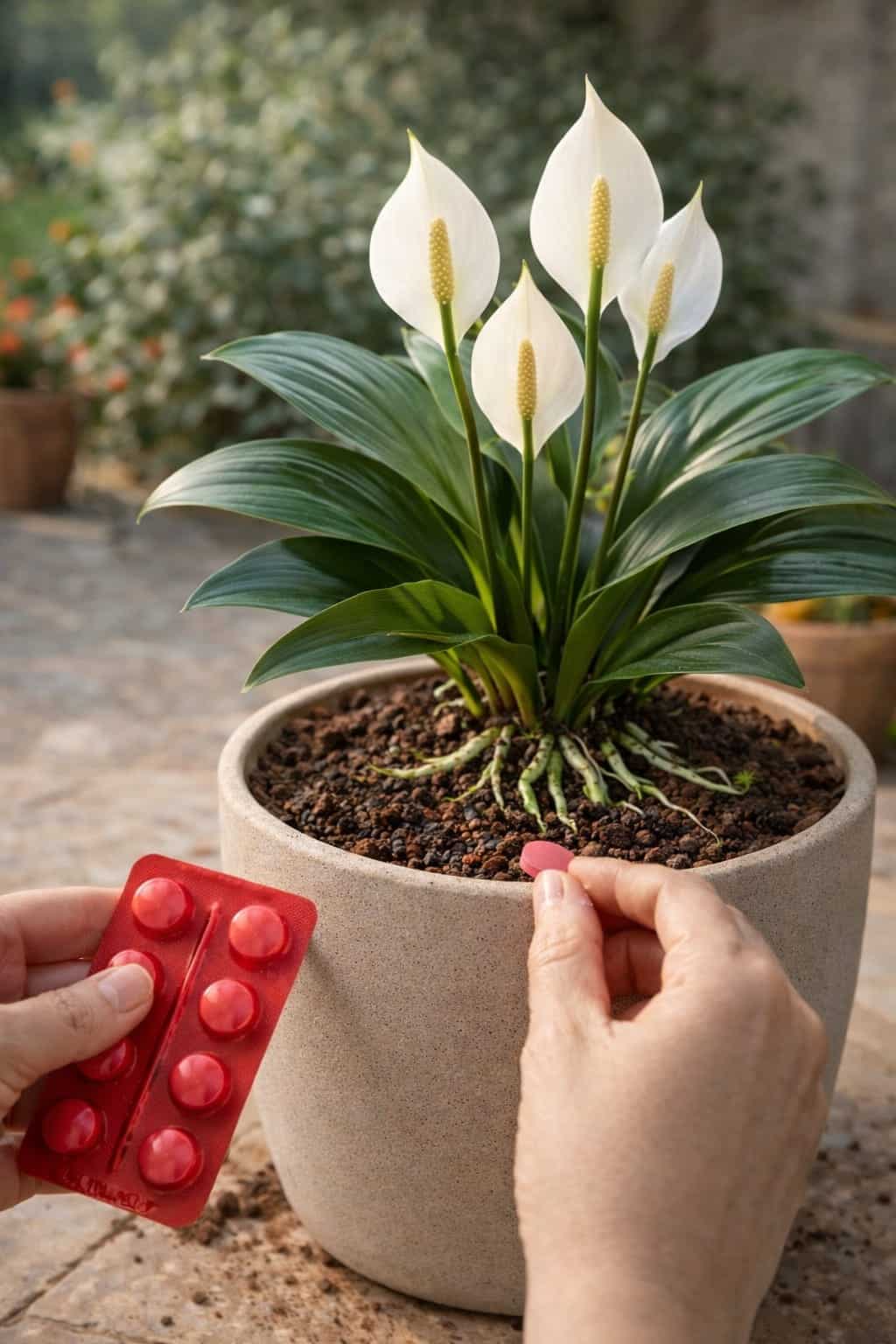
🪴 Best Setup for Healthier Peace Lily Roots (Before Any Tablet)
The tablet will only help if the plant’s environment is already optimized. Focus on these fundamentals first.
- Bright Indirect Light – The #1 Bloom Trigger
Peace lilies need bright, indirect light to produce flowers. Without enough light, no amount of fertilizer will help.
· Ideal spot: East or north‑facing window.
· Acceptable: A few feet back from a south or west window with a sheer curtain.
· Signs of insufficient light: Dark green leaves, no blooms, leggy growth.
Pro tip: If your peace lily hasn’t bloomed in over a year, move it closer to a window. You’ll likely see buds within weeks.
- Loose, Well‑Draining Potting Mix
Peace lilies hate soggy roots. Heavy, compact soil leads to root rot and no flowers.
· Best mix: Regular potting soil + 20% perlite or orchid bark.
· Avoid: Garden soil or dense, moisture‑retentive mixes.
- A Container with Proper Drainage Holes
· Always use pots with drainage holes – this is non‑negotiable.
· Terracotta pots are excellent – they wick away excess moisture.
- Consistent, Moderate Watering
· When to water: When the top inch of soil feels dry.
· How to water: Water thoroughly until it runs out the drainage holes. Empty the saucer.
· Water quality: Use filtered or distilled water to prevent brown tips from fluoride and chlorine.
- Gentle Feeding During Active Growth Seasons
The tablet is one form of gentle feeding. You can also use a diluted liquid fertilizer once a month in spring and summer. The tablet simply provides a longer‑lasting option.
Peace Lily Bloom Support Table – Simple Indoor Conditions
Factor Ideal Setup Why It Helps
Light Bright, indirect (east/north window) Fuels bloom production
Soil Airy, well‑draining (add perlite) Prevents root rot
Watering Even moisture – water when top inch dries Maintains stability
Feeding Mild slow‑release tablet or diluted liquid Avoids nutrient shock
Temperature 65–80°F (18–27°C) Encourages flowering
Troubleshooting – Common Problems & Solutions
Problem Likely Cause Solution
No blooms after using tablet Insufficient light Move to brighter indirect light.
Yellow leaves Overwatering or nutrient excess Let soil dry; remove tablet if over‑fertilized.
Brown leaf tips Mineral buildup or low humidity Use filtered water; increase humidity.
Tablet not dissolving Soil too dry Water lightly to activate.
Leaves drooping Underwatering or overwatering Check soil moisture; adjust.
White crust on soil Salt buildup from fertilizer Flush soil with plain water; reduce feeding.
Frequently Asked Questions (FAQs)
Q: Can a nutrient tablet force blooms quickly?
A: No. Proper lighting remains the main factor. The tablet only supports the plant if light and water are already correct.
Q: How often should I feed peace lilies?
A: Light feeding during active growth (spring and summer) is usually enough – once a month with diluted liquid fertilizer or one slow‑release tablet per season.
Q: Why are leaves healthy but no flowers appear?
A: Insufficient light is often the reason. Move the plant to a brighter spot.
Q: Can too much fertilizer reduce blooms?
A: Yes. Excess nutrients stress roots, causing yellow leaves and no flowers. Follow dosage instructions carefully.
Q: Should I remove old flowers?
A: Yes. Removing spent blooms (cut the stalk at the base) redirects energy to new growth and future flowers.
Q: Does repotting help peace lilies bloom?
A: Fresh soil improves oxygen flow and nutrient balance. Repot every 1–2 years, but avoid oversized pots – peace lilies like to be slightly root‑bound.
Q: Do peace lilies prefer tight pots?
A: They tolerate snug pots but need drainage. A pot that is too large holds excess moisture, leading to root rot.
Q: What water is best for peace lilies?
A: Filtered or room‑temperature water helps reduce mineral buildup. Let tap water sit out overnight to dissipate chlorine (fluoride remains, so filtered is better).
Q: Can tablets replace liquid fertilizer entirely?
A: They can simplify feeding but must follow dosage guidelines. Tablets provide slow release; liquid fertilizer gives a quicker boost. You can use either, but not both at the same time.
Q: What triggers flowering most effectively?
A: Bright indirect light and stable watering habits. Get these right first, then use fertilizer as a gentle support.
Printable Peace Lily Care Checklist (with Tablet Option)
☐ Place in bright, indirect light (east/north window)
☐ Use a pot with drainage holes (terracotta preferred)
☐ Fill with light, well‑draining potting mix (add perlite)
☐ Water when top inch of soil is dry
☐ Water thoroughly, then empty saucer
☐ Use filtered or room‑temperature water
☐ Optional: insert one slow‑release plant tablet in spring (follow package dosage)
☐ Do not use tablets in fall/winter
☐ Remove spent flowers and yellow leaves
☐ Wipe leaves with damp cloth monthly
☐ Repot every 1–2 years when root‑bound
Final Thoughts – Gentle Support, Strong Blooms
The “simple tablet” method can be a convenient way to provide steady, gentle nutrition to your peace lily. But it is not a magic solution. The real keys to abundant blooms are bright indirect light, proper watering, well‑draining soil, and stable temperatures.
If your peace lily isn’t blooming, don’t reach for a tablet first. Move it closer to a window, check the soil moisture, and ensure the pot has drainage. Once those basics are right, a slow‑release tablet can give it a gentle nudge – but it’s never the cure.
With patience and the right care, your peace lily will reward you with elegant white blooms that brighten your home for months.
Now it’s your turn! Have you tried a slow‑release tablet on your peace lily? What results did you see? Drop a comment below – I’d love to hear your experience.
And if you found this guide helpful, share it with a friend who loves peace lilies. Pin it for later, and subscribe to our newsletter for more practical plant care.
Stay bright, stay balanced, and watch your peace lily bloom. 🌿🤍✨