🪴 The Foundation Matters More Than Any Liquid
Before trying any feeding trick, optimize these fundamentals. Light, soil, and watering are far more important than any additive.
- Bright Indirect Light – The #1 Growth Driver
Snake plants can survive in low light, but they thrive in bright, indirect light. More light = stronger leaves, faster growth, and more pups.
· Ideal spot: East or west‑facing window.
· Acceptable: A few feet back from a south window with a sheer curtain.
· Avoid: Dark corners (slow growth) and direct afternoon sun (leaf scorch)
- Well‑Draining Succulent Mix
Snake plants need soil that dries quickly. Heavy, moisture‑retentive soil leads to root rot.
· Best mix: Cactus/succulent soil + 30% perlite.
· Avoid: Regular potting soil alone.
- Terracotta or Breathable Pots
Terracotta pots wick away excess moisture, reducing the risk of overwatering. Plastic pots can work, but they require more careful watering.
- Deep Watering, Then Full Dry‑Out
· When to water: Only when the top 2–3 inches of soil are completely dry.
· How to water: Water deeply until it runs out the drainage holes. Empty the saucer.
· Frequency: Every 2–4 weeks, depending on light and temperature.
- Stable Room Temperatures
Keep your snake plant between 65–85°F (18–29°C). Avoid cold drafts below 50°F.
Most snake plant growth improvements come from environment – not additives.
Snake Plant Health Support Table – Quick Reference
Factor Ideal Condition Why It Matters
Light Bright, indirect (east/west window) Drives steady growth and leaf structure
Soil Fast‑draining cactus/succulent mix Prevents root rot
Watering Dry cycles – let soil dry completely Keeps roots oxygenated
Additives Rare + diluted (once a month, spring/summer) Avoids stress and salt buildup
Pot Drainage holes (terracotta preferred) Protects root structure
How to Use a Diluted Milk Rinse – A Simple Safe Plan
If you want to try this method, follow this safe routine.
- Choose whole milk – skim lacks fat, which helps emulsify.
- Dilute 1 part milk with 4–5 parts water – room temperature.
- Ensure soil is dry – never apply to wet soil.
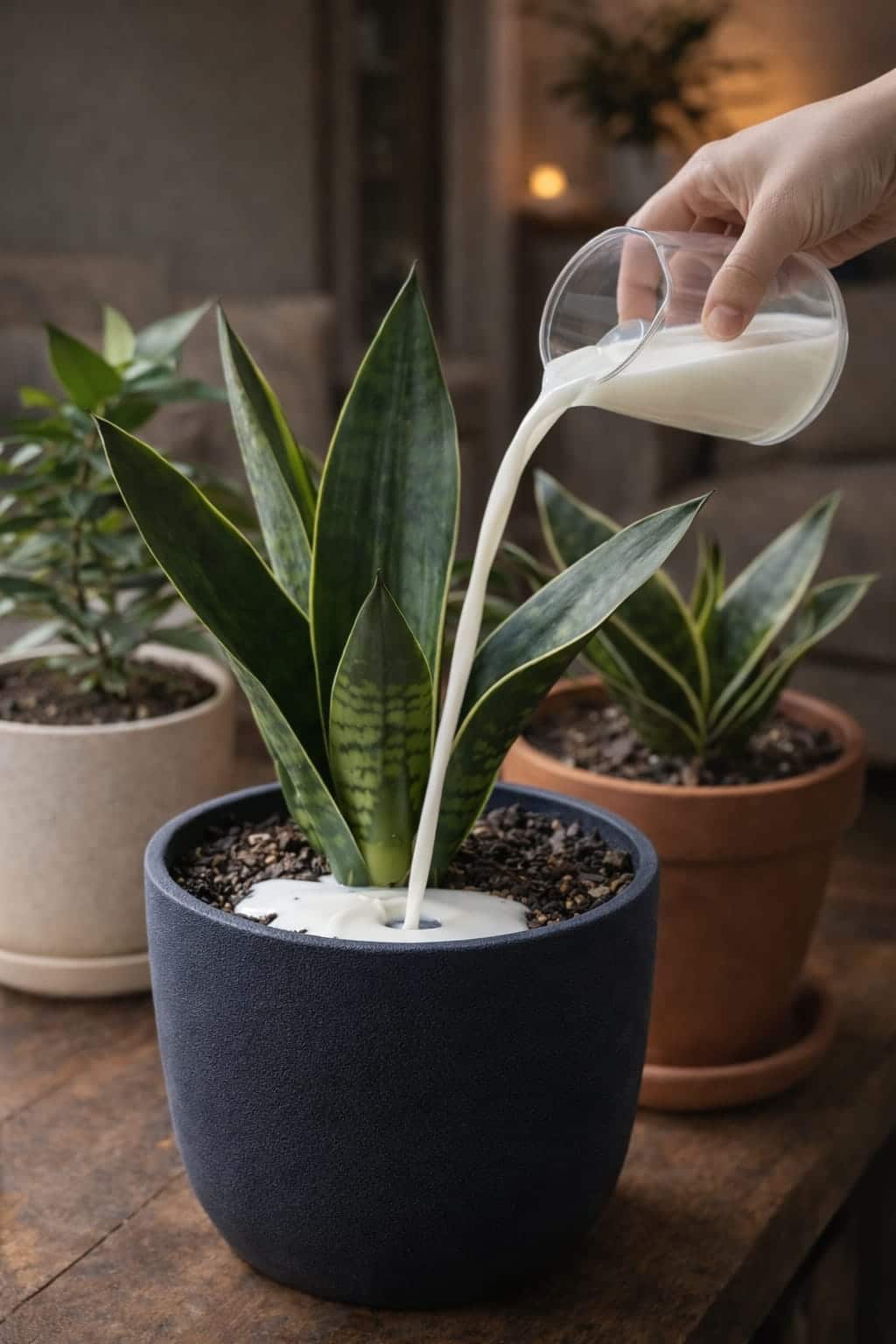
- Apply only to the soil – pour around the edges, avoiding the crown and leaves.
- Use once a month during spring and summer only.
- Stop immediately if you see mold, smell, or leaf spots.
Pro tip: If you want a calcium boost without the risks, use crushed eggshell powder (finely ground) sprinkled on the soil once a month – no smell, no mold, no pests.
Troubleshooting – Common Problems & Solutions
Problem Likely Cause Solution
Leaves soft after using milk Overwatering or poor drainage Stop milk; let soil dry; check roots.
White mold on soil Excess moisture or milk residue Scrape off; reduce watering; stop milk.
Yellow leaves Overwatering or root rot Let soil dry; repot if needed.
No growth Insufficient light Move to brighter spot.
Brown leaf tips Mineral buildup or low humidity Flush soil; increase humidity.
Fungus gnats Organic matter (milk) in wet soil Stop milk; let soil dry; use sticky traps.
Frequently Asked Questions (FAQs)
Q: Can diluted milk replace fertilizer for snake plants?
A: No – it is not a complete fertilizer. Milk provides trace calcium but lacks nitrogen, phosphorus, and potassium. Use a balanced fertilizer once or twice a year if needed.
Q: Is it safe to pour liquid into the center of the snake plant?
A: No – always apply to soil only. Liquid in the crown causes rot.
Q: Why are my snake plant leaves soft after trying this method?
A: Likely overwatering or poor drainage. Soft leaves are a sign of root stress. Stop using milk, let the soil dry completely, and check for root rot.
Q: How often should I use a kitchen‑based liquid on snake plants?
A: Rarely – once a month at most, and only during active growth (spring and summer). Do not use in fall and winter.
Q: Can snake plants grow without any additives?
A: Yes – they are naturally low‑demand. Snake plants can thrive for years with just light, water, and well‑draining soil.
Q: Does more feeding mean faster growth for snake plants?
A: No – snake plants dislike excess nutrients. Over‑feeding causes brown tips, salt buildup, and root burn. Less is more.
Q: What is the biggest mistake people make with snake plants?
A: Keeping soil constantly moist – this is the #1 killer. Snake plants prefer to be underwatered than overwatered.
Q: Should I flush the soil occasionally?
A: Yes – plain water flushing every few months can help prevent mineral buildup, especially if you use tap water or occasional additives.
Q: Does terracotta help snake plants?
A: Yes – terracotta allows better airflow and wicks away excess moisture, reducing the risk of root rot.
Q: What improves snake plant growth the most?
A: Consistent light and dry cycles. Light is more powerful than any additive.
Printable Snake Plant Care Checklist
☐ Place in bright, indirect light (east/west window)
☐ Use a pot with drainage holes (terracotta preferred)
☐ Fill with fast‑draining cactus/succulent soil (add perlite)
☐ Water only when soil is completely dry (check with finger)
☐ Water deeply, then empty saucer
☐ Do not water again for 2–4 weeks (depending on light)
☐ Optional: use diluted milk rinse (1:4) once a month in spring/summer – not necessary
☐ Apply to soil only – avoid crown and leaves
☐ Do not use in fall/winter
☐ Wipe leaves with damp cloth monthly
☐ Remove dead or yellow leaves at base
☐ Repot every 2–3 years when root‑bound
Final Thoughts – Less Is More
Indoor plant experts are using a diluted kitchen liquid on snake plants not because it’s a miracle cure, but because – when used correctly – it can provide a tiny calcium boost and support soil minerals. However, the real secret to a thriving snake plant is not in a bottle. It’s in the fundamentals: bright indirect light, well‑draining soil, infrequent watering, and a pot with drainage holes.
If your snake plant is struggling, don’t reach for a bottle first. Check the light, the soil, and your watering routine. Once those basics are right, a little diluted milk once a month can be a gentle experiment – but it’s never the cure.
With patience and the right care, your snake plant will reward you with strong, upright leaves and maybe even a few pups. And you’ll save money by not buying expensive products – because the best care is often the simplest.
Now it’s your turn! Have you tried a diluted milk rinse on your snake plant? What results did you see? Drop a comment below – I’d love to hear your experience.
And if you found this guide helpful, share it with a friend who loves snake plants. Pin it for later, and subscribe to our newsletter for more honest, evidence‑based plant care.
Stay dry, stay bright, and watch your snake plant thrive. 🌿✨