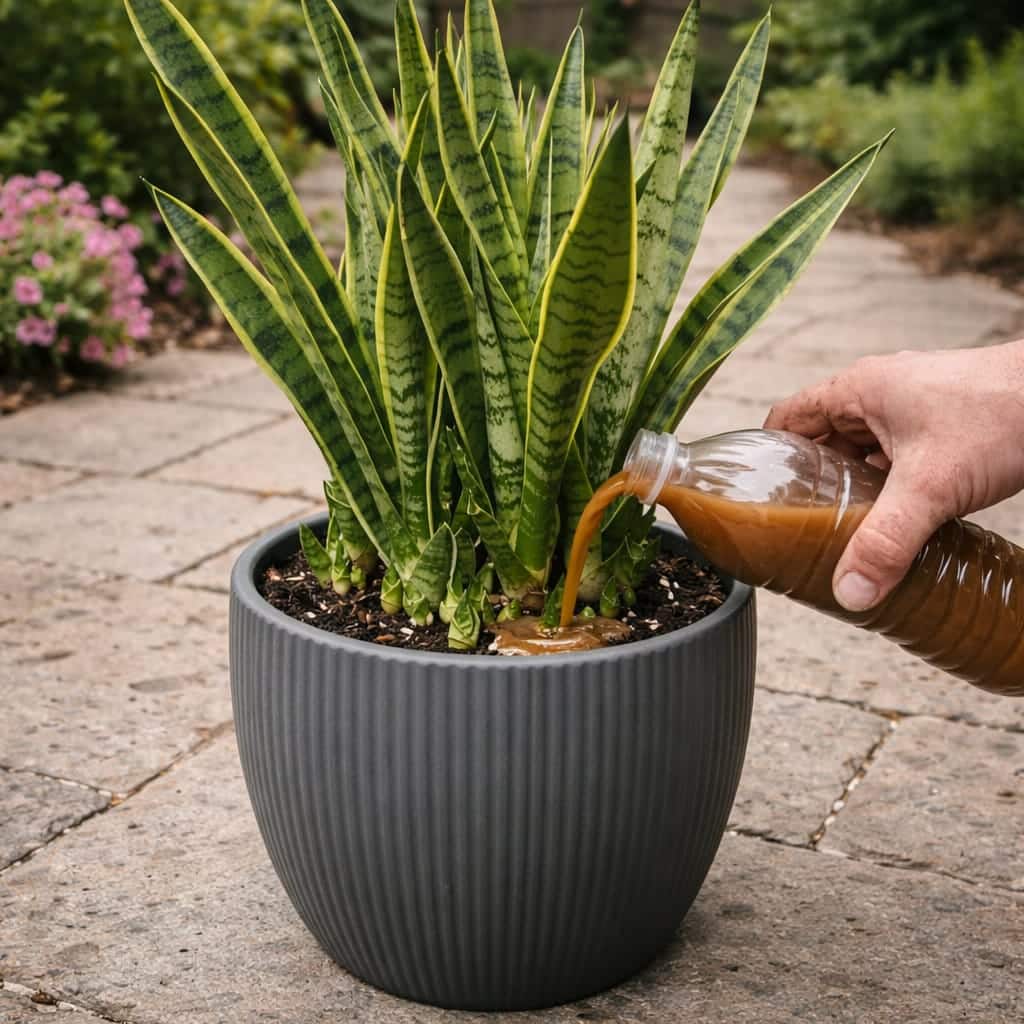
Revive a struggling snake plant with homemade liquid fertilizer. Learn what works, what doesn’t, and the real secrets – light, drainage, and watering. Natural, affordable, and effective.
Let’s be honest: snake plants (Sansevieria, now Dracaena) have a reputation for being nearly impossible to kill. They tolerate neglect, survive dry indoor air, and still manage to look stylish in almost any space. But even tough plants have limits. When a snake plant starts looking weak, stalled, or dull, many people get confused because they assume it should be able to thrive no matter what.
That was exactly my situation.
My snake plant was not completely dying, but it definitely was not thriving. The leaves looked less vibrant, growth had slowed, and the plant no longer had that strong, upright, healthy look it once had. Then I tried a simple homemade liquid fertilizer – and that is when I started noticing a real difference.
The leaves looked stronger. The plant seemed to wake up. Even the small pups at the base appeared more active.
Was it all because of the homemade liquid? Not entirely. But when used the right way, it became part of the routine that helped bring my snake plant back to life.
In this complete guide, I’ll share what homemade liquid fertilizer actually does, how to make and use it safely, the common mistakes that ruin results, and – most importantly – the fundamental care changes that truly revive a snake plant. No hype, just practical, honest advice.
Why Snake Plants Start Looking Unhealthy
Snake plants usually decline slowly, which is why the problem often goes unnoticed at first.
Common Signs of a Struggling Snake Plant
· Pale or dull leaves – loss of rich green color.
· Slower growth – no new leaves for months.
· Weak‑looking new shoots – small, thin, or misshapen pups.
· Drooping or bending leaves – loss of that signature upright structure.
· Overcrowded, tired‑looking clumps – the plant looks messy, not architectural.
Common Causes
Cause Effect
Poor soil nutrients Depleted potting mix, no food for growth.
Inconsistent watering Stress, root damage, yellowing.
Low light Weak, floppy leaves, no energy for growth.
Compacted or exhausted soil Roots can’t breathe or absorb water.
Overwatering stress Root rot, soft leaves, foul smell.
Root crowding without feeding support Too many plants in one pot, soil exhausted.
A snake plant can survive poor conditions for a long time, but survival is not the same as real health.
Why Homemade Liquid Fertilizer Seemed to Help
Many homemade plant tonics are based on simple kitchen ingredients that contain mild nutrients or organic compounds. Depending on what is in the liquid, it may provide:
· Trace minerals – small amounts of potassium, magnesium, calcium.
· Small amounts of potassium – supports overall plant vigor.
· Gentle support for root activity – mild organic matter feeds soil microbes.
· Moisture plus nutrients together – a combined watering and feeding step.
For a snake plant that is alive but underperforming, that extra support can make a visible difference – especially if the soil has gone stale or the plant has not been fed in a long time.
That is why so many people feel like their plant suddenly “comes back to life” after using a homemade fertilizer.
But here is the important truth:
👉 The fertilizer helps most when the plant’s basic care is also corrected.
- What Homemade Liquid Fertilizer Can Actually Do
Used carefully, a homemade liquid fertilizer may help:
· Refresh tired growth – encourage new leaves.
· Support new pups – baby plants grow stronger.
· Improve leaf color – deeper greens, brighter variegation.
· Encourage stronger overall vigor – more upright, firmer leaves.
What It Cannot Do
· Fix root rot – if roots are mushy, fertilizer won’t help.
· Replace proper light – a dark corner will still limit growth.
· Compensate for soggy soil – fix drainage first.
· Work overnight – recovery takes weeks, not days.
If a snake plant is sitting in soggy soil, trapped in deep shade, or suffering from root rot, fertilizer alone will not save it. In fact, adding more liquid to an already stressed root system can make things worse.
That is why the best results usually come from combining feeding with better care.
The Real Reason My Snake Plant Improved
The homemade liquid fertilizer was one part of the recovery. The bigger transformation happened because I started paying closer attention to the full routine.
- I Checked the Soil First
Before feeding, I made sure the potting mix was not staying wet too long. Snake plants need fast drainage. I stuck my finger into the soil – if it was wet, I let it dry out completely before doing anything else.
- I Made Sure the Pot Drained Properly
If water sits around the roots, feeding is pointless. The roots need air. I checked that the pot had drainage holes and that the saucer was not holding standing water.
- I Used the Fertilizer Lightly
I did not drown the plant. I applied a small amount around the soil, near the base, and let it work as a gentle boost.
- I Improved Light Conditions
Snake plants can survive low light, but healthier growth happens in bright indirect light. I moved my plant closer to an east window.
- I Stopped Overwatering
This was probably the biggest fix of all. Once the watering routine improved – letting the soil dry completely between waterings – the plant responded much better.
Continue to Page 2
Continue to page 2 for more details about this article and the key points many readers miss on the first page.