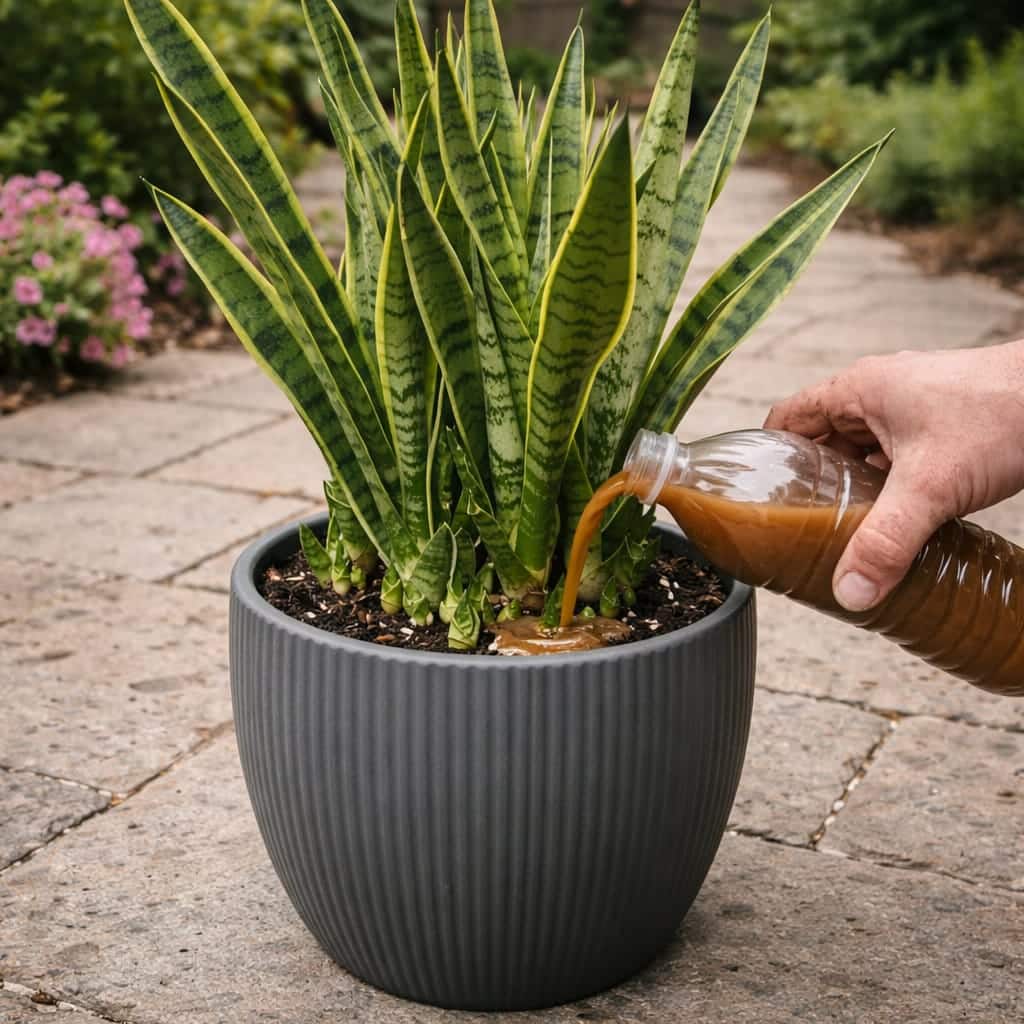
What Changed After I Started (Real Results)
The change was not a fake overnight miracle. It was gradual – but obvious.
I noticed:
· The leaves looked firmer and more upright.
· The color deepened into a richer green.
· The yellow margins looked cleaner and brighter.
· The base of the plant looked more active.
· Small pups seemed to strengthen faster.
That is what made it feel like the plant had been “revived.” Not because it suddenly doubled in size overnight, but because it started behaving like a healthy snake plant again.
How to Make a Simple Homemade Liquid Fertilizer for Snake Plants
If you want to try this method, here are a few safe, effective recipes.
Option 1: Diluted Seaweed or Kelp Extract (Best)
· Mix 1 teaspoon of liquid seaweed extract with 1 gallon of water.
· Use once a month during spring and summer.
Option 2: Diluted Worm Casting Tea
· Steep ½ cup worm castings in 1 gallon of water for 24 hours.
· Strain and use the liquid.
Option 3: Very Weak Compost Tea
· Use 1 part compost tea to 10 parts water.
Option 4: Rice Water (Mild)
· Save the water from rinsing rice (before cooking).
· Dilute with equal parts plain water.
· Use once a month.
Important: Never use sugar water, coffee water (unless diluted and used rarely), or any concentrated kitchen waste directly on soil.
The Best Way to Use Homemade Liquid Fertilizer – Step by Step
If you want to try this method, the safest approach is moderation.
Step‑by‑Step Safe Application
- Ensure soil is dry – never apply to wet soil. Snake plants need dry cycles.
- Dilute heavily – the solution should be very weak, like weak tea.
- Apply a small amount only – about ¼ cup for a 6‑inch pot.
- Pour around the outer edge – avoid the crown and leaves.
- Use occasionally – once a month during spring and summer.
- Stop in fall and winter – the plant rests.
What to Avoid
· Overusing – more than once a month can cause salt buildup.
· Feeding in soggy soil – fix watering first.
· Ignoring light – a snake plant in a dark corner will not suddenly become vigorous just because you feed it.
· Expecting bloom‑level transformation – a healthier plant may grow better, but that does not mean instant flowers.
Snake plants do not need constant feeding. They respond better to gentle support than heavy treatment.
Common Mistakes That Ruin the Result
A lot of people try homemade fertilizer and then assume it “doesn’t work” because they make one of these mistakes.
Mistake Why It’s Harmful Correct Approach
Overusing it Too much liquid or too much organic matter can overwhelm the roots. Once a month, very diluted.
Feeding in soggy soil If the soil is already too wet, adding fertilizer is the last thing the plant needs. Let soil dry completely first.
Ignoring light A snake plant in a dark corner will not suddenly become vigorous just because you feed it. Move to bright indirect light.
Using homemade liquid too often These remedies should be occasional boosts, not constant replacements. Use once a month in spring/summer only.
Expecting bloom‑level transformation A healthier plant may grow better, but that does not mean instant flowering. Be patient – recovery takes weeks.
What Really Keeps a Snake Plant Healthy Long‑Term
If you want lasting results, focus on the basics first.
The Real Formula for a Thriving Snake Plant
- Bright indirect light – east or west window.
- Well‑draining soil – cactus/succulent mix + perlite.
- A pot with drainage holes – terracotta preferred.
- Water only when the soil is completely dry – every 2–4 weeks.
- Occasional feeding – once a month in spring/summer.
- Repotting when badly overcrowded – every 2–3 years.
That is the real formula. The homemade liquid fertilizer can support it, but it works best as part of that full picture.
Why People Love This Trick
The reason this kind of method keeps going viral is simple: it feels satisfying.
· You use something simple (kitchen scraps, natural ingredients).
· The plant starts looking better.
· The change is visible.
And with snake plants, even small improvements stand out because their structure is so bold and upright. When a struggling snake plant starts producing stronger leaves and more active pups, it feels dramatic – even if the process is actually gradual.
Troubleshooting – Common Snake Plant Problems & Solutions
Problem Likely Cause Solution
Leaves soft or drooping Overwatering or root rot Let soil dry completely; check roots.
No new growth Low light or cold temps Move to brighter spot; keep above 65°F.
Pale leaves Nutrient deficiency or low light Feed lightly; increase light.
Brown leaf tips Mineral buildup or low humidity Use filtered water; flush soil.
White crust on soil Salt buildup from fertilizer Flush with plain water; reduce feeding.
Pups not growing Root‑bound or lack of nutrients Repot if crowded; feed lightly.
Frequently Asked Questions (FAQs)
Q: Can homemade liquid fertilizer revive a dying snake plant?
A: It can help if the plant still has healthy roots. But if the roots are rotted or the soil is waterlogged, fix those issues first. Fertilizer alone will not save a plant in soggy soil.
Q: How often should I use homemade liquid fertilizer?
A: Once a month during spring and summer only. Do not use in fall and winter.
Q: Can I use coffee grounds or banana water as fertilizer?
A: Yes, but very sparingly. Dilute heavily and use once a month. Never apply directly to dry soil.
Q: What is the best homemade fertilizer for snake plants?
A: Diluted seaweed extract or worm casting tea are gentle and effective. Avoid strong kitchen concoctions.
Q: Why didn’t my snake plant improve after feeding?
A: Most likely: low light, overwatering, or poor drainage. Check these before blaming the fertilizer.
Q: Can I use homemade fertilizer on snake plant pups?
A: Yes, but use even weaker dilution (quarter strength). Pups are more sensitive.
Q: Is it safe to use homemade fertilizer on other succulents?
A: Use with caution. Most succulents prefer very low nutrients. Dilute heavily and use rarely.
Printable Snake Plant Revival Checklist
☐ Check soil moisture – if wet, let dry completely.
☐ Ensure pot has drainage holes (terracotta preferred).
☐ Move to bright indirect light (east/west window).
☐ Water only when soil is completely dry (check with finger).
☐ Water deeply, then empty saucer.
☐ Do not water again for 2–4 weeks (depending on light).
☐ Make homemade liquid fertilizer (diluted seaweed or worm tea).
☐ Apply once a month in spring/summer only.
☐ Apply to soil – avoid crown and leaves.
☐ Do not feed in fall/winter.
☐ Wipe leaves with damp cloth monthly.
☐ Remove dead or yellow leaves at base.
☐ Repot every 2–3 years when root‑bound.
Final Thoughts – Gentle Support, Real Recovery
So, did homemade liquid fertilizer revive my snake plant?
Yes – but not because it was a miracle.
It helped because the plant was still alive, still capable of recovering, and finally getting better overall care. The liquid fertilizer gave it a gentle push, but the real recovery came from:
· Better drainage – letting the soil dry completely.
· Smarter watering – not overwatering.
· Improved light – moving it to a brighter spot.
· Patience – giving it time to respond.
That is the part most people miss.
Sometimes a plant does not need a complicated rescue. It just needs a simple boost and a better environment. And when those two things come together, even a tired snake plant can start looking strong, vibrant, and healthy again.
Now it’s your turn! Have you tried homemade liquid fertilizer on your snake plant? What results did you see? Drop a comment below – I’d love to hear your experience.
And if you found this guide helpful, share it with a friend who loves snake plants. Pin it for later, and subscribe to our newsletter for more honest, evidence‑based plant care.
Stay dry, stay bright, and watch your snake plant thrive. 🌿✨