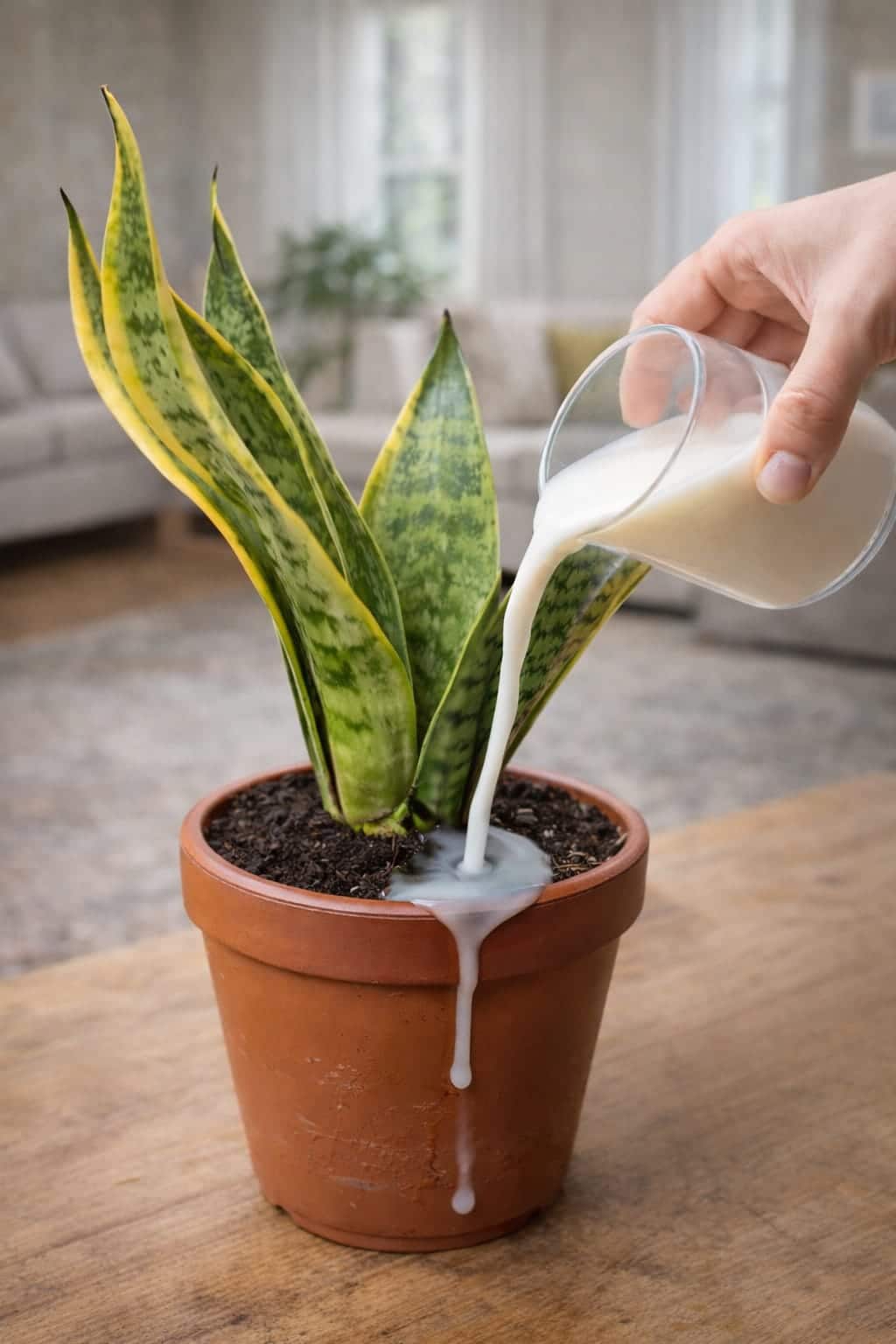
Snake plants, also known as Sansevieria or mother‑in‑law’s tongue, are among the most popular indoor plants for modern homes. Their upright architectural leaves, air‑purifying reputation, and easy‑care nature make them perfect for apartments, offices, and cozy living spaces.
But while many people grow snake plants successfully, very few ever get to see them bloom.
When a snake plant flowers, it sends up tall stalks covered in delicate white or cream blossoms with a soft, sweet fragrance. These rare blooms are not just beautiful — they are also a sign that the plant is healthy, mature, and growing under the right conditions.
The best part is that flowering is not just luck.
With one simple natural ingredient and a few smart care habits, you can increase the chances of your snake plant blooming indoors.
In this guide, you will learn exactly why snake plants rarely bloom, how a common kitchen leftover can help, and the step‑by‑step routine to encourage those stunning, fragrant flowers.
Why Snake Plants Rarely Bloom Indoors
Snake plants are slow‑growing succulents that store moisture in their thick leaves. In nature, they often bloom during warm seasons when they receive enough light, minerals, and slight environmental stress.
Indoors, they usually stay alive and grow leaves, but they often fail to bloom because:
· the soil becomes nutrient‑poor over time
· light exposure is too low
· roots never experience slight stress
· feeding is inconsistent
· watering habits are not ideal
That is why recreating a few natural conditions indoors can make such a difference.
Most people are surprised to learn that snake plants are actually flowering plants in the asparagus family. In their native West Africa, they bloom regularly. Indoors, we accidentally remove the very conditions that trigger flowers.
The good news is that you can put some of those conditions back — without a greenhouse or a degree in botany.
Why Nutrients Matter for Flowering
Many people only water their snake plant and expect it to thrive forever. While snake plants are very forgiving, blooming takes more than simple survival.
To produce flowers, the plant needs enough energy and the right balance of nutrients. Trace minerals, potassium, and other natural compounds help support:
· root health
· leaf strength
· chlorophyll production
· flower spike development
Strong roots are the real foundation of flowering.
When a snake plant sits in the same potting mix for years, the original nutrients slowly wash away or get used up. The plant may look fine — snake plants are masters at hiding stress — but it simply does not have the extra energy needed to produce blooms.
That is where a gentle, natural booster can help.
The Simple Natural Ingredient That Helps
One of the gentlest natural boosters for snake plants is:
👉 Diluted rice water
Some growers also use a very light organic compost tea, but rice water is one of the easiest and safest homemade options.
Diluted rice water may contain:
· Potassium – supports flower development and overall plant strength
· Magnesium – promotes greener, healthier growth
· Trace minerals – including phosphorus, iron, and zinc
· Natural carbohydrates – help energize plant cells and beneficial soil microbes
It is not a miracle liquid, but it can act as a mild support treatment when used correctly.
Rice water has been used in traditional gardening for centuries, especially in Asian households where rice is a daily staple. The cloudy water left over from washing rice was never thrown away — it was poured onto plants. And for good reason.
How to Make Rice Water Fertilizer at Home
Making rice water is almost too easy. Here are the two most common and effective methods.
Option 1: Rinse Water Method (Quickest)
- Place ½ cup of uncooked rice in a bowl or strainer.
- Rinse the rice with clean water, gently swirling.
- Collect the cloudy white water that runs off.
- Dilute this rinse water with an equal amount of fresh, clean water.
- Use immediately or within 24 hours.
Option 2: Soaked Rice Water Method (More Concentrated)
- Place ½ cup of rice in a bowl with 2 cups of water.
- Let it soak for 30 minutes, stirring occasionally.
- Strain out the rice (you can cook and eat it as usual).
- Dilute the soaking water with an equal amount of fresh water.
- Use within 24 hours.
Important Tips
· Use uncooked rice (white, brown, or jasmine all work).
· Do not add salt, oil, or seasonings.
· Never use rice water that smells sour or fermented.
· Always dilute. Undiluted rice water can be too strong for indoor plants.
Both methods are simple and gentle enough for indoor plant care.
How to Apply It Properly
To use rice water safely on your snake plant:
· apply it only to the soil (never pour on the leaves or into the center of the plant)
· avoid wetting the leaves, which can trap moisture and cause rot
· use it when the soil is mostly dry (do not add to already wet soil)
· apply it once every 2 to 3 weeks during the growing season (spring and summer)
· use about ¼ to ½ cup for a standard 6‑inch pot, adjusting for pot size
Do not overdo it.
Snake plants prefer moderation, and too much homemade liquid can stress the roots instead of helping them. If you notice the soil staying wet for more than a week, or if you see mold on the surface, stop using rice water and let the pot dry out.
Signs Flowering May Be Starting
If your plant is responding well to better light, proper watering, and gentle rice water feeding, you may notice:
· thicker, more robust leaf bases
· stronger upright growth (leaves stand taller)
· a healthier, deeper green color
· a small green stalk forming near the center of the plant
That stalk is often the beginning of a flower spike. Soon after, tiny buds begin to appear along the stalk. They open gradually, usually in the late afternoon or evening, releasing a sweet, jasmine‑like fragrance.
Do not be alarmed if the flower stalk grows quickly — sometimes several inches in a week. That is normal.
Continue to Page 2
Continue to page 2 for more details about this article and the key points many readers miss on the first page.