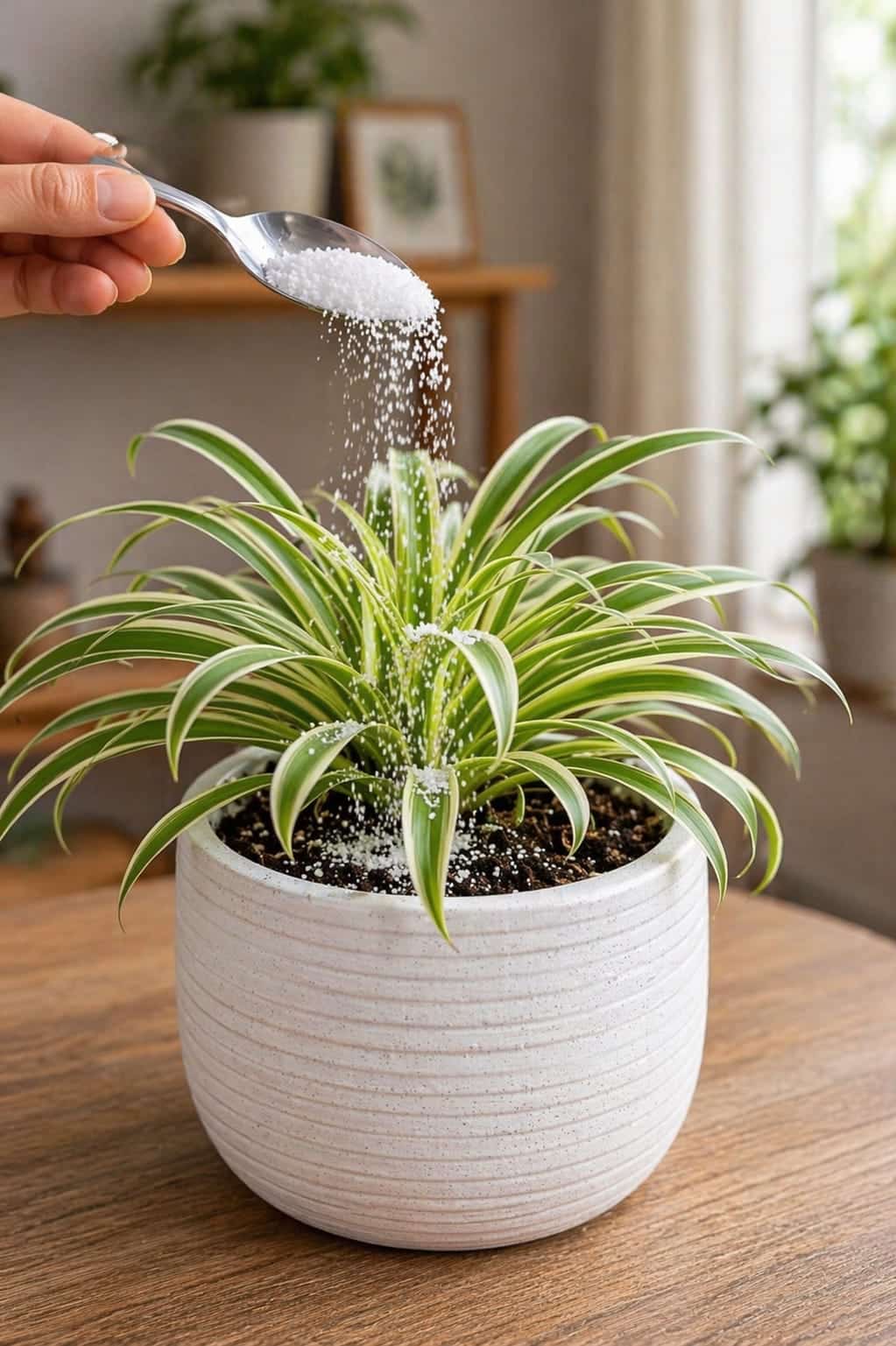
Spider plants are often described as one of the easiest houseplants to grow, and for the most part, that is true. They are forgiving, fast‑growing, and beautiful with their arching striped leaves. A healthy spider plant can brighten a shelf, fill out a hanging basket, and even produce baby plantlets that make the whole plant look lush and impressive.
But there is one reason so many spider plants stop looking their best:
They survive, but they do not truly thrive.
The leaves lose their rich color. Brown tips start appearing. Growth slows down. The plant stays alive, but it no longer looks full, fresh, or vigorous. That is when people start reaching for quick fixes, including white powders sprinkled on the soil.
Sometimes that powder is fertilizer. Sometimes it is Epsom salt. Sometimes it is something else entirely. But the truth is simple: a spider plant does not become healthier because of one random spoonful. It becomes healthier when its roots, watering, light, and feeding routine are all working together.
In this guide, you will learn the single biggest mistake spider plant owners make, what that white powder really does, and a simple, proven routine to help your spider plant thrive — with lush green leaves, few brown tips, and plenty of baby plantlets.
Why Spider Plants Start Looking Tired
Spider plants (Chlorophytum comosum) are easier than many houseplants, but they still have preferences. When they start declining, it is usually because one of a few basic things is off.
The Most Common Causes Are:
· Inconsistent watering – Too much or too little water stresses the roots.
· Mineral buildup in the soil – From tap water and fertilizer salts.
· Too much direct hot sun – Burns leaves and fades color.
· Low light for too long – Slows growth, reduces variegation.
· Exhausted potting mix – Old soil becomes compacted and nutrient‑poor.
· Lack of light feeding during active growth – Spider plants need occasional nutrients.
A lot of spider plants also react to poor water quality. If your plant keeps getting brown tips, that is often less about “disease” and more about salts, fluoride, or mineral buildup from tap water. This is one of the most overlooked issues.
What the White Powder in Videos Usually Is
In viral plant videos, the white crystals or powder are often one of these:
· A powdered fertilizer – Balanced houseplant food, slow‑release or water‑soluble.
· Epsom salt – Magnesium sulfate, sometimes overused as a “miracle” treatment.
· Crushed eggshells – Calcium source, very slow release.
· Perlite or another soil additive – For drainage, not feeding.
· A random household ingredient – Baking soda, sugar, or other non‑plant products.
The problem is that these are not interchangeable. A proper fertilizer and a kitchen ingredient are not the same thing. A light soil amendment and a heavy salt treatment are not the same thing either. That is why copying a video without knowing exactly what the powder is can create more problems than it solves.
For example, Epsom salt can help if your spider plant has a magnesium deficiency (yellowing between leaf veins), but using it when there is no deficiency can cause salt buildup. Baking soda raises soil pH and can damage roots. Fertilizer powder needs to be diluted; sprinkling it dry can burn.
So before you reach for that white powder, ask: what is it, and does my plant actually need it?
The Biggest Spider Plant Mistake (Almost Everyone Does This)
The biggest mistake most spider plant owners make is not “forgetting the powder.”
It is this: They let the plant sit too long in stressed soil conditions without correcting the basics.
Spider plants are so forgiving that people assume they can handle anything. And for a while, they do. But over time, the soil becomes compacted, salts build up, and the roots struggle. The plant stops producing new growth. The leaf tips turn brown. The green color fades.
Instead of addressing the underlying issues — old soil, mineral buildup, improper watering — people look for a quick fix in a white powder. That powder might provide a temporary boost, but it does not fix the root cause.
Spider Plants Do Best When They Have:
· Bright indirect light
· Evenly moist but not soggy soil
· A well‑draining pot with drainage holes
· Occasional feeding (light, not heavy)
· Low mineral buildup around the roots
If the soil is compacted, salty, or constantly wet, adding more material on top is not the real answer. The real answer is to refresh the soil, flush out excess salts, and adjust your watering routine.
What Actually Helps a Spider Plant Grow Better
Let us move beyond the powder and focus on proven care that works.
- Give It Bright, Indirect Light
Spider plants love bright filtered light. They can tolerate lower light, but they grow fuller, greener, and faster when they get better brightness.
· Ideal placement: Near an east or north window. A south or west window with a sheer curtain also works.
· Signs of too much harsh sun: Bleached, scorched, or brown leaves.
· Signs of too little light: Faded stripes, slow growth, no baby plantlets.
If your spider plant has lost its variegation (the white stripes), move it to a brighter spot. Variegation returns with adequate light.
- Water Consistently (Not on a Schedule)
Spider plants do not like bone‑dry neglect for too long, but they also do not want soggy roots.
A good routine is:
· Stick your finger into the soil. Water when the top inch feels dry.
· Water thoroughly until it runs from the drainage holes.
· Let all excess water drain away. Empty the saucer.
· In winter, water less often (every 10–14 days).
Inconsistent watering — going from bone dry to soaking wet — stresses the roots and contributes to brown tips.
- Flush the Soil Sometimes (The Overlooked Secret)
If your spider plant has brown tips, one of the most helpful things you can do is flush the pot with clean water once a month.
How to flush:
· Take the plant to a sink or outdoors.
· Pour room‑temperature water slowly through the soil for 1–2 minutes.
· Let it drain completely.
· Return the plant to its saucer.
This simple step washes away excess salts and minerals that accumulate from tap water and fertilizer. It often helps more than adding mystery powders.
- Feed Lightly During Active Growth
Spider plants are not heavy feeders, but they do benefit from gentle feeding in spring and summer.
· Use a balanced houseplant fertilizer (10‑10‑10 or 20‑20‑20) diluted to half strength.
· Feed once a month during spring and summer.
· Do not fertilize in fall and winter.
· Never fertilize dry soil — water first.
A mild, consistent feeding routine works much better than random kitchen hacks. Overfeeding causes salt buildup and burned leaf tips.
- Refresh Old Potting Mix
If the plant has been in the same soil for more than a year, a fresh, airy mix can make a huge difference. Healthy roots need oxygen and room to function well.
Best soil for spider plants:
· Standard all‑purpose potting mix with added perlite (2 parts soil, 1 part perlite).
· Or a commercial houseplant mix that drains well.
· Avoid heavy garden soil or moisture‑control mixes that stay wet too long.
Repot every 1–2 years in spring. Choose a pot only 1–2 inches larger than the current one.
Continue to Page 2
Continue to page 2 for more details about this article and the key points many readers miss on the first page.