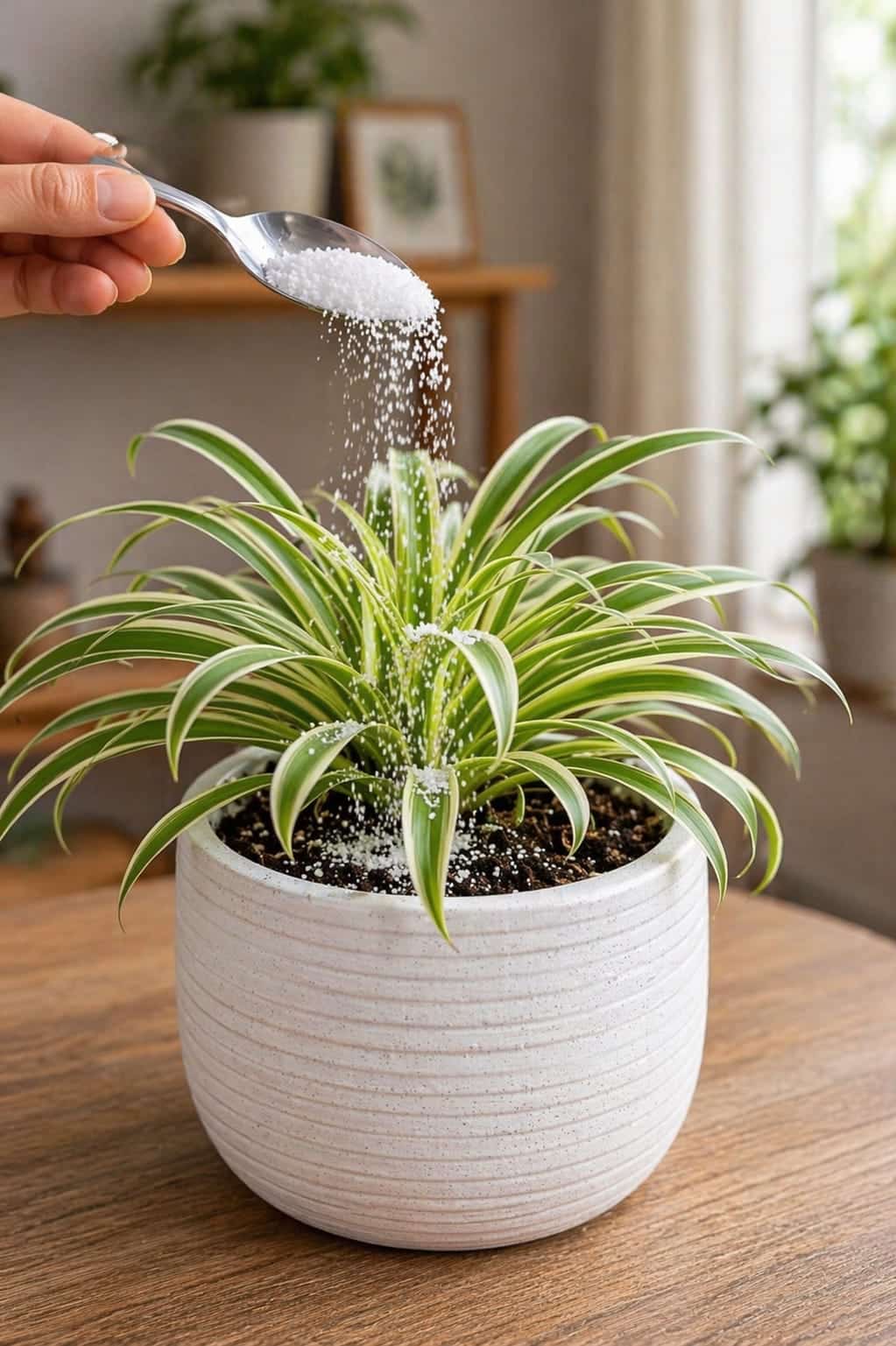
Can a White Powder Help at All?
Yes, sometimes — but only in specific situations.
When It Might Help:
· If the powder is a proper houseplant fertilizer (slow‑release granules or water‑soluble), used as directed. Sprinkle lightly and water in, or dissolve first.
· If the powder is Epsom salt and your plant shows signs of magnesium deficiency (yellowing between leaf veins). Use 1 teaspoon per gallon of water, once a month.
· If the powder is cinnamon and you are dusting cut ends after pruning (antifungal, not a fertilizer).
When It Will Not Help (Or Will Harm):
· Baking soda – Raises soil pH, can damage roots.
· Flour or cornstarch – Feeds mold, no benefit.
· Crushed eggshells – Break down too slowly; not an instant fix.
· Any powder used too heavily – Causes salt buildup, root burn, or soil crusting.
If the plant is already getting decent light, careful watering, fresh enough soil, and proper drainage, then a little feeding (using the right product) can absolutely help. But if the plant is sitting in tired, salty soil with poor root conditions, the powder is not the real fix.
Signs Your Spider Plant Is Improving
A healthier spider plant usually shows:
· Brighter, cleaner leaf color – Greens are vibrant, whites are crisp.
· Firmer, arching growth – Leaves stand up, not limp.
· Fewer brown tips – New leaves emerge clean.
· Faster center growth – New leaves unfurl regularly.
· More baby shoots (plantlets) – The plant is happy and reproducing.
These are the real signs that the plant is responding to better care — not just a temporary boost from a mystery powder.
Common Mistakes to Avoid
If you want your spider plant to look full and healthy, avoid these common errors.
Overwatering
Soggy soil leads to root rot. Yellow, mushy leaves are a sign. Let the top inch dry out.
Letting Fertilizer Salts Build Up
Brown tips are often from salt buildup. Flush the soil monthly.
Using Unknown Powders Too Often
Random kitchen ingredients can do more harm than good. Stick to proven products.
Keeping It in Very Low Light
The plant may survive, but it will not thrive. Move it closer to a window.
Letting the Soil Stay Exhausted for Too Long
Old soil becomes compacted and nutrient‑poor. Repot every 1–2 years.
Using Strong Direct Afternoon Sun
Scorched leaves are permanent damage. Use sheer curtains or move back from the window.
Ignoring the Roots
If the pot is full of roots (root‑bound), the plant will struggle. Repot into a slightly larger container.
A Simple Spider Plant Care Routine (Weekly & Seasonal)
Here is a straightforward routine to keep your spider plant thriving.
Weekly
· Check soil moisture. Water if top inch is dry.
· Wipe leaves with a damp cloth to remove dust.
· Rotate the pot slightly for even light.
Monthly
· Flush the soil with plain water to remove salts.
· Inspect for pests (spider mites, aphids, mealybugs).
· Remove any dead or yellow leaves.
Spring & Summer (Active Growth)
· Bright indirect light.
· Water every 5–7 days (when top inch dries).
· Feed once a month with half‑strength balanced fertilizer.
· Watch for baby plantlets (spiderettes).
Fall & Winter (Resting Period)
· Still bright light, but days are shorter — consider a grow light.
· Water less often (every 10–14 days).
· Stop fertilizing.
· Maintain cooler temperatures (55–65°F at night is fine).
Annually
· Repot in fresh, well‑draining potting mix.
· Trim any dead or brown roots.
· Divide if the plant is overcrowded.
Frequently Asked Questions (Spider Plants)
Why do my spider plant leaves have brown tips?
Most common causes: fluoride or minerals in tap water, salt buildup from fertilizer, or inconsistent watering. Use filtered water, flush the soil monthly, and water consistently.
Can I use coffee grounds on spider plants?
In small amounts, coffee grounds add organic matter. But they can compact the soil and acidify it. A thin sprinkle mixed into the topsoil once every few months is safe; do not overdo it.
Is Epsom salt good for spider plants?
Only if the plant has a magnesium deficiency (yellowing between leaf veins). Use 1 teaspoon per gallon of water once a month. Otherwise, it can cause salt buildup.
How do I get my spider plant to produce babies (plantlets)?
Give it bright indirect light and a slightly snug pot. Once the plant is mature and root‑bound, it will naturally produce long stems with baby plants. Also, avoid over‑fertilizing (high nitrogen promotes leaves, not babies).
Should I cut off the brown tips?
You can trim them for appearance, but it will not solve the underlying cause. Cut at an angle following the natural leaf shape. Use clean scissors.
Can I use rice water on spider plants?
Diluted rice water (1:1 with fresh water) can be used occasionally as a mild tonic. It provides trace minerals but is not a complete fertilizer. Do not use it every watering.
How often should I repot a spider plant?
Every 1–2 years, or when you see roots growing out of the drainage holes. Use a pot only 1–2 inches larger.
Why is my spider plant losing its white stripes?
Too little light. Move it to a brighter spot. Variegated spider plants need more light than solid green varieties to maintain their stripes.
The Bottom Line: No Magic Powder, Just Good Care
If your spider plant looks tired, do not assume the answer is one spoonful of white powder. That powder might be fertilizer, Epsom salt, or something else entirely — and without knowing what it is, you could be doing more harm than good.
The real secret is much simpler:
· Bright indirect light – Near an east window or south with sheer curtain.
· Regular but careful watering – When the top inch of soil is dry.
· Occasional light feeding – Half‑strength balanced fertilizer in spring/summer.
· Fresh, draining soil – Repot every 1–2 years.
· Less salt buildup – Flush the soil monthly with plain water.
That is what brings spider plants back to life. That is what turns a tired, brown‑tipped plant into a lush, cascading beauty full of baby plantlets.
Because the healthiest spider plants are not built with random hacks. They are built with simple care, repeated consistently, until the whole plant becomes fuller, greener, and more beautiful again.
So before you reach for that white powder, check your light. Feel your soil. Flush out those salts. Then, if you still want to feed your plant, use a real fertilizer — gently and sparingly.
Your spider plant will thank you with every arching leaf and every new baby.
Have you struggled with brown tips or slow growth on your spider plant? Share your experience in the comments below. And if you found this guide helpful, save it for later or send it to a friend who needs a spider plant rescue.