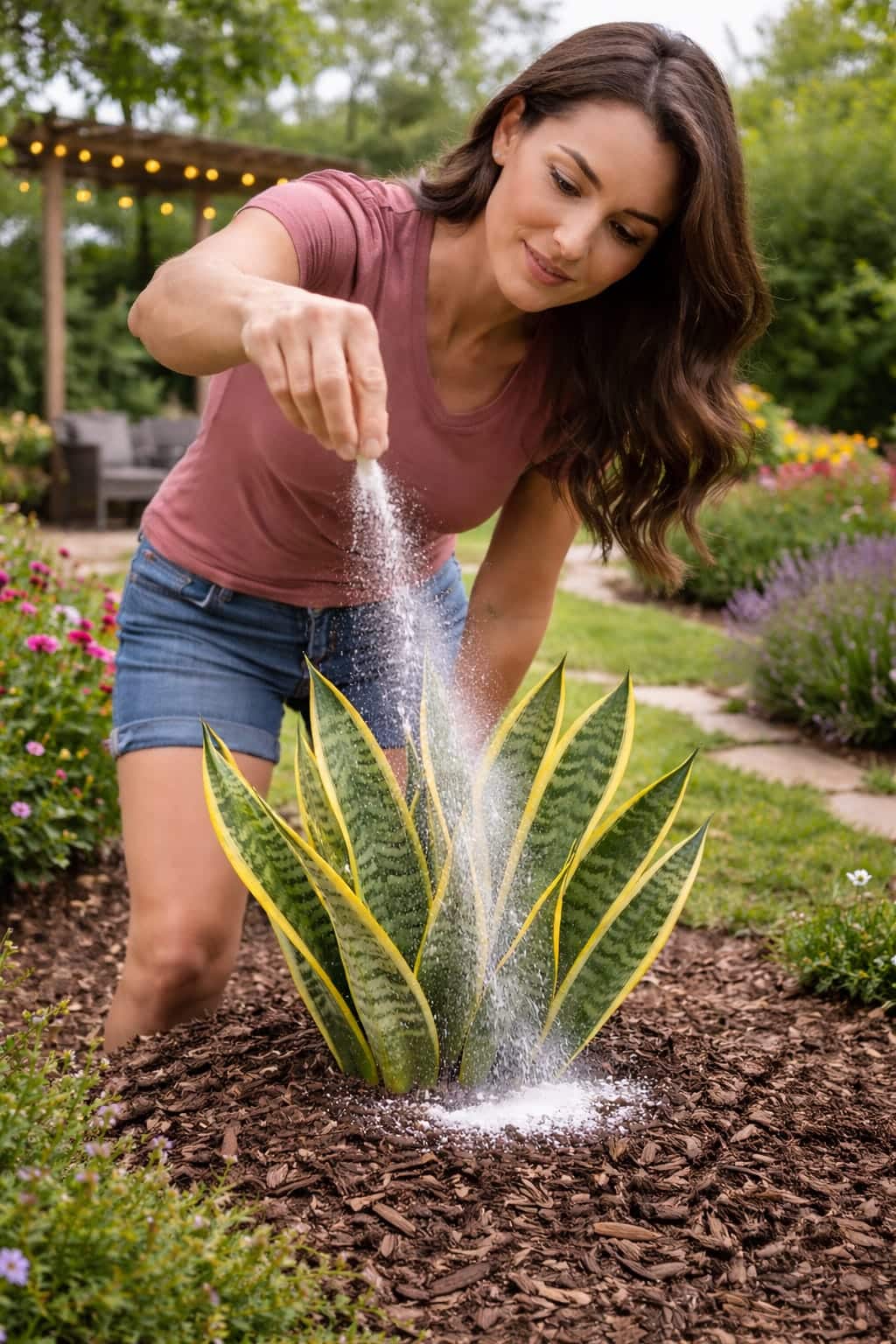
Snake plants are famous for being one of the easiest plants to grow. They tolerate neglect, survive dry indoor air, and still manage to look bold and beautiful in almost any space. That is exactly why so many people get curious when they see a simple powder sprinkled around the base of the plant with claims that it changes growth, color, or even blooming.
At first glance, it looks harmless.
A little white powder on the soil.
A healthy snake plant.
A promise that something surprising will happen next.
But what is really going on?
The truth is that snake plants do respond to changes in the soil environment — but not because of magic. A powder may help in certain situations, but only if it matches what the plant actually needs. Otherwise, it may do nothing at all, or worse, create problems below the surface.
In this guide, I will share my own experience of adding a powder to my snake plant soil, explain the different types of powders people use, and help you understand what a “reaction” really means — so you can make smart choices for your own plant.
Why Snake Plants “React Differently”
Snake plants are sensitive in a quiet way. They do not always show stress immediately, but their roots and rhizomes respond strongly to changes in moisture, soil texture, and nutrient balance.
That means when you add something to the soil, the plant may react in a few ways:
· Stronger upright growth – Leaves become firmer and stand taller.
· Greener leaves – Color deepens, and variegation becomes more distinct.
· New pups at the base – Baby shoots emerge from the rhizomes.
· No visible change – The plant ignores the addition entirely.
· Slower growth – If the soil becomes unbalanced, growth stalls.
· Stress signs – If the roots stay too wet or too salty, leaves may yellow or soften.
So yes, the plant can react differently. But the important question is not whether it reacts. It is whether the reaction is actually helpful — and whether the powder was the real cause.
What the Powder Usually Is
In videos and social media posts, the powder is often one of these:
· A powdered fertilizer – Balanced houseplant food, slow‑release or water‑soluble.
· Epsom salt – Magnesium sulfate, often overused as a “miracle” treatment.
· Baking soda – Used for pH adjustment or mildew, rarely helpful for snake plants.
· Cinnamon – Antifungal, used on cut wounds or surface mold.
· A lime or mineral product – To raise pH or add calcium.
· A random household powder – Flour, cornstarch, or other non‑plant products used for attention.
Each one does something completely different. That is why a video can be misleading. If the creator never explains what the powder is, how much was used, or why it was added, then the “result” does not really teach you anything useful.
My Experience: What I Added and What Happened
I decided to test a light sprinkle of slow‑release balanced fertilizer (10‑10‑10 granules) on one of my mature snake plants. The plant had been in the same pot for about 18 months, and growth had slowed down. The leaves were still green, but no new pups had appeared in over a year.
I sprinkled about half a teaspoon evenly over the soil surface, then watered it in lightly. Then I waited.
After 2 weeks: No visible change. The plant looked the same.
After 4 weeks: I noticed a slight deepening of leaf color. The existing leaves felt slightly firmer.
After 8 weeks: A small pup emerged near the edge of the pot. It was subtle, but it was there.
Did the fertilizer cause the pup? Possibly. But I had also been more careful with watering and had moved the plant slightly closer to a window. The powder may have helped, but it was not the only factor.
In a separate test on a different snake plant, I tried a pinch of Epsom salt (dissolved in water). There was no visible reaction at all — because the plant did not have a magnesium deficiency. The Epsom salt added salt to the soil without any benefit.
That taught me an important lesson: the powder is only helpful if the plant actually needs what it provides.
Can Powder Help a Snake Plant? (Yes, Sometimes)
A powder can help if it is:
· the right product for the situation
· used very lightly (less is more)
· applied to a plant that actually needs it
· part of a healthy overall care routine
When Specific Powders May Help
Powder Potential Benefit When to Use
Balanced fertilizer Supports growth, leaf color, pup production During spring/summer active growth, if plant has not been fed in months
Epsom salt Provides magnesium for chlorophyll Only if plant shows magnesium deficiency (yellowing between leaf veins)
Cinnamon Antifungal for cut wounds or surface mold After trimming roots/leaves, or for minor mold on soil surface
Baking soda Not recommended for snake plants Almost never needed; can harm roots
Lime Raises soil pH Only if soil test shows very acidic conditions (rare for snake plants)
None of these replace the real foundations of snake plant care. They are supplements, not solutions.
Continue to Page 2
Continue to page 2 for more details about this article and the key points many readers miss on the first page.