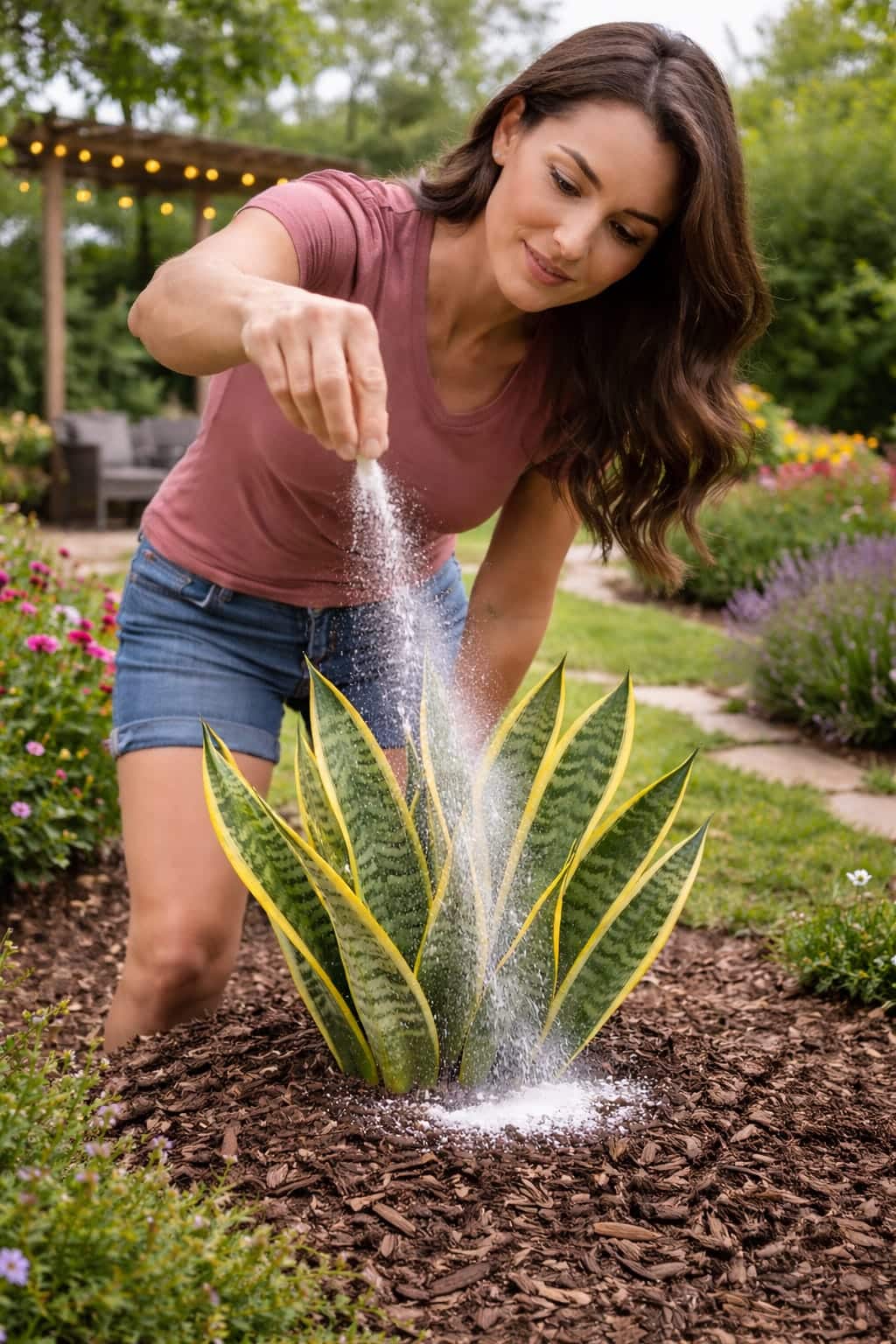
What Really Makes Snake Plants Thrive (The Real Secret)
Before adding anything to the soil, make sure these basics are right. These are the non‑negotiable factors that determine whether your snake plant will be healthy, strong, and full of pups.
- Bright Indirect Light
Snake plants survive in low light, but they grow better and stronger in brighter filtered light. An east window or a south/west window with a sheer curtain is ideal. Low light = low energy = slow growth and no pups.
- Fast‑Draining Soil
A cactus or succulent mix works much better than heavy, soggy soil. Regular potting soil holds too much moisture. Mix 2 parts potting soil with 1 part perlite or coarse sand for a DIY alternative.
- Dry‑Down Between Waterings
Let the soil dry completely before watering again. Stick your finger in — if it feels dry at least 2 inches down, water. In most homes, this means every 2–4 weeks in spring/summer, and once a month or less in winter. Overwatering is the #1 killer of snake plants.
- A Pot with Drainage Holes
Healthy roots need airflow and moisture control. A pot without holes is a death sentence. Always use a container that allows excess water to escape.
- Light Feeding During Active Growth
A mild balanced fertilizer (diluted to half strength) once every 6–8 weeks in spring and summer is far safer than random experiments. This supports steady growth without stressing the roots.
That is what usually causes the best “reaction” in a snake plant — not a mystery powder, but consistent, appropriate care.
Why Viral Powder Tricks Look So Dramatic
A lot of these videos seem convincing because the plant shown is already healthy, or because other parts of the routine changed too.
Sometimes the person also:
· repotted the plant into fresh soil
· started watering more carefully
· moved it into brighter light
· stopped overwatering
· improved drainage with perlite
The powder gets the credit, but the care changes did the real work. In my own test, the fertilizer may have helped, but the pup also appeared after I improved light and watering. It is impossible to say the powder was the sole cause.
When Adding Powder Can Go Wrong (And What to Watch For)
This is where people get into trouble. Adding too much of the wrong powder — or even the right powder in excess — can harm your snake plant.
Signs the Soil Treatment Is Not Helping
· Mushy bases – Soft, brown areas near the soil line (root rot).
· Yellowing leaves – Especially lower leaves, often a sign of overwatering or salt stress.
· Soft, floppy growth – Leaves lose their upright structure.
· White crust buildup on the soil – Excess salts from fertilizer or Epsom salt.
· Slowed growth after treatment – The plant stalls instead of improving.
· A sour or musty smell – Indicates rot or fermentation.
If you notice these, stop adding products immediately. Flush the soil with plain water to wash away excess salts, or repot into fresh, dry cactus mix. Then return to basics: light, water, and drainage.
How Too Much Powder Hurts
· Salt buildup – Fertilizers and Epsom salt leave behind salts that can burn roots and block water absorption.
· pH imbalance – Baking soda or lime can make the soil too alkaline, preventing nutrient uptake.
· Moisture retention – Heavy layers of powder on the soil surface can trap moisture and encourage rot.
· Root irritation – Direct contact with concentrated powder can damage delicate root tips.
Snake plants do not need heavy feeding or complicated soil chemistry. They do best with simple, stable care.
Signs Your Snake Plant Is Responding Well
If your plant is truly benefiting from its care routine (with or without a powder), you may notice:
· Firmer, more upright leaves – No drooping or wrinkling.
· Deeper color – Rich green, with clear variegation if applicable.
· Active new growth in the center – Fresh leaves unfurling.
· Pups emerging at the base – Baby shoots appearing over time.
· Stronger overall posture – The plant looks solid and healthy.
These are the real signs of progress. A powder may contribute, but it is never the only factor.
The Smarter Approach: How to Test a Powder Safely
If you want to test a soil amendment on your snake plant, do it carefully. Here is a step‑by‑step protocol.
Step 1 – Identify the Powder
Know exactly what you are using. Read the label. If it is a kitchen ingredient (cinnamon, Epsom salt), research its effects on succulents. Do not guess.
Step 2 – Start with a Healthy Plant
Only test on a snake plant that is already in good condition — firm leaves, proper watering, decent light. A struggling plant will not give you clear results.
Step 3 – Use a Very Small Amount
For fertilizer: use half of the recommended dose for houseplants. For Epsom salt: ¼ teaspoon per gallon of water, applied once. For cinnamon: a light dusting only on cut areas or a thin layer on soil surface.
Step 4 – Apply to Soil Only
Do not pour powder into the crown or onto leaves. Keep it on the soil surface, then water in lightly if needed.
Step 5 – Wait and Observe
Do not expect overnight changes. Wait 4–8 weeks. Take photos to compare. Note any differences in leaf firmness, color, growth rate, and pup production.
Step 6 – Do Not Combine Multiple Hacks
If you add fertilizer, cinnamon, and Epsom salt at the same time, you will not know which one caused the result. Test one variable at a time.
Step 7 – Stop at the First Sign of Trouble
If you see yellowing, mushiness, or white crust, stop immediately. Flush the soil or repot.
A Simple Snake Plant Care Routine (Better Than Any Powder)
Here is a weekly and seasonal routine that consistently produces healthy, thriving snake plants — without guesswork.
Weekly
· Check soil moisture. Water only if completely dry.
· Wipe leaves with a damp cloth to remove dust.
· Rotate the pot slightly for even light.
Monthly
· Inspect for pests (mealybugs, spider mites).
· Remove any dead or yellow leaves.
· Check that drainage holes are clear.
Spring & Summer (Active Growth)
· Bright indirect light (10–12 hours).
· Water every 2–4 weeks (when dry).
· Feed with half‑strength balanced fertilizer once every 6–8 weeks (optional, only if plant has not been repotted recently).
· Watch for new pups.
Fall & Winter (Resting Period)
· Still bright light, but days are shorter — consider a grow light.
· Water once a month or less.
· No fertilizer.
· Keep away from cold drafts.
Annually
· Refresh the top inch of soil with fresh cactus mix.
· Repot every 2–3 years if roots are crowded or soil is compacted.
Frequently Asked Questions (Powder on Snake Plant Soil)
Why did my snake plant not react at all to the powder?
The plant likely did not need whatever the powder provided. If the soil already had enough nutrients, or if the powder was not a fertilizer (like cinnamon), there may be no visible reaction. That is normal.
Can I use baking soda on my snake plant?
Not recommended. Baking soda raises soil pH, which can stress snake plants. They prefer slightly acidic to neutral soil (6.0–7.0). There are safer ways to address mold or pests.
How do I know if my snake plant needs fertilizer?
Signs of nutrient deficiency include pale leaves, very slow growth (no new leaves in over a year), and no pups despite good light and watering. If the plant has been in the same soil for 2+ years without feeding, a light fertilizer may help.
Will Epsom salt make my snake plant grow faster?
Only if the plant has a magnesium deficiency. Otherwise, Epsom salt adds salt to the soil with no benefit. Use it only when you see yellowing between leaf veins on older leaves.
Is cinnamon safe for snake plants?
Yes, in small amounts on cut wounds or as a light surface dusting for minor mold. Do not use it as a regular soil amendment or fertilizer.
What is the best powder to add for more pups?
There is no single “pup powder.” Pups come from healthy rhizomes, bright indirect light, proper watering, and occasional light feeding. Focus on those basics first.
My snake plant has a white crust on the soil after I added powder. What is it?
That is salt buildup from fertilizer or Epsom salt. Flush the soil with plain water several times to wash away excess salts. In the future, use less product and water more thoroughly.
Can I mix powder into the soil instead of sprinkling on top?
Yes, but it is easier to overdo it. If using a slow‑release fertilizer, follow label directions for mixing into the top layer. For cinnamon or other powders, surface application is fine.
Final Thoughts
So, did the snake plant react differently after powder was added?
Possibly, yes.
But that does not mean the powder was a miracle. In my own test, the fertilizer may have supported a new pup, but improved light and watering likely played a bigger role. In another test, Epsom salt did nothing because the plant did not need it.
Snake plants respond best when their roots are healthy, their soil drains well, and their watering routine stays balanced. A powder can sometimes support that, but it is never the whole story.
The real secret to a stronger snake plant is not what you sprinkle once. It is the stable care you keep giving it afterward — bright indirect light, fast‑draining soil, dry periods between waterings, a pot with drainage, and occasional light feeding when needed.
So before you reach for that powder, check your basics. Then, if you still want to experiment, do it carefully and observe honestly. You might see a reaction — or you might not. Either way, you will learn something valuable about your plant.
And that is worth more than any viral trick.
Have you added a powder to your snake plant soil? What happened? Share your experience in the comments below. And if you found this guide helpful, save it for later or send it to a friend who is curious about plant hacks.