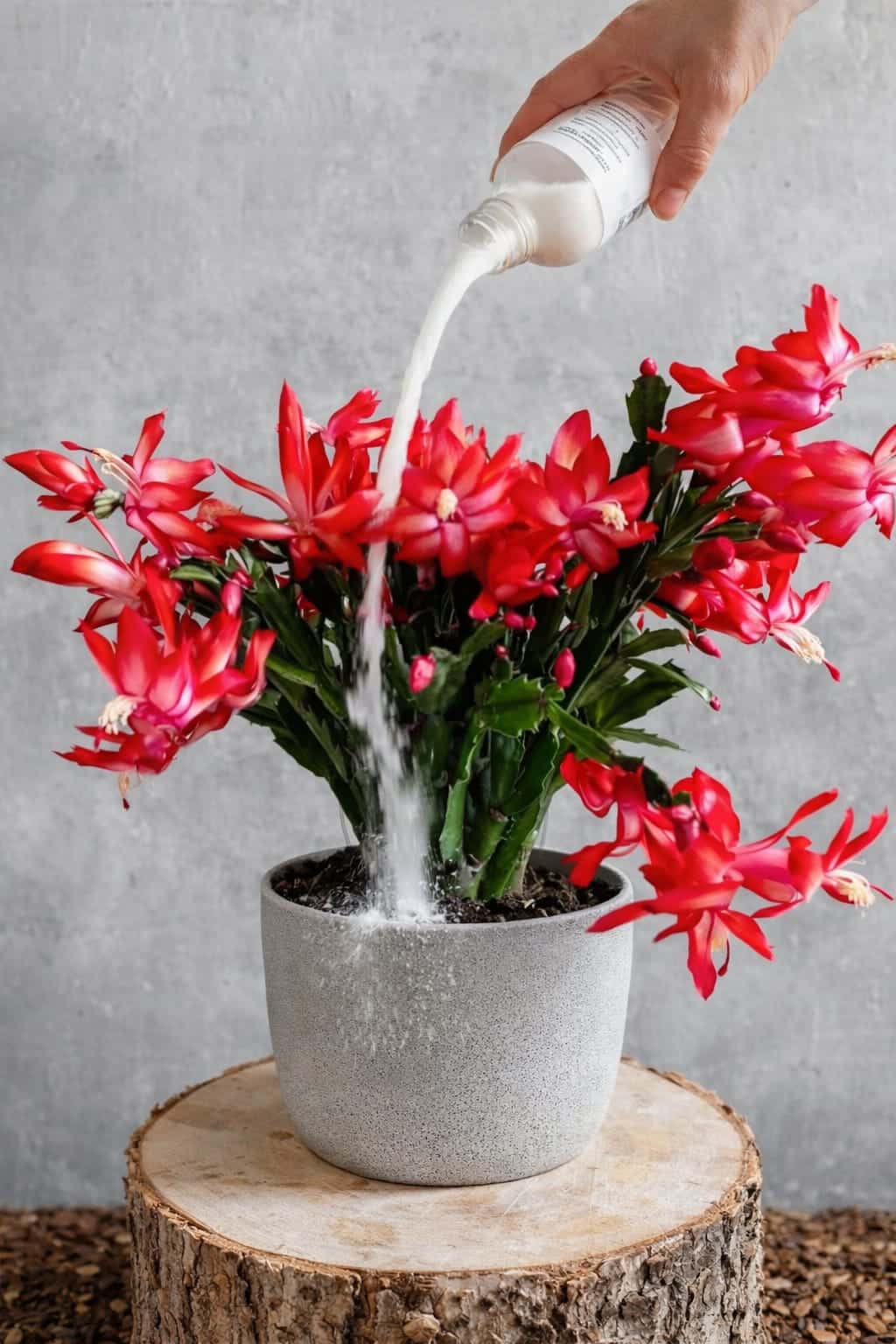
A Christmas cactus covered in bright flowers is one of the most beautiful signs of the holiday season. When it is full of buds and color, it instantly makes a room feel warmer, brighter, and more festive. But many plant lovers run into the same problem every year:
The plant grows well, looks healthy enough, and then refuses to bloom when it matters most.
That is exactly why so many “bloom formulas” and homemade tricks get attention online. A bottle gets poured into the soil, and suddenly the plant is covered in flowers. It looks easy.
But the truth is a little different.
A Christmas cactus does not bloom beautifully because of one magic liquid. It blooms when the plant gets the right signals at the right time. A gentle feeding routine can help, but the real secret is the full setup: light, darkness, temperature, watering, and timing.
In this guide, you will learn the simple holiday formula that actually works — no mystery liquids required. You will discover why your Christmas cactus may be missing bloom season, how to trigger buds with light and temperature, and a step‑by‑step routine that will have your plant flowering right on time.
Why Your Christmas Cactus Often Misses Bloom Season
A Christmas cactus (Schlumbergera x buckleyi) is not like a desert cactus. It is an epiphyte native to the tropical rainforests of Brazil, where it grows on trees in shaded, humid conditions. In nature, it responds strongly to seasonal changes — especially shorter days and cooler nights — which signal that it is time to bloom.
Indoors, we often accidentally remove those signals.
The Most Common Reasons It Does Not Bloom Well:
· Too much warmth all the time – Christmas cacti need cooler nights to trigger buds.
· Too much light at night – Artificial light from lamps, TVs, or overhead fixtures can interrupt the dark period.
· Overwatering – Soggy soil stresses the plant and reduces blooming.
· No rest period before bloom season – The plant needs a natural pause in growth to shift into flower mode.
· Poor light during the day – Without enough bright indirect light, the plant cannot store energy for blooms.
· Being moved around too much once buds form – Sudden changes cause bud drop.
That means the plant often needs less pushing and more proper timing. The best “bloom booster” is not a bottle — it is a change in environment.
The “Formula” That Really Works
If you want your Christmas cactus to bloom before the holidays, the real formula is:
· Bright indirect light during the day – Builds energy.
· Cooler nights – Triggers bud formation.
· Long uninterrupted darkness – Simulates shortening days.
· Slightly reduced watering before buds form – Encourages the plant to shift focus.
· Stable care once buds appear – Prevents bud drop.
That combination is what triggers the plant to shift into bloom mode. No single ingredient can replace these environmental cues.
Let us break down each part of the formula.
Bright Light During the Day Matters
Before a Christmas cactus can flower well, it needs enough energy stored in its stem segments. That energy comes from photosynthesis, which requires good light.
The Best Placement:
· Near a bright window with filtered sunlight.
· An east‑facing window (morning sun) or a north‑facing window (bright indirect) is ideal.
· A south or west window with a sheer curtain also works, but avoid harsh afternoon rays.
How Much Light?
· 10–12 hours of bright indirect light daily during the growing season (spring through early fall).
· In low light, the plant may stay alive but will not have enough energy to bloom heavily.
A plant kept in very low light may survive, but it usually will not bloom. If your Christmas cactus has never bloomed for you, moving it to a brighter spot is the first and most important step.
Darkness at Night: One of the Biggest Secrets
This is one of the most overlooked parts of Christmas cactus care.
To form buds properly, the plant usually needs several weeks of long, dark nights. In nature, the shortening days of autumn trigger blooming. Indoors, artificial light can completely disrupt this signal.
How Darkness Helps:
· From late September through October (or 6–8 weeks before you want blooms), give your Christmas cactus 12–14 hours of complete darkness every night.
· This means no light from lamps, ceiling fixtures, TVs, or even streetlights through thin curtains.
· If your plant sits in a room with bright lamps on every evening, it may struggle to begin blooming.
How to Create Darkness:
· Move the plant to a dark closet or unused room each evening.
· Or cover it with a large, opaque cardboard box or paper bag.
· During the day, return it to bright indirect light.
A Simple Routine:
· 8:00 AM – Uncover the plant and place it in a bright window.
· 8:00 PM – Move it to darkness or cover it.
· Repeat daily for 6–8 weeks.
Once you see tiny buds forming, you can stop the darkness treatment and leave the plant in its bright spot. The buds will continue to develop.
That is why many people see healthier growth after changing the plant’s nighttime conditions instead of adding more products. The darkness treatment is free, easy, and highly effective.
Cooler Nights Help Trigger Buds
A slight drop in nighttime temperature also encourages blooming. The plant does not need freezing conditions — in fact, frost will kill it — but it does benefit from cooler, steady nights compared with daytime warmth.
Ideal Temperature Cycle:
· Daytime (fall): 65–75°F (18–24°C)
· Nighttime (fall): 50–65°F (10–18°C)
That cooler period tells the plant it is time to prepare for flowers. Without this temperature drop, the plant may keep producing green segments instead of buds.
How to Achieve Cooler Nights Indoors:
· Place the plant near a cool window (but not drafty enough to freeze).
· Turn down the thermostat at night if possible.
· Move the plant to an unheated room or sunroom that stays cooler overnight.
· In mild climates, put it outside in late summer/early fall before frost (bring it in before freezing).
Start this cool treatment at the same time you begin the darkness routine — typically late September to early October for blooms around Thanksgiving through Christmas.
Continue to Page 2
Continue to page 2 for more details about this article and the key points many readers miss on the first page.