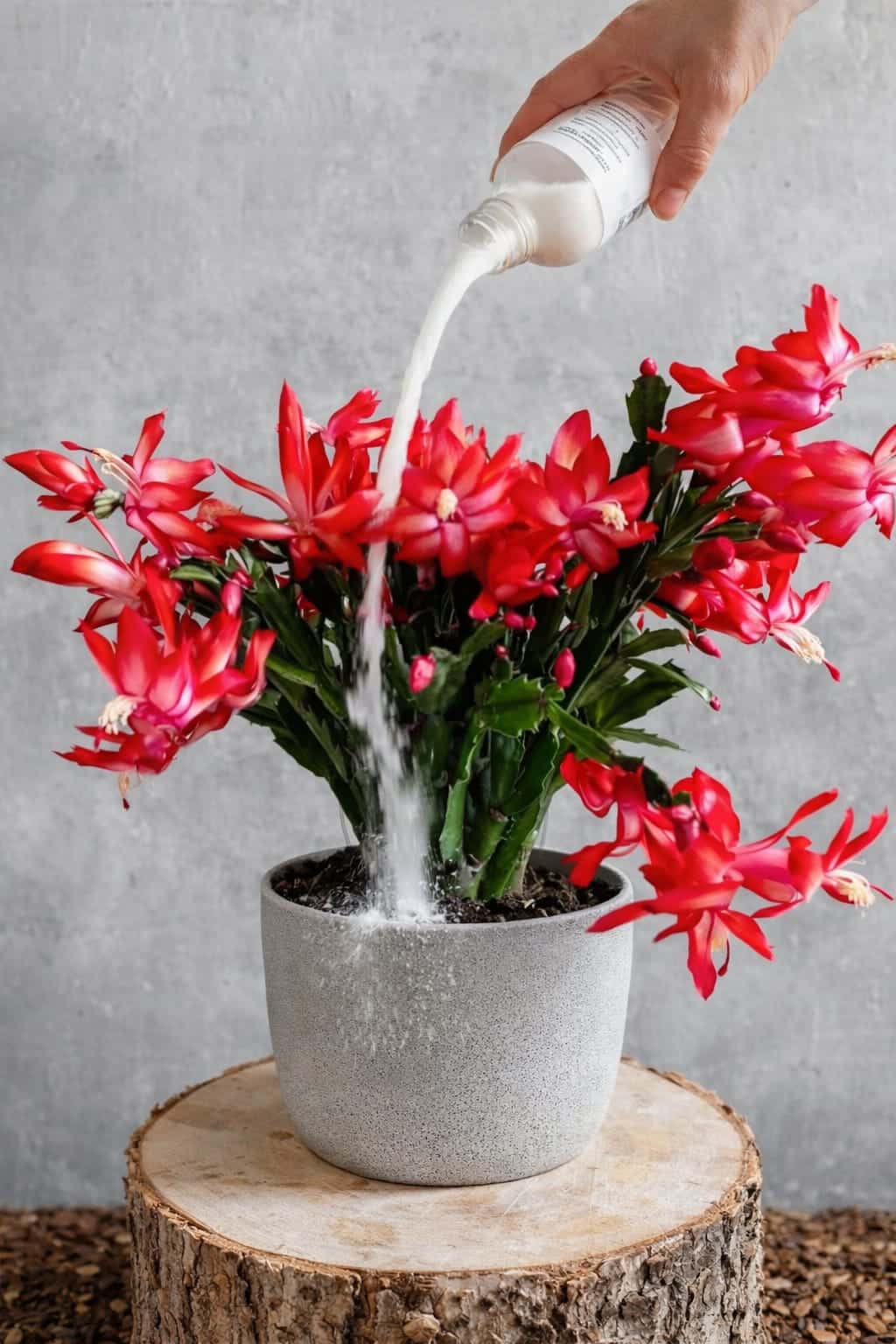
What About the White Liquid in Videos?
In many viral posts, a white liquid is poured into the pot and presented like the main bloom booster. Sometimes it is milk, sometimes a diluted homemade mix, and sometimes it is just there for attention.
The truth is simple: Milk is not the real reason a Christmas cactus blooms well. In fact, heavy kitchen liquids can sour in the soil, create odor, attract pests, or stress the roots if used too often.
If you want to support blooming, a light balanced fertilizer during the active growing season makes much more sense than random homemade mixtures. Milk is not a fertilizer for cacti. It belongs in your refrigerator, not your plant pot.
When to Feed for Better Blooms
If you want more flowers later, feed the plant lightly while it is actively growing before bud season begins. That helps it build strength.
Feeding Schedule for Christmas Cactus:
· Spring and summer (active growth): Use a balanced houseplant fertilizer (like 20‑20‑20 or 10‑10‑10) diluted to half strength. Feed every 2–4 weeks.
· Early fall (before bud set): Switch to a bloom‑booster fertilizer (higher phosphorus, like 10‑30‑20) for 2–3 feedings. This supports flower development.
· Once buds appear: Stop fertilizing completely. Feeding during bud formation can cause bud drop.
· Winter (during bloom and rest): No fertilizer.
Too much fertilizer too late can make the plant focus on growth instead of blooms. The goal is to build energy early, then shift to stability.
Watering Before Bloom Season
A Christmas cactus likes more moisture than many people expect, but it still does not want soggy roots. It is not a desert cactus; it comes from humid rainforests. However, overwatering is still a common mistake.
Before Bloom Time (Late Summer to Early Fall):
· Let the soil dry a bit more between waterings compared to summer.
· Water when the top inch of soil feels dry.
· Do not keep it constantly wet.
· Avoid letting it sit in standing water.
Once Buds Appear:
· Return to a more even moisture balance.
· Water when the top inch is dry, but do not let the plant wilt.
· Consistent moisture helps buds develop without dropping.
During Bloom (Flowers Open):
· Keep soil lightly moist.
· Avoid letting it dry out completely, which can cause buds to drop.
· Do not overwater — soggy soil also causes bud drop.
The key is balance: slightly drier before bud set, then steady moisture once buds form.
Do Not Move It Once Buds Begin
This is another very common mistake — and one of the most frustrating because it leads to bud drop.
Once the buds form, sudden changes in:
· light direction (even turning the pot)
· room temperature (drafts or heat vents)
· watering rhythm (going from dry to soaked)
· placement (moving to another room)
can cause the tiny buds to fall off before they open.
The Rule:
· Find a good spot with bright indirect light and stable temperatures.
· Leave the plant there until blooming finishes.
· Do not rotate the pot.
· Do not move it to a “better” spot for display.
If the plant is happy and starting to bloom, leave it alone and let it finish the show.
Signs Your Christmas Cactus Is Getting Ready to Bloom
A plant preparing well for bloom often shows:
· Firm, green segments – Not limp, wrinkled, or yellow.
· Lots of small bud tips – Tiny reddish or pink bumps at the ends of segments.
· Active growth before the bud stage – Healthy segments produced during spring and summer.
· Buds swelling steadily – They get larger over several weeks instead of dropping.
These are much better signs than any bottle or shortcut. If you see buds forming, your care routine is working. Now your job is to maintain stability.
Common Mistakes to Avoid
If you want holiday flowers, avoid these common errors.
Too Little Daytime Light
Low light means low energy. The plant cannot produce buds.
Strong Artificial Light at Night
Even a few hours of lamp light can reset the plant’s internal clock and delay blooming.
Overwatering
Soggy soil stresses the plant and can cause root rot, which stops blooming entirely.
Heavy Feeding at the Wrong Time
Fertilizing after buds form can cause them to drop. Feed early, then stop.
Moving the Plant Too Often
Each move is a stress event. Bud drop follows.
Depending on Milk or Random Homemade Liquids
Milk does not trigger blooms. It can sour and attract pests. Stick to proper fertilizer and environmental controls.
Ignoring Temperature
Without cooler nights, many Christmas cacti will not bloom. Aim for 50–65°F at night for 6–8 weeks.
A Step‑by‑Step Holiday Bloom Routine
Here is a simple calendar to follow for blooms by late November or December.
Spring & Summer (Building Energy)
· Light: Bright indirect light (east or north window, or south/west with sheer curtain).
· Water: When top inch of soil is dry (every 7–10 days).
· Fertilizer: Balanced houseplant fertilizer, half strength, every 2–4 weeks.
· Temperature: Normal room temperature (65–75°F).
Early Fall (Bloom Prep – Late September to October)
· Light: Still bright indirect light during the day.
· Darkness: 12–14 hours of complete darkness every night.
· Temperature: Cool nights (50–65°F). Move plant near a cool window or to an unheated room.
· Water: Reduce slightly. Let soil dry a bit more between waterings.
· Fertilizer: Switch to bloom‑booster (higher phosphorus) for 2–3 feedings, then stop.
· Do not repot or prune.
Bud Development (Late October to November)
· Light: Continue bright indirect light during the day (darkness treatment can stop once buds are visible).
· Temperature: Keep stable, avoid drafts and heat vents.
· Water: Keep soil lightly moist. Do not let it dry completely or stay soggy.
· Fertilizer: None.
· Do not move the plant. Do not rotate.
Bloom Season (Late November to December)
· Light: Bright indirect light.
· Water: Maintain even moisture.
· Temperature: Avoid extremes.
· Fertilizer: None.
· Enjoy the flowers! Deadhead spent blooms by gently twisting them off.
After Bloom (Winter Rest)
· Light: Still bright, but days are shorter — consider a grow light.
· Water: Reduce watering (once every 2–3 weeks).
· Fertilizer: None.
· Temperature: Normal room temperature (no need for cool nights).
· Rest for 6–8 weeks, then resume spring routine.
Frequently Asked Questions (Christmas Cactus Blooms)
How long does it take for a Christmas cactus to bloom after starting the darkness treatment?
You should see tiny buds forming within 4–6 weeks of consistent 12–14 hour dark nights and cool temperatures.
Why are my buds dropping before they open?
Most common causes: moving the plant, temperature fluctuations (hot vent or cold draft), overwatering or underwatering, or too much light at night.
Can I use Epsom salt to help my Christmas cactus bloom?
Epsom salt provides magnesium. It can help with overall health if your plant shows a deficiency, but it does not directly trigger blooming. Use 1 teaspoon per gallon of water once a month during growth, not during bloom prep.
Is coffee good for Christmas cactus?
Diluted black coffee (1 part coffee to 3 parts water) can provide a tiny nitrogen boost, but it is not a bloom trigger. Focus on light and temperature instead.
How do I tell the difference between Christmas cactus and Thanksgiving cactus?
Thanksgiving cactus (Schlumbergera truncata) has pointed, crab‑claw edges on segments and usually blooms in November. True Christmas cactus (Schlumbergera x buckleyi) has rounded, scalloped edges and blooms in December. Care is nearly identical.
Can I force my Christmas cactus to bloom twice in one year?
It is possible but not recommended. Forcing a second bloom can exhaust the plant. Stick to one strong bloom cycle per year for long‑term health.
What do I do after blooming finishes?
Remove spent flowers. Reduce watering and stop fertilizing. Let the plant rest for 6–8 weeks (cooler, drier conditions). Then resume normal spring care.
My Christmas cactus is years old and never bloomed. Where do I start?
Start with the basics: brighter light during the day, a cool night period (50–65°F), and 12–14 hours of complete darkness each night for 6 weeks. Also check that you are not overwatering. Most non‑blooming plants respond to these changes.
Final Thoughts
If you want your Christmas cactus to bloom right before the holidays, the best “formula” is not a mystery liquid poured into the pot.
It is this:
· Bright indirect light during the day to build energy.
· Cooler nights (50–65°F) in early fall to trigger buds.
· 12–14 hours of complete darkness each night for 6 weeks to simulate shortening days.
· Careful watering (slightly drier before buds, evenly moist after).
· Gentle feeding earlier in the season, then stop once buds appear.
· Stable care once buds form — no moving, no sudden changes.
That is what makes the real difference.
Because the most beautiful Christmas cactus blooms do not come from one dramatic trick. They come from giving the plant the exact seasonal cues it has been waiting for — the shorter days, the cooler nights, the rhythm of the seasons.
So this year, skip the milk. Skip the random kitchen liquids. Instead, give your Christmas cactus the one thing it really needs: the right environment at the right time.
Then sit back and watch as those tiny buds swell into a cascade of holiday color. It is not magic. It is simply good care — and it works every time.
Have you tried the darkness and cool night trick on your Christmas cactus? Share your experience in the comments below. And if you found this guide helpful, save it for later or send it to a friend who wants a stunning holiday bloom display.